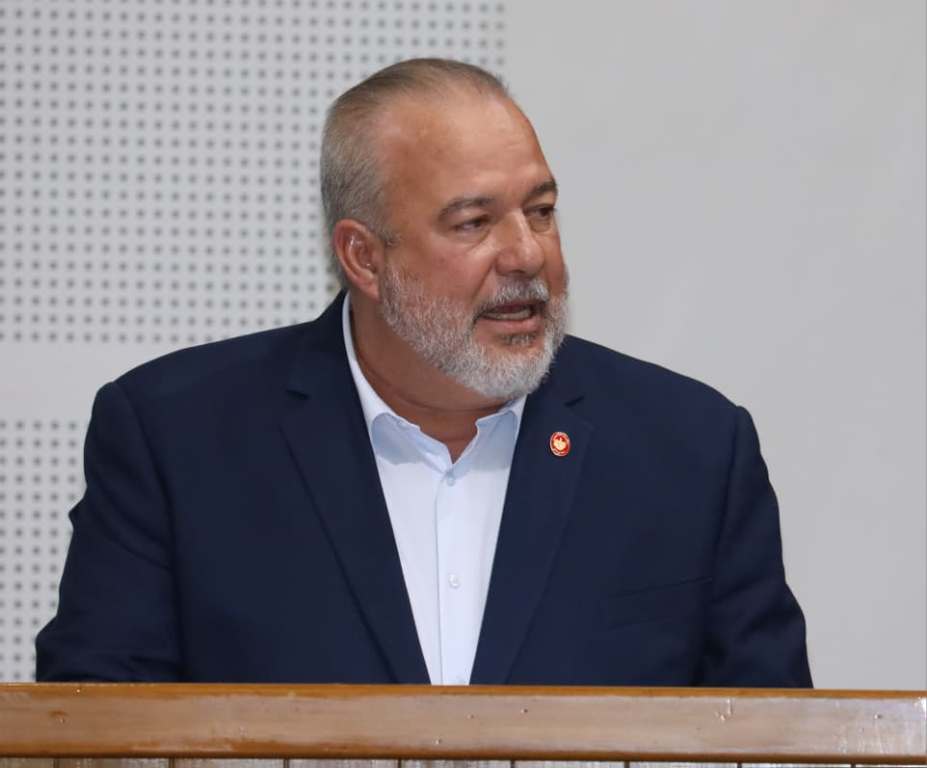
Prime Minister Manuel Marrero has affirmed that despite external pressures and internal challenges, Cuba remains committed to social justice, sovereignty and the unity of the people.
Presenting the results of the government program to correct distortions and revitalize the economy before the National Assembly, Marrero emphasized that the defense of the homeland, the protection of the population, and national security are strategic priorities of the Cuban state.
In this regard, he stressed the crucial role of the combatants from the Ministries of the Revolutionary Armed Forces (FAR) and the Interior (Minint), who, in close collaboration with the Party, the Government, and mass organizations, have intensified their training in response to the worsening situation in the region.
In response to the damage caused by Hurricane Melissa, he noted that the Baraguá Exercise was postponed, although the activation of the National Defense Council and its territorial structures was maintained, allowing for a cohesive state response with the direct participation of the people.
He also emphasized the successful completion of Exercise Meteoro 2025, whose results require adjustments to response plans for extreme weather events, and the holding of the IV National Cybersecurity Conference, focused on the secure use of technologies in digital transformation.
Marrero reported that progress is being made in restructuring the central government, with the goal of reducing the number of agencies within the Central State Administration.
In the health sector, he stated that despite the actions taken, infant mortality is worsening, with a rate of 9.8 per 1,000 live births, compared to 7.0 during the same period last year.
Meanwhile, in the education sector, the implementation of the Program to Improve the Quality of the Teaching Process continues, including a comprehensive reorganization of the school network in coordination with local authorities.
The prime minister pointed out that one of the greatest national challenges is demographic trends, as Cuba is projected to end 2025 with 9.6 million inhabitants, a figure that will decrease to 7.7 million by 2050.
The aging population will increase from 25.7 percent to 36.4 percent, and the working-age population will decrease from 5.9 million to 4.1 million.
Given this outlook, Marrero emphasized that demographics must be “an essential tool for planning and decision-making.”
The island’s prime minister also highlighted the shortcomings of the Housing Program, hampered by low local production of materials, a shortage of cement and steel, and the need to accelerate construction using shipping containers as a viable alternative.
Prime Minister Manuel Marrero confirmed the continuation of salary measures in the health and education sectors, as well as the redistribution of unspent salary funds to budgeted units, as recognition of job performance.
In addition, he said, adjustments were implemented that raised pensions to four thousand pesos, benefiting 88 percent of pensioners.
[ SOURCE: PRENSA LATINA ]