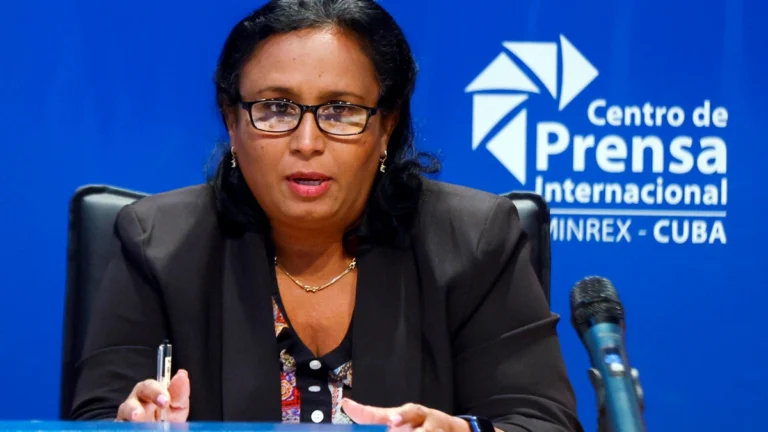
Cuba has registered a sustained decrease in cases of nonspecific febrile syndrome (NSFS), the first indicator of arboviral diseases such as dengue and chikungunya, and shows a clear trend toward controlling the epidemic, declared the Deputy Minister of Public Health, Carilda Peña, this Friday in Havana.
“After approximately three months of increasing cases, we can say that the trend is toward control. The country has begun to experience a decrease in cases of nonspecific febrile syndrome,” said Peña during a press conference held by the Ministry of Public Health (MINSAP).
According to official data, this is the seventh consecutive week with a decrease in cases of nonspecific febrile syndrome. Furthermore, the current week saw a 12.3% reduction in chikungunya cases, and there are fewer patients in serious or critical condition.
Although the dengue incidence rate remains stable at between 14 and 15%, health authorities believe the epidemiological situation is beginning to stabilize after the peak recorded in July, when the chikungunya virus was introduced to the province of Matanzas, whose capital, also named Matanzas, is located about 100 kilometers east of Havana.
Chikungunya spread rapidly to all provinces, affecting a population that, according to Peña, “had never before faced this illness.” This spread coincided with a period of high population mobility and favorable climatic conditions for the proliferation of the Aedes aegypti mosquito, the vector that transmits both diseases.
The deputy minister warned that chikungunya can develop into a chronic phase characterized by joint inflammation, persistent pain, and limited mobility, reinforcing the need for prolonged clinical monitoring of affected patients.
The Ministry of Public Health (MINSAP) also acknowledged the underreporting of cases of infectious dengue fever (IDF), as many people fell ill without seeking medical attention. “MINSAP plans to conduct further studies to estimate the number of people who were sick,” Peña stated.
As of the end of this week, 55 deaths from arboviral diseases have been reported in Cuba: 37 from chikungunya and 18 from dengue. In November, the Cuban government officially acknowledged that the country was facing an epidemic following a sustained increase in cases since mid-year.
Given this situation, MINSAP has emphasized the need to strengthen control and protection measures, especially for vulnerable groups such as the elderly, pregnant women, and children under one year old. It also urges the public to seek medical attention if they experience alarming symptoms, such as high fever, severe muscle pain, bleeding, skin rashes, or other signs associated with these diseases.
Carilda Peña reported that the day before, 2,188 cases of nonspecific febrile syndrome (NFS), the first indicator of arbovirus, were registered, and 372 new infections of chikungunya were confirmed, raising the national total to 47,756 cases of this disease.
IMAGE CREDIT: The Cuban Deputy Minister of Health reported that this is the seventh consecutive week with a decrease in cases of nonspecific febrile syndrome. Photo: EFE.
[ SOURCE: AGENCIA CUBANA DE NOTICIAS / teleSUR ]