Cuba is updating its plans for defense, reviewing the measures and plans to respond to aggression, as part of the doctrine of War of the Entire People.
On Saturday, January 17, as part of the activities scheduled for Defense Day, the National Defense Council (CDN) of Cuba met to review and approve the plans and measures for transitioning to a state of war.
The analysis was conducted “in compliance with the activities planned for Defense Day and with the objective of increasing and improving the level of preparedness and cohesion of the leadership and personnel,” explained a statement from the National Defense Council.
This Sunday, January 18th, headlines and reports about Cuba “entering a state of war” circulated on social media and in the press, amidst growing U.S. threats. This is part of a media manipulation that has generated confusion.
An analysis of the official statement highlights the omissions of media outlets that immediately began reporting that “Cuba ‘enters a state of war.’”
According to the official communication, the National Defense Council met to review and approve the plans and measures for entering a state of war; that is, the plans and measures that would be implemented if the Caribbean nation were to enter such a situation.
There is no room in the statement to infer that the National Defense Council (CDN) “approved the transition to a state of war.”
Approving “plans and measures” is an administrative and preventative act. It means updating logistics, mobilization, and defense manuals so that the country is prepared for any aggression (a circumstance in which, yes, a state of war could then be declared).
The review of measures and plans for such an eventuality is done periodically, as part of the doctrine of the War of the Entire People on the Caribbean island. This does not mean that Cuba is at war today.
Declaring a state of war is an extremely serious constitutional decision that only occurs in the face of actual military aggression. According to the Constitution, this power belongs solely to the National Assembly of People’s Power (Parliament), or to the Council of State, in its absence. It is not declared in a periodic meeting of the National Defense Council.
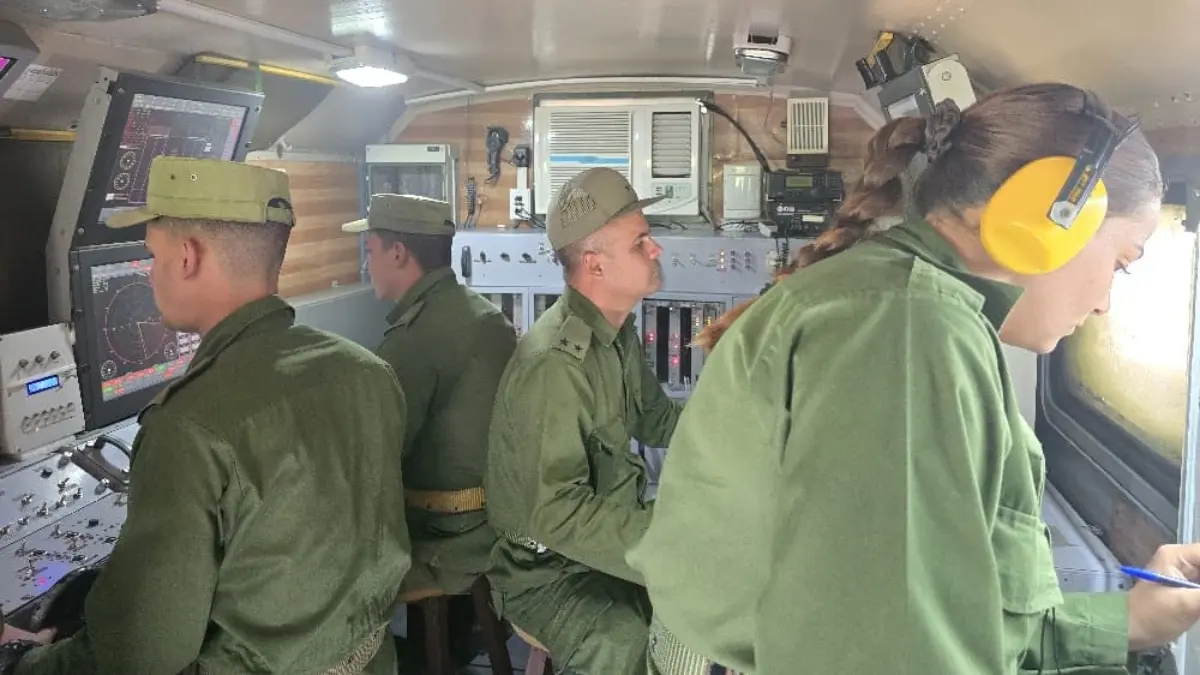
On January 10, the country held its Territorial Defense Days, during which civilians and regular troops carried out exercises related to the armed and unarmed components of preparedness in all Cuban provinces.
These exercises are held periodically and, as explained by the Ministry of the Armed Forces, “constitute one of the main ways in which the popular character of our defense strategy is realized and are an important complement to the personnel training system, as well as a means of facilitating the participation of the population in defense tasks.”
Chapter II of the Constitution of the Republic of Cuba, which defines the National Assembly of People’s Power as the supreme organ of state power, establishes in Article 108, paragraph ñ, that, among other powers, it is responsible for “declaring a state of war or war in the event of military aggression and approving peace treaties.”
Cuba remains in peacetime and focused on its problems. It does not seek war, but it is not defenseless.
Preparing for defense is a constitutional right and duty for any country, but manipulating the public and changing “preparation” and “review and approval of plans” to “declaration of a state of war” is irresponsible journalism.
IMAGE CREDIT: On January 10, the country held Territorial Defense Days, in which civilians and regular troops carried out actions related to the armed and unarmed components of preparedness in all Cuban provinces. Photo: AGENCIA CUBANA DE NOTICIAS.
[ SOURCE: teleSUR and AGENCIA CUBANA DE NOTICIAS ]