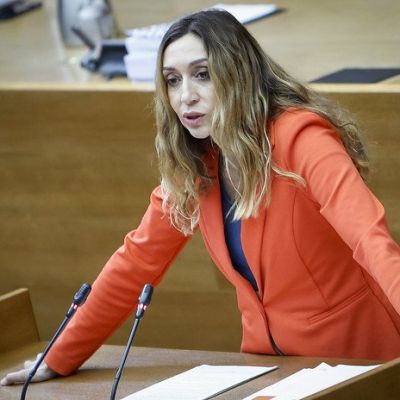
Valencian deputy Isaura Navarro, a member of the Compromís party in the Valencian Parliament, denounced the intensification of the US blockade against Cuba in an exclusive interview with Cubainformación TV, calling it “a flagrant violation of International Law and a direct aggression against the Cuban people.” She explained the details of the non-binding resolution presented by her party in the Valencian regional parliament, which urges the Spanish government and international institutions to take a firm stance against the suffocation of the Cuban people by the Trump administration.
News from Prensa Latina
This strangulation stems from the Executive Order of January 29, 2016, signed by Trump, which, under the false declaration of a “national emergency,” unilaterally and extraterritorially expands the blockade, punishing third countries that maintain legitimate trade relations with Cuba and, specifically, sell oil to the island.
The Compromís initiative includes four fundamental pillars: the explicit rejection of the new Executive Order; the reaffirmation of Spain’s commitment to the Charter of the United Nations and multilateralism; the demand for the immediate, total, and unconditional lifting of the blockade; and the promotion of a common position within the European Union against unilateral sanctions and their humanitarian consequences.
Statements to cubainformación.tv
The deputy told cubainformación: “From Compromís, we have registered a parliamentary initiative for debate in the Valencian Parliament, condemning and absolutely rejecting this ‘national emergency’ invented by Donald Trump to interfere in a sovereign state like Cuba and suffocate it, and thereby suffocate the entire population, which is suffering the most and will continue to suffer the most from these decisions, such as the economic, commercial, and financial blockade that the United States has been imposing on the Cuban people for years, without any support from the United Nations.
And what we want is for the Spanish government to take a stand and be the one, from the European Union and from all relevant bodies, both the United Nations and multilateral organizations, to defend the rights of the Cuban people and demand an end to this blockade, aggravated by this declaration of a national emergency in which Donald Trump, pay attention!, establishes that Cuba is a dangerous country for the interests of the United States. Here The country that poses a threat to the interests of the planet is the United States, and all countries should stand against these kinds of actions and defend the rights of the Cuban people.
We already saw what happened in Venezuela, how a sovereign country was invaded without any backing from the United Nations. And now it’s Cuba, when what Cuba needs is aid. And now, by preventing the oil from arriving, what they are achieving is that the population is worse off than ever, because it affects the functioning of hospitals, the transportation people need to get to work. It’s a basic issue.
And it’s also about an agreement (Cuba-Venezuela), with an exchange of doctors and oil, which has been fundamental for the Venezuelan people, because the majority of Venezuelans have had access, for the first time in their lives, to missions like Barrio Adentro, for primary care, and the subsequent ones, for specialized care. They have had access and have seen a doctor for the first time, thanks to that exchange (with Cuba), because the Cuban people offered their doctors, highly skilled professionals, who have turned the health situation around. that the Venezuelan people had, the vast majority of the Venezuelan people. This exchange has been beneficial, both for the Cuban people and for the Venezuelan people.
And now that is being prevented by the blockade being established, by this national emergency measure, by Mr. Trump and the United States, completely without any support from the United Nations. And all it does is harm the Cuban people. And that is a violation of the right to life, the human rights of the Cuban people. And we, the whole world, all nations, should rebel against this type of action.”
Two more proposals: solidarity with Venezuela and denunciation of US impunity.
In addition to this initiative, Compromís has registered two other non-binding motions of significant political importance. One demands that the Valencian Parliament request the Spanish Government to petition the Nobel Foundation to withdraw the Nobel Peace Prize awarded to Venezuelan coup leader María Corina Machado, “for her active participation in destabilizing plans against Bolivarian democracy.”
The other denounces the crimes committed by the Trump administration both within and outside its borders: mass deportations, ICE paramilitary violence, inhumane conditions in detention centers, as well as the recent invasion of Venezuela and the kidnapping of its president. All of this, the text states, “with the sole aim of appropriating its natural resources, in a re-edition of the darkest chapters of American interventionism.”
Text of the NON-LEGISLATIVE PROPOSAL AGAINST THE COERCIVE MEASURES OF THE UNITED STATES AGAINST CUBA AND IN DEFENSE OF INTERNATIONAL LAW, SOVEREIGNTY, AND PEACE
The foreign policy of the United States toward Latin America and the Caribbean has been marked by systematic interference and a hegemonic conception of international relations, considering the region as its “backyard” and an exclusive sphere of influence. This logic, a direct descendant of the Monroe Doctrine and its contemporary reinterpretation in a unilateral and coercive manner, has repeatedly served to justify military interventions, interference policies, economic pressure, and threats against sovereign states, in open contradiction with the principles of international law and the multilateral system.
Within this framework, the United States’ policy toward the Republic of Cuba constitutes one of the most prolonged and serious examples. For more than six decades, Cuba has been subjected to a unilateral economic, commercial, and financial blockade, imposed without the backing of the United Nations, which violates the principles of sovereign equality of states, non-interference in internal affairs, and the prohibition of the use of coercive measures enshrined in the Charter of the United Nations.
This policy of aggression against the Cuban people, maintained by the United States, is now exacerbated by the Executive Order issued on January 29, 2016, by President Donald Trump. This Order, which declares a “national emergency” with respect to Cuba, unilaterally designates the Cuban government as an “unusual and extraordinary threat” to its national security and foreign policy, using this declaration as a legal basis to expand and deepen economic coercion measures. Undoubtedly, this is an unprecedented hardening of the stance, marking a new stage in US policy toward Cuba, in line with the threats made by President Trump and Secretary of State Marco Rubio based on completely unfounded accusations.
The Order explicitly establishes a tariff system that allows for the imposition of additional tariffs on imports from any country that, directly or indirectly, sells or supplies oil to Cuba. This measure represents an extraterritorial extension of the blockade, as it seeks to condition the foreign policy and trade relations of sovereign third-party states. It is an exceptional measure in which U.S. tariff policy serves as an instrument of political coercion, “granting itself the right to dictate to sovereign states which nations they can trade with and to which they can export their national products,” as the Cuban government statement points out.
These measures clearly respond to an explicit strategy of extreme pressure and economic strangulation, aimed at causing the collapse of the Cuban economy, internal destabilization, a humanitarian crisis, and justifying intervention to force political change. Following the US intervention in Venezuela, which violated international law, this would be another operation whose sole purpose is to interfere in the internal affairs of another sovereign state, increasing threats to regional peace and stability.
Furthermore, the consequences of these measures will directly affect the Cuban people. The blockade, now intensified by the restriction of access to oil, will worsen the living conditions of the population, affecting the functioning of basic services such as healthcare and transportation, as well as access to basic goods and essential products.
The illegal economic, commercial, and financial blockade imposed by the United States against Cuba has been repeatedly denounced by the international community. Since 1992, the United Nations General Assembly has adopted, year after year and by overwhelming majorities, resolutions demanding an end to the blockade. Spain has consistently voted in favor of these resolutions, aligning itself with the majority position of the international community in defense of international law, multilateralism, and the sovereignty of states. The tightening of the blockade through the declaration of a supposed “national emergency” based on falsehoods and the imposition of the measures contained in the Order therefore constitute a new attack on international law, a new challenge to multilateralism, and a new challenge to the positions historically defended by the Spanish State itself.
Spain, as a State committed to peace, international law, and the peaceful resolution of conflicts, cannot remain impassive in the face of a policy that so flagrantly violates these principles, that seeks to intervene in Cuba under false accusations, and that jeopardizes regional stability. The defense of international law, the rejection of all forms of interference, and the commitment to an international order based on rules must remain central pillars of the Spanish State’s foreign policy.
For the reasons stated above, the following is presented:
NON-LEGISLATIVE PROPOSAL
Congress urges the Government to:
Publicly denounce and firmly express its absolute rejection of the declaration of a supposed “national emergency” regarding Cuba and the tariff measures contained in the Executive Order signed on January 29 by the President of the United States, which aim to tighten the economic, commercial, and financial blockade against Cuba, as they constitute a violation of international law, an aggression against Cuba’s sovereignty, and a threat to regional peace and stability.
Reaffirm its commitment to the principles of the Charter of the United Nations, particularly the sovereign equality of States, non-interference in internal affairs, and the peaceful settlement of disputes, rejecting the use of economic coercion, unilateral sanctions, and the tariff policy employed by the United States as instruments of its foreign policy.
Continue demanding the immediate, total, and unconditional lifting of the economic, commercial, and financial blockade imposed by the United States against Cuba, in accordance with the resolutions of the United Nations General Assembly repeatedly adopted with Spain’s support.
Lead a firm stance against this new aggression against Cuba within the European Union and multilateral organizations, and continue promoting multilateralism, respect for international law, and the protection of human rights, as well as advocating for concrete initiatives aimed at ending unilateral coercive measures and their grave humanitarian consequences.
IMAGE CREDIT: Photo: Isaura Navarro’s Facebook page.
[ SOURCE: cubainformacion.tv ]