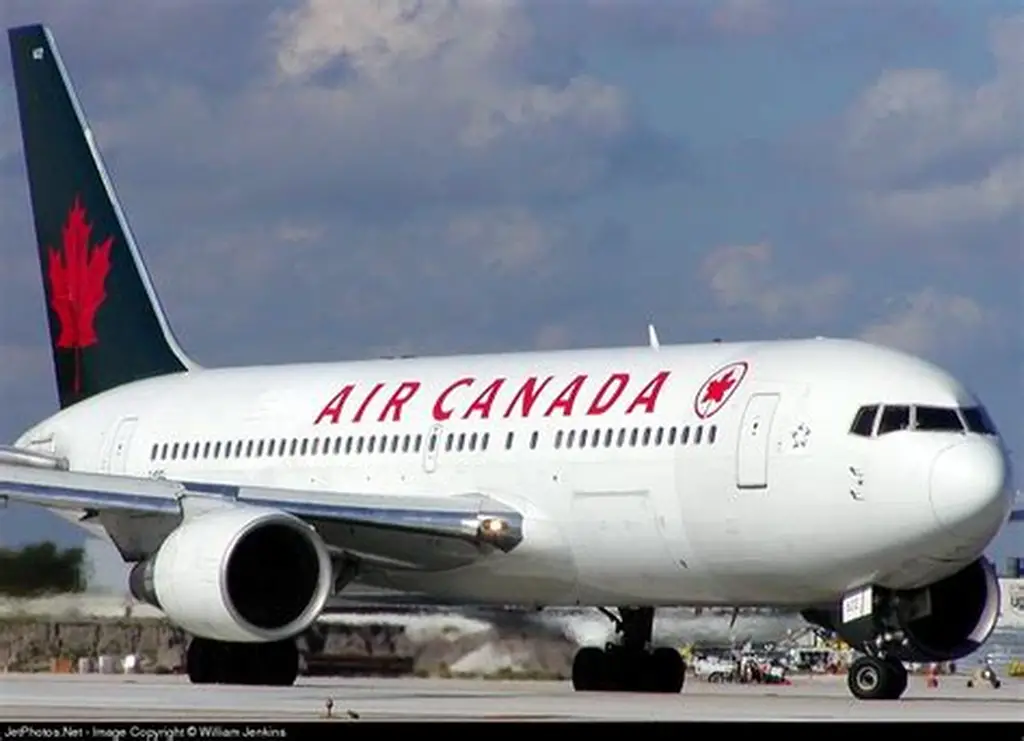
from the FACEBOOK page of Isaac Saney *
The decisions by Air Canada, WestJet, Air Transat, and other carriers to cancel flights and vacation packages to Cuba because the island has run out of jet fuel are not neutral commercial adjustments. They are political acts with profound consequences. They make Canadian companies enforcers – unwilling or willing-of a U.S.engineered economic war designed to suffocate Cuba’s economy and break the will of its people.
At the heart of Washington’s latest escalation—threatening punitive tariffs on any country that supplies fuel to Cuba—is a clear and calculated objective: to target Cuba’s tourism sector, one of the country’s principal sources of foreign exchange, in order to deprive the nation of the hard currency required to purchase food, medicines, and essential goods. This is collective punishment of the people of Cuba.
For a Caribbean nation with limited access to international credit and under six decades of comprehensive U.S. sanctions, tourism is not a luxury—it is an economic lifeline. To deliberately choke off fuel supplies so that planes cannot land, resorts cannot operate, and visitors cannot arrive is to intentionally deepen shortages and hardship. It is to weaponize scarcity. It is to pursue what can only be described, accurately and without hyperbole, as a starvation policy against an entire people, with all its genocidal implications and dimensions.
Cuba is under siege. The goal is not subtle. The goal is to starve the Cuban people into submission by collapsing the economy, generating desperation, and provoking the social unrest Washington has long hoped for—unrest that could then be cynically invoked as a pretext for “humanitarian” intervention or regime-change operations.
This strategy is not speculation. It was spelled out with chilling clarity more than six decades ago by Lester D. Mallory, then U.S. Vice Secretary of State and one of the principal architects of U.S. policy toward Cuba. In an April 6, 1960, memorandum, now declassified, Mallory unambiguously declared:
“The only foreseeable means of alienating internal support is through disenchantment and disaffection based on economic dissatisfaction and hardship … every possible means should be undertaken promptly to weaken the economic life of Cuba … denying money and supplies to Cuba, to decrease monetary and real wages, to bring about hunger, desperation and overthrow of government.”
Today’s fuel strangulation and tourism sabotage are simply contemporary expressions of this same doctrine.
When Canadian airlines cancel flights because Cuba has been deliberately deprived of fuel, they become collateral damage in Trump’s economic war. But more than that, they become conduits through which Washington’s policy is operationalized inside Canada. This is an immediate and direct assault on Canadian economic sovereignty and independence. No foreign power has the right to dictate where Canadian companies may fly, who Canadians may visit, or with whom Canada may trade.
The U.S. economic war against Cuba—along with its other coercive measures—has been condemned year after year by overwhelming majorities in the United Nations General Assembly as violating international law, particularly the principles of non-intervention and the right of peoples to self-determination. Canada votes in favor of these resolutions. Canada is a signatory to the UN Charter and to numerous international conventions affirming sovereign equality of states and peaceful coexistence. These commitments cannot remain rhetorical. They demand concrete action.
Now is not the time for capitulation to Donald Trump and Marco Rubio. Washington’s War on Cuba Is undermining Canada’s sovereignty and economy.
Canada must firmly oppose Washington’s assault on Cuba and assist the very Canadian companies now being targeted as collateral casualties. Ottawa should provide financial and logistical support to Air Canada, WestJet, Air Transat, and other carriers so that flights to Cuba can continue. It should deepen economic ties, expand trade, and increase material assistance to Cuba—particularly in the energy sector—to help blunt the impact of U.S. coercion. Anything less amounts to acquiescence.
This is also a direct attack on the Canadian people. Hundreds of thousands of Canadians have family members in Cuba. Millions more have travelled to the island and forged deep personal bonds. Over decades, Canadians have come away with a profound respect and admiration for the Cuban people—their dignity, resilience, and generosity in the face of relentless external aggression. Regardless of political or ideological differences, Canadians overwhelmingly support relations with Cuba based on mutual respect, equality, and recognition of Cuba’s right to choose its own path.
That spirit is reflected in the recently launched Canadian Parliamentary Petition (e-7082) condemning the U.S. economic blockade of Cuba and calling on Canada to deepen economic ties, trade and assistance to the heroic island nation. The petition has already garnered—and continues to gather—thousands of signatures, sending a clear and resounding message: opposition to the economic war on Cuba is widespread, growing, principled, and resolute.
In short, defending Cuba is defending Canada.
It is defending Canada’s sovereignty against extraterritorial bullying. It is defending the right of Canadians to travel, trade, and engage freely. It is a defense of international law against raw power, coercion, and the rule of “might makes right”. And it is defending a people who, despite decades of siege, continue to stand with dignity and courage.
History will judge where we stood at this moment. Canada must choose independence over subservience and humanity over cruelty.
-0-0-0-0-0-0-0-0-0-0-0-0-0-0-0-0-0-0-0-0-0-0-0-0-0-0-0-0
Isaac Saney is a Black Studies and Cuba specialist and coordinator of the Black and African Diaspora Studies (BAFD) program. He holds a PhD in history from the School of Oriental and African Studies – University of London. His teaching, research and scholarship encompass Cuba, Africa, the Caribbean, Black Canadian history, the global Black liberation struggle, and reparations. A major area of his research is Cuba’s relationship with Africa.
Isaac is a long-time community activist and participant in the anti-war movement and the anti-racist struggle and passionately believes in the collective power of the people to transform the world in ways that bring forth equity, justice, and human dignity. His roots lie in the African Nova Scotia community and the Caribbean.