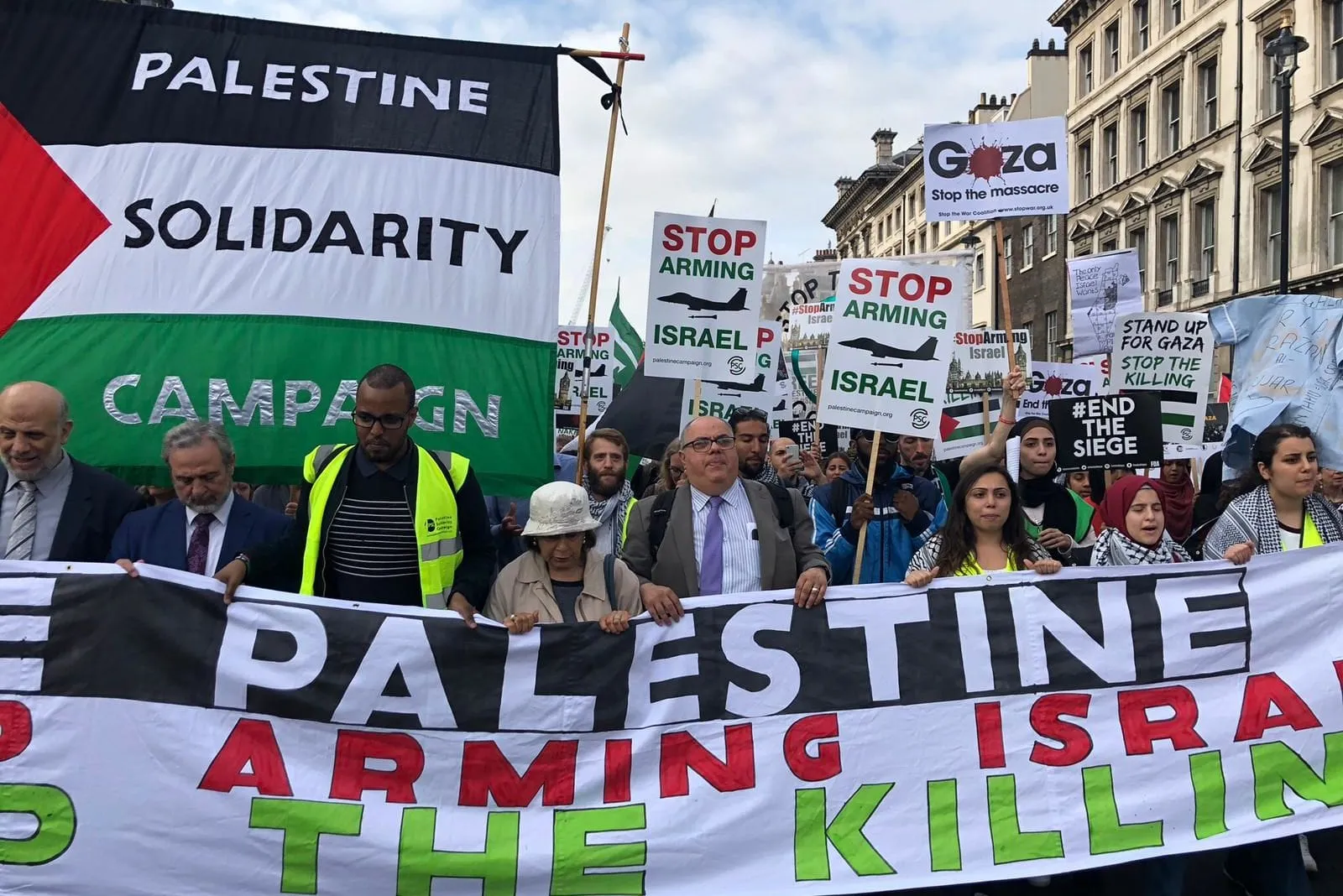
In the UK, four members of the advocacy group Palestine Action have pledged to continue their hunger strike amid grave medical warnings and the hospitalizations of their fellow protesters.
The group’s members are being held in five prisons in the United Kingdom over alleged involvement in break-ins at a facility of the UK’s subsidiary of the Israeli defense firm Elbit Systems in Bristol and a Royal Air Force base in Oxfordshire. They are protesting for better conditions in prison, rights to a fair trial, and for the UK to change a July policy listing the movement as a “terror” group.
Palestine Action denies charges of “violent disorder” and others against the eight detainees. Relatives and loved ones told Al Jazeera of the members’ deteriorating health amid the hunger strikes, which have led to repeated hospital admissions. Lawyers representing the detainees have revealed plans to sue the government.
The case has brought international attention to the UK’s treatment of groups standing in solidarity with Palestinians amid Israel’s genocidal war in Gaza. Thousands of people have rallied in support of Palestine Action every week.
Hunger strikes have been used throughout history as an extreme, non-violent way of seeking justice. Their effectiveness often lies in the moral weight they place upon those in power.
IMAGE CREDIT: Police officers detain protesters during the ‘Lift the Ban’ demonstration organized by the civil action and campaign group Defend Our Juries ahead of a judicial review into the decision to designate the Palestine Action group as a terrorist organization, at Tavistock Square in London, UK [File: Rasid Necati Aslim/Anadolu]
[ SOURCE: AL JAZEERA ]