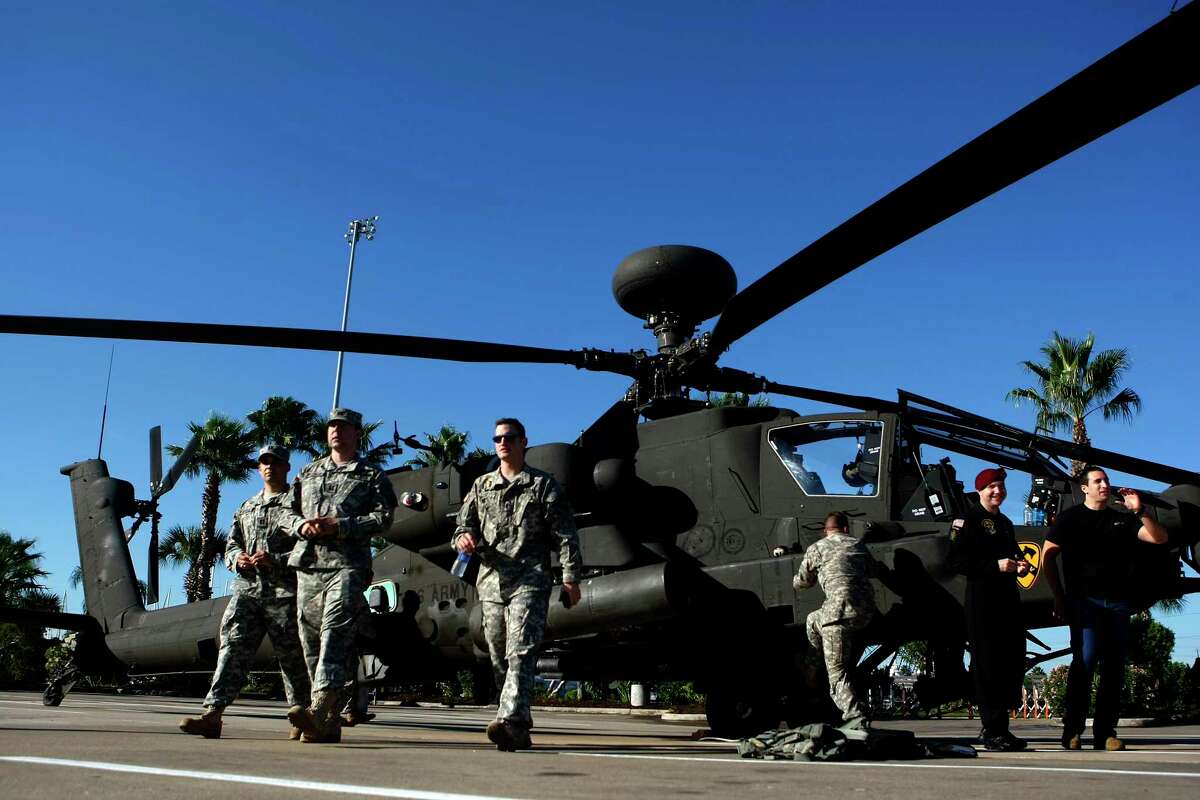
After attacking Venezuela and kidnapping its constitutional president, Nicolás Maduro, Secretary of State Marco Rubio and Secretary of War Pete Hegseth are rushing to finalize agreements to send marines to Peru, Ecuador, Paraguay, Trinidad and Tobago, and the Dominican Republic.
The corollary with which President Donald Trump updated the Monroe Doctrine takes different forms. Strategies that mutate, but pursue the same goal: to regain control of the territory that the United States has always considered its “backyard” and to control the natural resources that are currently in dispute with other major powers.
One of the forms the Trump Corollary has taken involves the increased US military presence in Latin America and the Caribbean. The excuse: the fight against the current enemy, “narco-terrorism,” which has been proven false in Venezuela. Those in charge of carrying out this strategy—Secretaries Rubio and Hegseth—have already begun it, and now they want to consolidate it.
The attack on Venezuela, which concentrated the largest military deployment Washington has ever made in the region in the Caribbean Sea, with the presence of aircraft carriers, troops, and even a nuclear submarine, is also accompanied by the deployment of marines to Peru, Ecuador, Paraguay, Trinidad and Tobago, and the Dominican Republic.
Dominican Republic
On November 26, during his visit to the Dominican Republic, Secretary of Defense Pete Hegseth thanked President Luis Abinader for supporting a “temporary agreement” that allows the United States to deploy troops on Dominican territory.
This is “a great collaboration and, truly, a joint effort between our two countries against drug trafficking and narco-terrorism,” Hegseth stated.
Along the same lines, President Abinader asserted that there is “a threat that knows no borders, that does not distinguish flags, that destroys families, and that, for decades, has attempted to use our territory as a route. That threat is drug trafficking, and no country can, nor should, confront it without allies.”
According to a statement on the official website of the Dominican Republic’s Presidency: “The United States Southern Command and Air Force will provide refueling and airlift aircraft to support counter-narcotics operations, including Operation Southern Spear, announced by Secretary of Defense Pete Hegseth on November 13, which also combats illicit arms trafficking.”
This collaboration aims to disrupt the illicit operations of transnational criminal organizations (TCOs) and foreign terrorist organizations (FTOs), identified by the United States, along various routes spanning the entire Caribbean Sea,” the text adds.
It also emphasizes that “several KC-135 tanker aircraft will be present to support air patrol missions, expanding monitoring and interdiction capabilities over a large portion of the maritime and air domains, and will provide refueling services to aircraft from partner countries, thus ensuring sustained operations for monitoring, detecting, and tracking verified illicit smuggling activities.”
Additionally, the official statement reads, “C-130 Hercules cargo aircraft will facilitate aeromedical evacuations, firefighting, meteorological reconnaissance, and disaster relief.”
Trinidad and Tobago
A few days later, on November 29, according to the Trinidad and Tobago Guardian website, Prime Minister Kamla Persad-Bissessar confirmed that the United States had installed “a new radar to monitor activities inside and outside Trinidad and Tobago.”
The radar was located at ANR Robinson International Airport, a few kilometers from the Venezuelan coast.
According to the Zona Militar website, “Authorities in Trinidad and Tobago recently confirmed that the U.S. Marine Corps is reinforcing its local presence with the deployment of an AN/TPS-80 G/ATOR radar.”
The assistance is part of an agreement between the two countries to increase surveillance capabilities against illegal flights directly linked to narco-terrorist organizations and the growing tension with Venezuela.
According to reports, marines from the 22nd Expeditionary Unit, who were there for joint exercises in mid-November, remain in Trinidad and Tobago.
The website highlights that, in addition to the ground component, the Marines have air assets such as helicopters and fifth-generation F-35B Lightning II fighter jets, as well as amphibious assets from the U.S. Navy and aircraft from the Air Force.
Peru
On December 5, the Peruvian government reported that the Plenary of the Congress of the Republic approved, by majority vote (73 votes in favor, 25 votes against, and 2 abstentions), Legislative Resolution 13436/2025-CR, which authorizes the entry of foreign military personnel with weapons of war into the territory of the Republic of Peru.
The statement emphasizes that “military personnel from the United States Department of Defense, as specified in its first article, will enter national territory with weapons of war from January 1 to December 31, 2026,” that is, for one year.
“The institutions involved are: the Joint Intelligence and Special Operations Command (CIOEC), the Joint Special Forces (FEC), and the Special Operations Forces (FOES) of the Peruvian Navy; the Special Forces Group (GRUFE) of the Peruvian Air Force; the 1st, 3rd, and 6th Special Forces Brigades of the Peruvian Army; and the Peruvian National Police (DIROPESP, DIRANDRO, GRECCO),” the official information states.
Paraguay
Just nine days later, on December 14, an official statement from the U.S. Embassy in Paraguay announced that “Secretary of State Marco Rubio met today with Paraguayan Foreign Minister Rubén Ramírez Lezcano to sign a Status of Forces (SOFA) agreement between the United States and Paraguay.
The historic agreement establishes a clear framework for the presence and activities of U.S. Department of Defense military and civilian personnel in Paraguay, facilitating bilateral and multinational training, humanitarian assistance, disaster response, and other shared security interests,” the statement said.
It is noted that “Secretary Rubio emphasized that the SOFA reflects the United States’ commitment to close coordination with Paraguay on regional security and Paraguay’s growing importance as a regional leader and defender of security in our hemisphere.
The agreement strengthens a long-standing partnership and supports our shared priorities. Both officials expressed their confidence that the agreement will strengthen the sovereignty of both countries and enhance our cooperation to achieve greater stability and prosperity in the region,” the text concludes.
Ecuador
Three days later, on December 17, the U.S. Embassy in Ecuador posted a welcome message on social media to the U.S. troops arriving in the country.
In a text that begins somewhat confusingly, it states that “the United States welcomes U.S. Air Force personnel for a temporary operation with the Ecuadorian Air Force in Manta.
This short-term joint effort is part of our long-term bilateral security strategy, in line with existing agreements under Ecuadorian law,” it adds.
The post concludes that “the operation will enhance the Ecuadorian military’s ability to combat narco-terrorists, including strengthening intelligence gathering and counter-narcotics capabilities, and is designed to protect the United States and Ecuador from shared threats.”
On the same day, Ecuadorian President Daniel Noboa posted on Twitter that “with U.S. support, we have launched a temporary operation in conjunction with the Ecuadorian Air Force in Manta, as part of a long-term bilateral security strategy. This operation will allow us to identify and dismantle drug trafficking routes and bring to justice those who thought they could take over the country.”
A forward-looking operation with a history
Telma Luzzani, journalist, researcher, and author of the book “Monitored Territories: How the Network of US Military Bases Operates in South America,” stated that “in one way or another, the United States, in this stage of declining hegemony, is seeking to militarize its security zone, its vital platform, through which it historically expanded and became the world’s leading power.
It does so with subservient governments like those of Ecuador, Peru, and Argentina. It does so explicitly by directly announcing the arrival of marines who will control absolutely everything in those countries and the region. It does so explicitly and, obviously, with the acquiescence of puppet or subservient governments,” suggests the political expert.
Luzzani points out that “the strategy has always been one of absolute domination and militarization of our countries. There was a period during the Cold War when our governments were military governments. Under the pretext of the Soviet threat or the threat of communism, the aim was to militarize our region, our Latin America, through military governments.
In fact, the United States specifically had the School of the Americas in Panama to train military personnel. That is to say, it didn’t do so directly, as it does now, but through the armed forces of the various South American or Latin American countries,” he recalls.
Today, with Donald Trump, all possible legal frameworks are being broken. The Charters of the United Nations and the OAS are irrelevant. The US president has established his own rules, which are clearly stipulated in the National Security Strategy, where the first region he refers to is ours, recognizing it as a primary area and outlining a significant reform at the Pentagon.
Trump held a meeting a few months ago at the Quantico military base, where US generals, who arrived from all over the world, received new instructions, not only regarding other nations, but also regarding a supposed internal enemy in the United States. “This speaks to a significant shift in US military policy,” she asserted.
The researcher warns that in Argentina, the military base in Ushuaia is a crucial location due to its easy access to Antarctica. Paraguay has historically been occupied by US armed forces at their bases. Peru raises great concern for the United States because it is home to the port of Chancay, where China has a strong presence.
In Ecuador, there are renewed attempts to remilitarize Manta and the Galápagos Islands, despite a referendum in which Ecuadorians rejected the installation of foreign bases on their territory. Added to this are the military actions being carried out against Venezuela and the harassment of Gustavo Petro, Luzzani concludes.
IMAGE CREDIT: “Send in the Marines!” / Photo: PRENSA LATINA
[ SOURCE: CUBA DEBATE ]