By Henry Omar Pérez
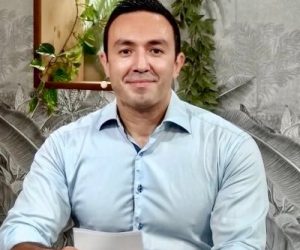
In times when media warfare and sanctions seek to break the will of the people, the voice of French professor, essayist, and researcher Salim Lamrani stands out as an essential reference point for understanding Cuban resistance.
A specialist in relations between Havana and Washington, Lamrani has dedicated decades to dismantling myths and revealing the contradictions of US policy toward the island.
In an exclusive interview, the intellectual rigorously and critically analyzes Cuba’s challenges on the international stage, emphasizing that the true “threat” to the Caribbean nation is neither military nor political, but rather the example of sovereignty and dignity it offers the world.
—What historical evidence demonstrates that Cuba has never posed a real military or political threat to the U.S. since 1959?
Cuba, with barely 10 million inhabitants and limited resources, has lived under an economic embargo since 1960, and throughout its history has remained steadfast in its rejection of wars of aggression.
It has never attacked its northern neighbor. On the contrary, since the triumph of the Revolution, it has always expressed its willingness to maintain cordial and respectful relations, based on reciprocity and sovereign equality.
In 1984, when Cuban intelligence services uncovered a plot to assassinate Ronald Reagan, they immediately alerted U.S. authorities and saved the president’s life, despite Washington’s hostile policy.
Following the attacks of September 11, 2001, Havana offered its airspace and airports, and in 2005 proposed sending the Henry Reeve Medical Brigade to assist the victims of Hurricane Katrina.
Cuba is a peaceful country, but it is not willing to compromise its sovereignty. Washington must understand that the Cuban people respond only to respectful dialogue, not to threats or blackmail.
—How can the blockade and sanctions be interpreted as a political pretext, rather than a response to an objective danger?
The purpose of the economic sanctions has always been to overthrow the Revolution. Since 1960, every US administration has maintained them, varying only the pretexts: nationalizations, the alliance with the USSR, support for independence movements, and later, the argument of democracy and human rights.
In reality, the White House never accepted that Cuba achieved its true independence on January 1, 1959, nor that it successfully challenged its hegemony in its own “backyard.”
—What role does media warfare play in legitimizing the sanctions against Cuba?
The media narrative constructs the image of Cuba as an “enemy” to justify coercive measures contrary to international law.
However, international public opinion overwhelmingly rejects the economic blockade because it knows that Cuba does not represent a military threat.
The only “threat” emanating from the island is its example in terms of sovereignty and the universalization of rights such as education, health, and culture.
Since 1992, the international community has condemned the unilateral sanctions imposed by the United States every year at the UN, by an overwhelming majority.
—How can it be demonstrated that Cuba is a country of peace, based on its foreign policy of medical cooperation and international solidarity?
International solidarity has been a pillar of Cuban foreign policy since 1959.
In 1960, Cuba offered aid to Chile after an earthquake, and in 1963, it sent its first medical brigade to Algeria.
Between 1959 and 2020, Cuba carried out more than 600,000 missions in 158 countries, with the participation of more than 326,000 healthcare professionals. The creation of the Latin American School of Medicine in 1998 enabled the training of nearly 40,000 doctors from 141 countries.
The island provided free medical care to more than 26,000 children affected by the Chernobyl disaster, restored sight to nearly 4 million people through Operation Miracle, and sent medical contingents to combat Ebola in Africa and COVID-19 in Europe. These actions demonstrate that Cuba is a country of peace and solidarity.
—To what extent do Trump’s measures against Cuba violate basic principles of international law?
During his presidency, Donald Trump imposed 243 new sanctions, 50 of them during the height of the pandemic, impacting vital sectors such as medical cooperation, remittances, and tourism.
Between 2017 and 2020 alone, losses amounted to $7.5 billion, equivalent to the electricity consumption of the entire population for six years.
Since 1960, sanctions have caused cumulative losses estimated at $170 billion, and more than 80% of Cubans were born under this economic blockade.
In January 2016, the Trump administration labeled Cuba an “extraordinary and unusual threat” and imposed tariffs on countries that supplied oil to the island, exacerbating the energy crisis and affecting essential services such as hospitals and schools.
—What lessons does Cuba’s resistance to media warfare and sanctions offer?
Cuba is an example of sovereignty, courage, and fidelity to its principles. It does not negotiate its independence nor does it yield to intimidation. This attitude is admirable in a world where cowardice and betrayal too often prevail. The study of relations between Cuba and the United States demands historical rigor and a critical perspective, far removed from media simplifications. Cuban resistance demonstrates that dignity and sovereignty can prevail in the face of pressure from a superpower.
Through his reflections, Salim Lamrani makes it clear that Cuba’s history in relation to the United States cannot be reduced to slogans or media simplifications. His critical perspective reminds us that, beyond sanctions and pressure, the island has defended its sovereignty with concrete acts of solidarity and resistance.
“The true threat to Cuba is its example,” affirms the academic, convinced that the dignity of a people is non-negotiable.
INDEX CREDIT: Salim Lamrani is a specialist in relations between Cuba and the United States. Photo: Perfil del entrevistado en X.
[ SOURCE: CUBA DEBATE ]