Colombia has announced its willingness to provide humanitarian aid to Cuba amidst the energy crisis currently gripping the island—a crisis exacerbated by the U.S. blockade that has been in effect for decades. The decision was communicated by the Ministry of Foreign Affairs, headquartered in Bogotá.
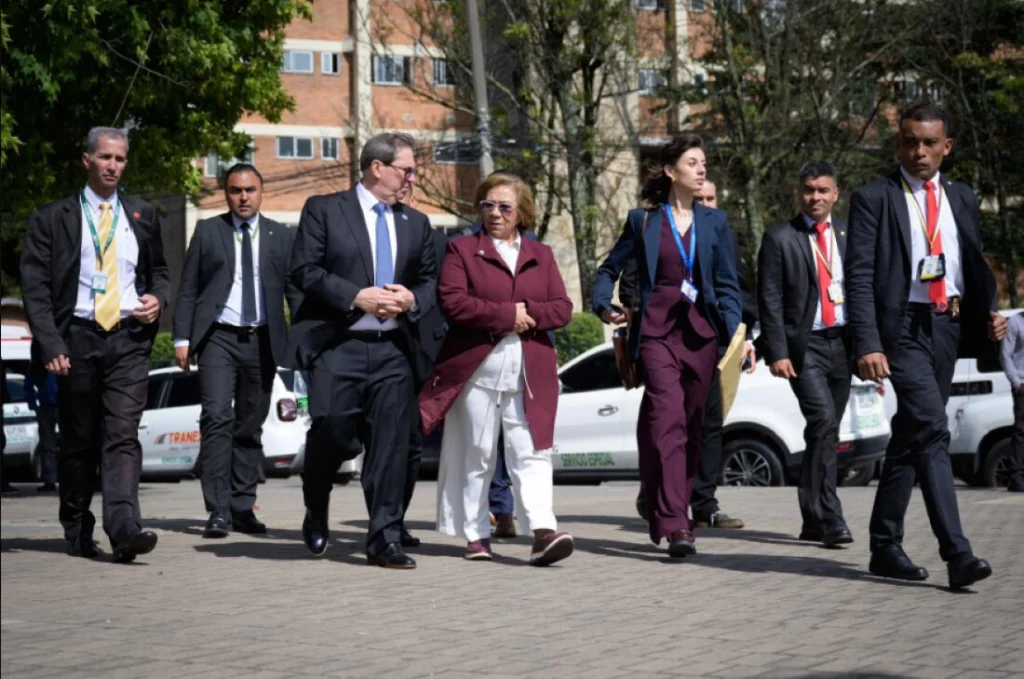
The announcement was made this Friday during the High-Level Forum between the Community of Latin American and Caribbean States (CELAC) and Africa, where Foreign Minister Rosa Villavicencio held a dialogue with her Cuban counterpart, Bruno Rodríguez.
According to the Ministry’s official profile on the social media platform X, “Colombia reiterated its willingness to provide humanitarian assistance to Cuba, in coordination with national entities, and to advance concrete mechanisms for cooperation.”
The proposal presented to Rodríguez also included strengthening bilateral cooperation in areas such as trade, health, education, and energy, with the aim of opening new avenues for collaboration between the two countries.
Colombia’s offer comes within a context marked by the worsening of the energy crisis in Cuba, due to the economic blockade imposed by the United States for over six decades—a policy that has also prompted Latin American governments to reduce diplomatic ties with the Caribbean nation.
During the fourth day of the 10th Summit of Heads of State and Government of CELAC, Colombia will hand over the organization’s *pro tempore* presidency to Uruguay. The gathering has convened more than thirty regional leaders, although, to date, only the attendance of the presidents of Colombia—Gustavo Petro—Uruguay—Yamandú Orsi—and Brazil—Luiz Inácio Lula da Silva—all identified with a progressive political orientation, has been confirmed.
Furthermore, the meeting aims to adopt the Bogotá Declaration, a document in which member states will acknowledge the progress achieved under the Colombian presidency and define CELAC’s strategic priorities for the upcoming period.
IMAGE CREDIT: Colombia’s offer comes within a context marked by the worsening of the energy crisis in Cuba, due to the economic blockade imposed by the United States for over six decades. Photo: @CancilleriaCol.
[ SOURCE: teleSUR ]