By Hedelberto López Blanch* / Special Collaboration for Resumen Latinoamericano.
The illegal, devastating, and bloody US-Israeli war against the Islamic Republic of Iran has also brought serious consequences for the aggressors because they did not foresee facing a powerful resistance very different from their previous aggressions in the Middle East against countries like Libya, Syria, or Iraq.
Despite the enormous censorship in the media controlled by Washington and Tel Aviv, the successful actions undertaken by Tehran against US military bases in countries of the region have come to light; the attacks on aircraft carriers that were forced to withdraw from the area; the downing of planes and helicopters; Extensive damage inflicted on several Israeli cities and the closure of the Strait of Hormuz have left the Trump administration with no option but to seek a way out of the impasse.
The convicted pedophile US president (with his usual ego and arrogance) maintains in his daily press conferences that Iran is defeated and that he wants to talk, but the political responses of the Iranian leadership and the military forces on the battlefield are diametrically opposed.
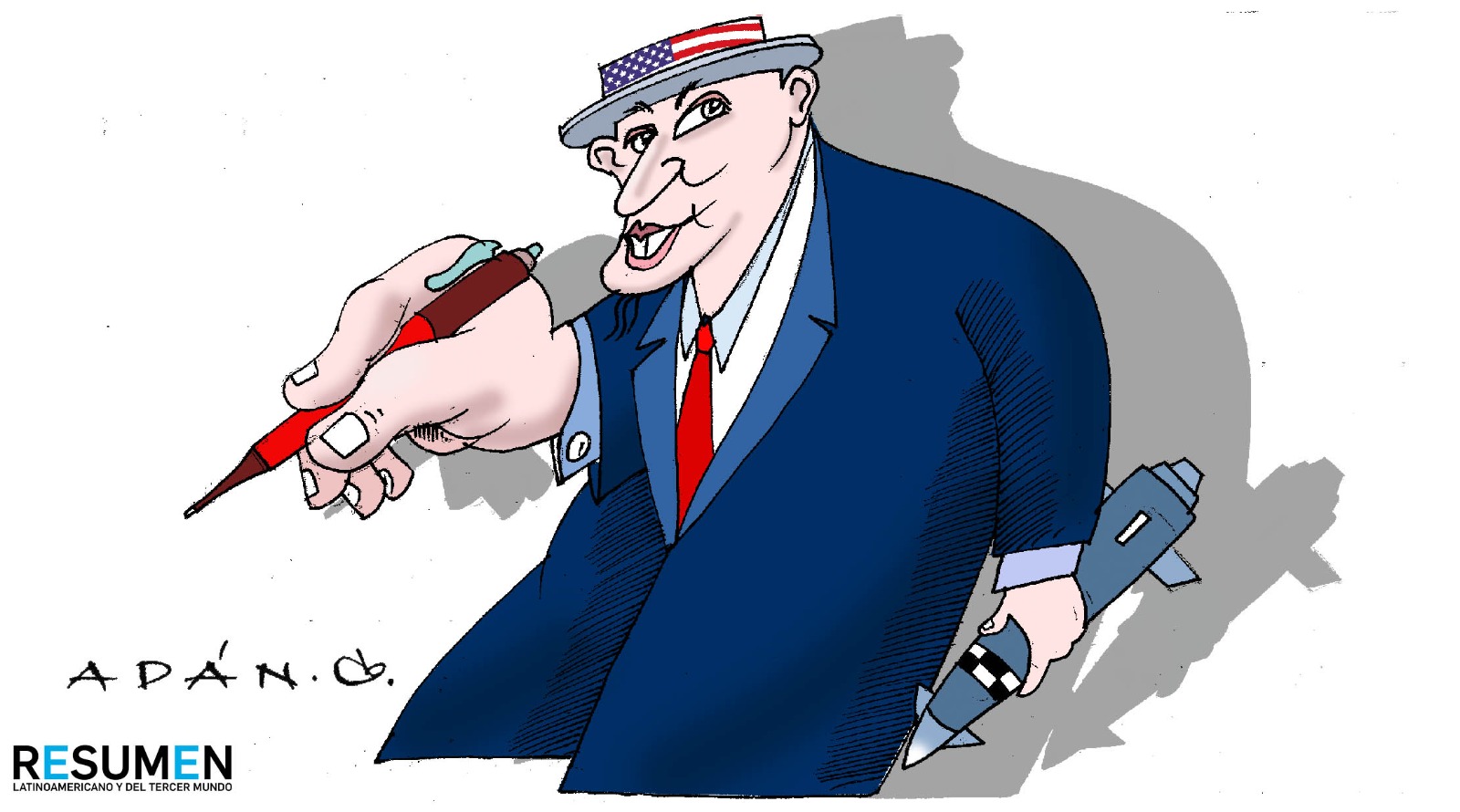
Despite the indiscriminate bombing of schools, hospitals, scientific research centers, and the general population, Iran’s resistance and offensive against the aggressors has persisted, prompting Trump to send a “15-point plan” to the Islamic leaders to find a way out of the impasse.
As if it were the victor of the conflict, the document proposes the easing of “sanctions,” monitoring of the Iranian program by the International Atomic Energy Agency, the elimination of all long- and medium-range missiles, and the opening of the Strait of Hormuz. However, it makes no mention of the devastation caused, the murders of Iranian leaders, and of children, women, and the elderly, which would go unpunished.
As expected, Tehran rejected these demands and presented its own countermeasures because it does not accept surrender as stipulated in the document.
It, in turn, outlined six points for a ceasefire:
1. Firm guarantees that there will be no new war.
2. Closure of all US military bases in the Middle East.
3. Full reparations from the United States and Israel for the damage caused.
4. An immediate end to operations on all regional fronts, including attacks against groups allied with Iran.
5. A new legal framework for the Strait of Hormuz.
6-Handing over to Iran individuals linked to “hostile media” for prosecution.
Throughout its millennia-long history, Iran has learned that making concessions in negotiations with a powerful and overbearing enemy has never worked.
Recent examples have demonstrated this. In Iraq, Saddam Hussein negotiated a ceasefire in 1991, brokered by a UN coalition led by the United States, withdrew from Kuwait, and the war temporarily halted. Afterward, he was subjected to 12 years of aggressive “sanctions,” leaving his infrastructure devastated and unable to import medicine and food, resulting in the starvation deaths of over 500,000 children and elderly people.
Following a massive campaign based on the lie that the regime possessed weapons of mass destruction, and with the country completely weakened, in 2003, the coalition led by the United States and Great Britain attacked, ravaged Iraq, and killed Saddam Hussein. Negotiating under false pretenses worked for them because they weakened the government and seized control of Iraqi oil.
The situation was similar in Libya. Muammar Gaddafi intervened in foreign oil companies, attempted to create a regional currency to replace the dollar, raised the standard of living for his population, and had the highest GDP per capita in Africa with free healthcare and education. But his example proved unforgivable to the West’s oil ambitions, which gradually closed all doors to him until, in 2003, they forced him into negotiations.
As a result, he had to abandon his weapons program, allowed international inspectors to dismantle his nuclear program, cooperated with US intelligence against Al Qaeda, and “normalized” relations with the West.
None of it mattered. The country was further isolated until, in 2011, NATO, led by the United States, the United Kingdom, and France, violently bombed the country for seven months. Gaddafi was captured and killed.
Today it remains a devastated state plagued by clashes between armed gangs, but the West achieved its objective: to destabilize a troublesome government in a region rich in oil.
In Venezuela, following the January 3rd attack on several locations and the kidnapping of its legitimate president, Nicolás Maduro, and his wife, Cilia Flores, a kind of “negotiation” has been established whereby the United States receives the nation’s oil and manages the profits from its sale. So far, the country has remained calm, and everyone is waiting to see what the future consequences will be.
In the case of Iran, it has been attacked twice while “serious meetings” with Washington were taking place or were planned. The first attack occurred on June 13, 2025, when a meeting was scheduled for June 15th. Iran had to defend itself for 12 days and essentially make the aggressors understand that their losses would be significant. A few months later, they proposed resuming talks. Negotiations began, but on February 28th, the same tactic was repeated, even though both sides had agreed to meet in Vienna.
Iran knows its aggressors intimately, has confronted them with courage and intelligence, and understands, as the Heroic Guerrilla Ernesto Che Guevara taught us, that “imperialism cannot be trusted even a little bit.”
IMAGE CREDIT: Cover image: Adán Iglesias Toledo
(*) Hedelberto López Blanch is a renowned Cuban journalist. He writes for the newspaper Juventud Rebelde and the weekly Opciones. He is the author of “Cuban Emigration to the United States,” “Secret Stories of Cuban Doctors in Africa,” and “Miami, Dirty Money,” among others.
SPECIAL THANKS TO THE AUTHOR: Hedelberto López Blanch
[ SOURCE: RESUMEN LATINOAMERICANO Y DEL TERCER MUNDO CUBA / EN RESUMEN ]