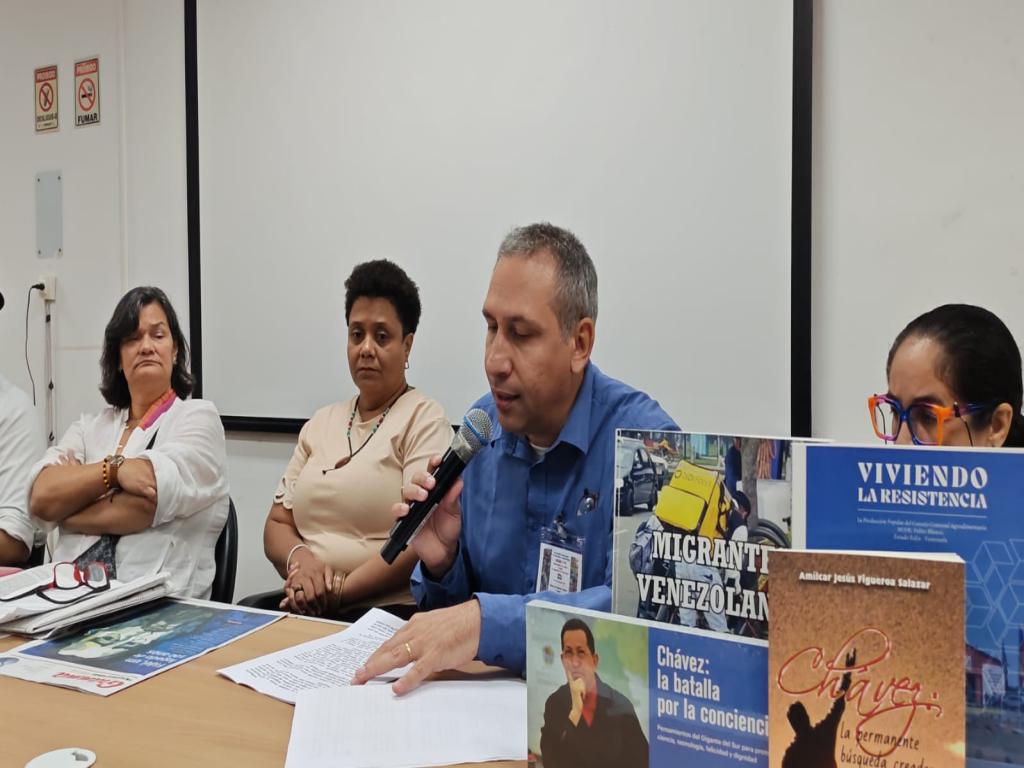
Cuba is facing one of the most complex moments since the triumph of the Revolution, amid the intensification of the U.S. blockade, yet it maintains its capacity for resistance and the defense of its sovereignty, a Cuban diplomat stated in Brasilia on Saturday.
Speaking at the 19th International Seminar on Struggles against Neoliberalism, Vladimir Falcón, Counselor at the Cuban Embassy in Brazil, described the current situation as one of the greatest offensives the island has faced since 1959.
He maintained that Washington’s policy is multidimensional, combining economic, financial, energy, diplomatic, and media-related pressures that, he asserted, seek to paralyze the country, isolate it, and call its political system into question.
Falcón specifically highlighted the impact of new measures adopted this year by the United States, stating that restrictions on fuel supplies and secondary sanctions against foreign companies have exacerbated the difficulties in ensuring commercial operations and the supply of goods.
Added to these actions, he explained, are the accumulated consequences of the economic, commercial, and financial blockade and the impact of the COVID-19 pandemic—factors that, he noted, contributed to the deterioration of the Cuban economy.
The Cuban counselor recalled that the United Nations General Assembly once again spoke out against the U.S. blockade in October 2025, when 165 countries backed a resolution calling for its lifting, against seven votes in opposition and 12 abstentions. According to Falcón, Cuba possesses experience in dealing with scenarios of extreme pressure—such as the so-called “Special Period” of the 1990s following the collapse of the Soviet Union and the socialist bloc, a time when the island lost a significant portion of its markets and supply sources.
The Cuban diplomat noted that the crisis of that era compelled the country to diversify its international economic relations, develop new revenue streams, attract foreign investment, boost tourism, and expand its domestic productive and scientific capabilities.
In this regard, he linked the country’s current resilience to the legacy of Fidel Castro (1926–2026)—whose centenary is being commemorated this year—and highlighted the defense of sovereignty, independence, national unity, and international solidarity as core principles.
Vladimir Falcón also underscored Cuba’s cooperation with Global South nations—particularly in the fields of health and education—as part of a foreign policy that, he maintained, enabled the island to expand its international ties and overcome previous periods of isolation.
Addressing the capabilities available to tackle the current situation, he cited Foreign Minister Bruno Rodríguez, who highlighted resources such as oil, nickel, cobalt, arable land, and water, alongside the development of the technology and biomedicine sectors.
The counselor concluded that Cuba is facing the current situation with “unity, creativity, and courage,” asserting that the country’s historical experience demonstrates the possibility of withstanding external pressures while preserving national sovereignty.
[ SOURCE: PRENSA LATINA ]