Between February 1 and 15, 2026, a wave of calls for violence and civil disobedience against Cuba swept across digital platforms. Despite its media stridency, it failed to translate into real mobilization within the island.
The analysis by the Cubadebate Media Observatory documents in detail how dozens of posts—mostly from profiles located outside of Cuba and disseminated primarily on meta-platforms—sought to create a sense of imminent collapse, but lacked the minimum elements necessary to transform the noise into collective action.
“They originate mostly from profiles located outside the island, were disseminated primarily on meta-platforms—through Facebook, Instagram, and WhatsApp—and share the same outcome: none managed to translate into real mobilization within the country,” states the report from the Cubadebate Media Observatory.
Far from being spontaneous, the analyzed pieces respond to a technical and repetitive repertoire: astroturfing, synchronized rumors, artificial spikes in interaction, and micro-segmentation aimed at producing emotional impact rather than political organization. The iconography used—hooded faces, red backgrounds, maximalist slogans—was designed to function as a meme and portable symbol, suitable for circulating in screenshots, reels, and WhatsApp chains, but not for sustaining logistics, leadership, or territorial nodes.
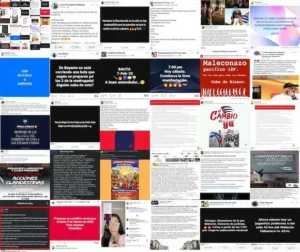
Cover images of the analyzed calls to action Image: Cubadebate
Consequently, the virality achieved by many posts was niche: intense within circles hostile to the Cuban government, but incapable of generating widespread resonance or sustained channels of coordination.
The report also warns of a deliberate tactic: provocation through overexposure. By designing content that is easily denounced, its promoters seek to have authorities or media outlets reproduce it, thereby granting it legitimacy and algorithmic reach.
This media feedback loop transforms a marginal post into a public issue and multiplies its circulation, even though its actual capacity for mobilization remains nil. Therefore, the Observatory recommends not publicly overemphasizing this content and, instead, reporting it specifically for incitement to violence while shifting attention to narratives of social normalcy and community organization.
This phenomenon is part of a broader context of external pressure on the island: sanctions, smear campaigns, and communication operations aimed at eroding the legitimacy of the Cuban government have intensified in recent years.
February 2026 coincided with a moment of heightened social sensitivity, marked by economic hardship and international media coverage that amplified external threats. This fertile ground was exploited by actors based primarily in the United States and other countries to launch messages that appealed to an “all or nothing” mentality and, in several cases, to explicit violence.
However, the gap between the digital noise and the material reality within the country was once again evident: mobilizing on social media is relatively easy; mobilizing in the streets requires structure, roots, and leadership — elements absent in these operations.
Beyond this specific episode, the Observatory’s report raises a reflection on the nature of contemporary cognitive warfare: its objective is not always to provoke an immediate explosion, but rather to erode trust, induce collective anxiety, and prepare the ground for narratives of collapse that legitimize diplomatic pressure or external interventions.
In this sense, the communication strategy of those promoting these campaigns seeks to undermine public opinion, narrow perspectives, and polarize the situation—conditions that facilitate the acceptance of extreme measures or the normalization of external control.
The most effective response, the Observatory concludes, is neither media amplification nor visceral reaction, but rather a combination of technical and political measures: timely reports to platforms for incitement to violence, strengthening community information channels, and the sustained promotion of verifiable narratives that ground the conversation in the daily realities of communities.
For communicators and authorities, the priority must be protecting social normalcy and safeguarding local information spaces against disinformation campaigns that seek to transform marginal issues into mainstream ones.
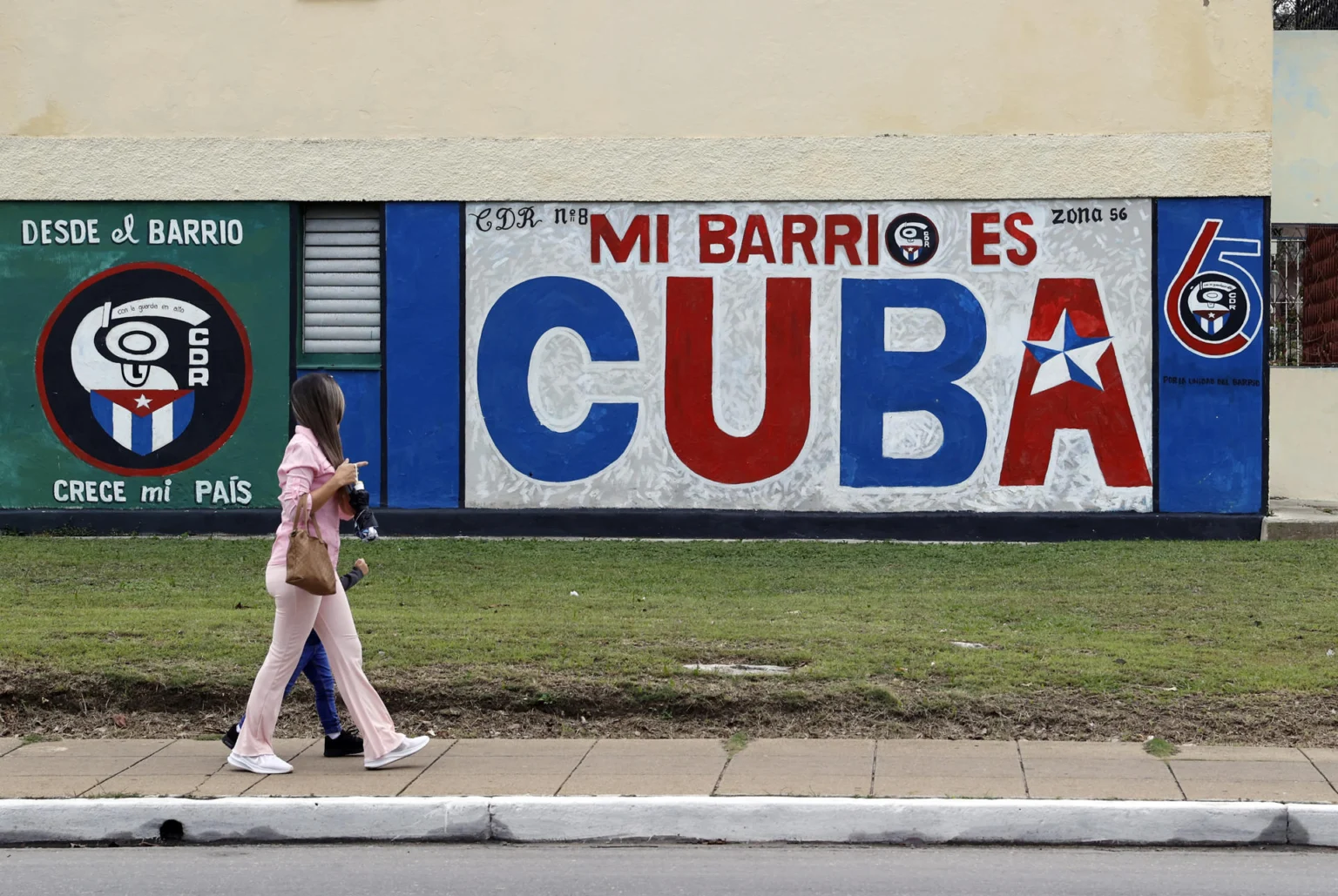
The February events confirm a constant in the contemporary Cuban landscape: a lot of digital noise does not equate to real social force.
The agitation operations detected function as instruments of psychological pressure and narrative construction from the outside, not as mechanisms for internal mobilization. In this clash between appearance and reality, informational resilience and the strength of community ties emerge as the best barriers against the instrumentalization of social media.
IMAGE CREDIT: The February episode confirms a constant in the contemporary Cuban landscape: a lot of digital noise does not equate to real social force. Photo: EFE
[ SOURCE: teleSUR ]