By Michel Torres Corona (*)
The propaganda against Cuba insists on portraying the Cuban people as “sheep” who, out of cowardice and submission, don’t dare to confront the “cruel dictatorship.” However, Cuban history is full of examples of men and women who knew how to raise their voices or confront—risking their lives or potential comforts—despotic powers and corrupt leaders.
Almost legendary is the Protest of Baraguá, when the equally mythical Antonio Maceo decided, in 1878, not to sign the Pact of Zanjón and to continue the war against Spain, despite being overwhelmingly outmatched. But it is neither legend nor myth: it happened. Maceo met with Captain General Arsenio Martínez Campos and made it clear that an armistice without independence for the nation and the abolition of slavery was unacceptable. What would later be known as the Ten Years’ War ended in defeat for the Mambí troops, but the dignified example set at Baraguá was—and remains—a source of inspiration for Cuban revolutionaries.
Also historic is the Protest of the Thirteen, led by a group of young people, headed by Rubén Martínez Villena, who denounced the corruption of Alfredo Zayas’s government. The year was 1923, and the new generations were clashing with figures who had achieved renown in the 19th-century struggles (such as Zayas himself, and others of similarly tragic notoriety, like José Miguel Gómez, Mario García Menocal, and Gerardo Machado). The situation of the neocolonial republic, ruled by American puppet governments and shackled by the Platt Amendment imposed on the Constitution during the military intervention, provoked shame and indignation among young patriots.
It is impossible to forget the lawyer Fidel Castro Ruz and his legal denunciation of Fulgencio Batista’s coup d’état on March 10, 1952. Armed with moral authority and compelling arguments, Fidel demanded a severe sentence for Batista, which, of course, never materialized. The authorities ruled that what had occurred was not a coup but a “revolution” and that, therefore, this was a legitimate “source of law.” Fidel would later respond by calling this act a “power grab,” and thus begin to plan a true Revolution that would triumph years later, on January 1, 1959.
The enemies of the Revolution, disregarding the history of our people, have accused the Cuban socialist state—during the second half of the 20th century and into the 21st—of repressing all exercises of individual political freedom, including protest. They do not, of course, recognize the collective exercise of these freedoms in the massive demonstrations that, for decades, have filled the spaces of the Plaza de la Revolución and the Anti-Imperialist Tribune, to mention only two emblematic locations in Havana.
However, the current Cuban Constitution (in effect since 2019) also recognizes individual political rights, including the right to demonstrate. And in practice, when peaceful demonstrations have occurred (some even without authorization from the relevant institutions, in violation of regulations), there has been no repression or arrests. A few days ago, to cite just one example, some 30 students staged a peaceful sit-in on the iconic steps of the University of Havana, protesting the distance learning system imposed due to the current energy crisis caused by the tightening of the US embargo.
If we were to believe the propaganda against Cuba, there would have been deaths and injuries, and a violent deployment of repressive forces to put an end to the “audacity” of these young people. But the reality was quite different. The Cuban state’s response was dialogue. The university rector and the Minister of Higher Education met with the students and reached agreements. There were no legal consequences for them.
Of course, peaceful protest is one thing, and vandalism is quite another. Images of masked men destroying and burning the headquarters of the Communist Party of Cuba in Morón, Ciego de Ávila, circulated around the world. All the discontent and frustration accumulated due to the current complex situation cannot justify terrorism, gratuitous violence, or looting. The President of the Republic himself stated that the irritation is understandable, but there will be no impunity for those who break the law, for those who commit acts of aggression. And it wasn’t just the Cuban government: media outlets not aligned with the Cuban Revolution, such as Deutsche Welle and the BBC, also referred to these events in terms of “vandalism,” “looting,” etc.
The propaganda against Cuba is based on lies: in this country, people protest, denounce wrongdoing, raise their voices against injustice, and engage in daily debate, contrasting different opinions. We are not “sheep.” However, we are determined, together with the State, to defend our Constitution, defend the Revolution, and defend socialism. This is also our way of protesting against those who try to suffocate us.
(*) Michel E. Torres Corona, Cuban lawyer and communicator, host of the program “Con Filo” on Cuban Television. Director of the Nuevo Milenio publishing group, he also contributes to various media outlets in his country and around the world.
(**) Professor Adán Iglesias Toledo, Cuban graphic artist, editorial cartoonist, and director of the humor section DEDETE in the newspaper Juventud Rebelde, member of UNEAC, UPEC, and REDH (Cuba Chapter). He contributes to various media outlets in his country and abroad. Author of several logos and advertising campaigns, he has participated in multiple individual and collective exhibitions, workshops and national and international interventions and has been awarded more than 40 times in his country and other countries.
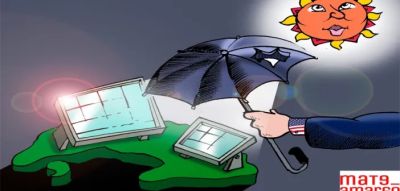
IMAGE CREDIT: Illustration by Adan Iglesias Toledo (**)
[ SOURCE: www.cubainformacion.tv ]