By Henry Omar Pérez
The narrative that attempts to portray Cuba as a failed state stems from a reductionist vision and is laden with political interests.
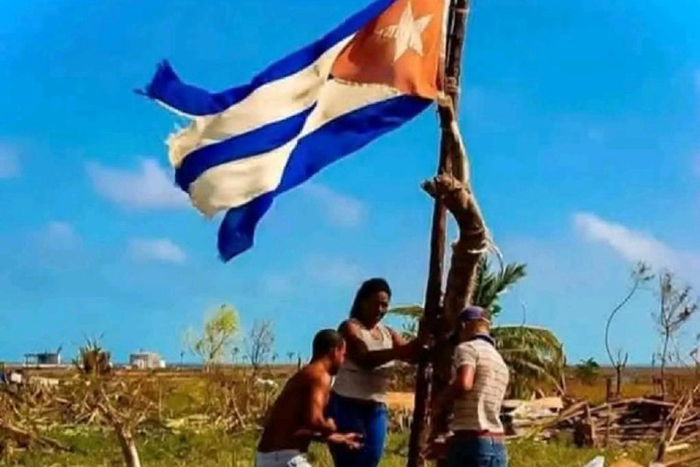
Such an assertion ignores the essence of what the Cuban nation represents: a people who, in the face of the harshest adversities, have demonstrated resilience, solidarity, and creativity, refuting any attempt to label it as a project doomed to collapse.
During the most difficult years of the Special Period, when daily life was radically transformed, the Cuban people’s response was neither resignation nor chaos.
It was organization, resourcefulness in overcoming shortages, and solidarity that sustained life at a time when the hatred and visceral cruelty of the powerful denied us access to the supplies and medicines necessary to save our people.
Instead of fracturing, society became more cohesive. This experience left a mark of resilience and creativity that still defines our national identity today.
In the global health crisis, Cuba once again demonstrated that its strength lies not in economic figures, but in human values. Collective discipline, mutual care, and the willingness of thousands of healthcare professionals to face the challenge, even beyond its borders, show that the island does not collapse: it rises again.
In response to the label of a failed state, Argentine sociologist, journalist, and researcher Jorge Norberto Elbaum explained to the Cuban News Agency that Cuba’s capacity to reinvent itself from the neighborhoods, from the workers, and from everyday solidarity is extraordinary.
Far from collapsing on its own, the island sustained itself thanks to solidarity, state organization, and the creativity of its citizens. That is its true strength: a society that invents new ways to sustain life every day, he affirmed.
When asked about those who insist on promoting the idea that Cuba is a failed state, Elbaum responded that this narrative is part of a strategy aimed at delegitimizing any alternative model to corporate capitalism; Cuba has demonstrated, in the most difficult scenarios—such as the Special Period or the Covid-19 pandemic—that its people possess a unique capacity for resilience.
UN News noted that the tightening of sanctions affects the enjoyment of human rights and called for an end to this punishment, recalling that generations of Cubans have lived under these measures.
In this regard, Special Rapporteur Alena Douhan described the United States’ sanctions as the longest-running policy of unilateral measures in US foreign relations.
A failed state is one that loses cohesion, identity, and a sense of belonging; Cuba, on the contrary, has cultivated a vibrant culture, a shared historical memory, and a national pride that is passed down from generation to generation.
Music, literature, sports, and popular traditions are living expressions of a people who recognize themselves in their diversity and find in them reasons to move forward.
When the gendarme of the north claims that Cuba will collapse on its own, it underestimates the strength of a people who have demonstrated, time and again, that their resilience does not depend on external circumstances or foreign rhetoric.
This island is not sustained by inertia, but by the conscious will of millions of people who, in the most difficult times, have known how to reinvent themselves and defend their collective life project, their identity, their faith, and their roots, which are the best inheritance given by their ancestors.
We are not a failed state because a failed state is one that renounces itself, that loses the capacity to sustain its social and cultural fabric.
This nation has demonstrated that its greatest wealth lies in its people: in solidarity, dignity, and the ability to face adversity without losing hope after more than 60 years of blockade and pressure. That is the true answer to those who await its downfall: Cuba does not collapse, Cuba reinvents itself.
[ SOURCE: AGENCIA CUBANA DE NOTICIAS ]