The occupants of the boat intercepted last Wednesday by Border Guard Troops on the north-central coast of Cuba aimed to infiltrate, incite public disorder, carry out violent acts, and attack military units, specialists from the Ministry of the Interior (Minint) reported in a televised appearance Friday night.
According to the investigation, two boats departed from Marathon Key, Florida, but one encountered difficulties en route, so the group transferred to the boat from which they opened fire on the Cuban personnel. An arsenal was seized from that boat, equipped with an outboard motor and radio navigation equipment, revealing the objectives of the operation.
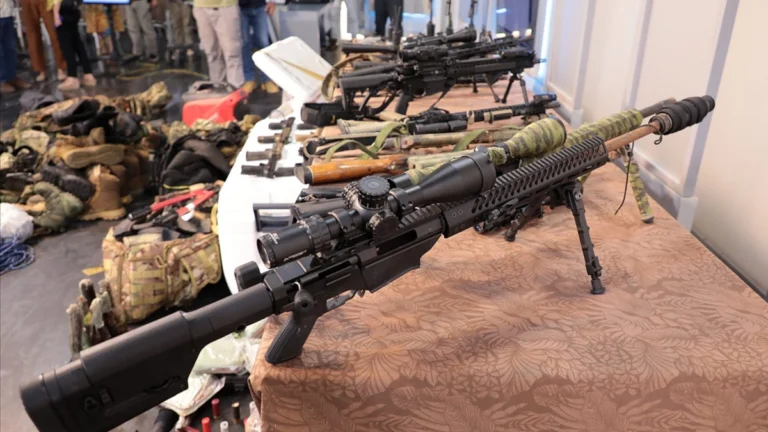
Minint officials specified that on the vessel, which was carrying approximately 1.8 tons of weight, they seized rifles of various calibers, a Winchester shotgun, DB AR-15 type rifles, a Delta rifle, 11 pistols, and an individual kit for each of the 10 occupants, which included a rifle, pistol, knife, camouflage uniform, medications, balaclavas, helmets, and other equipment.
All were carrying communication devices, vision equipment, and sterile supplies. Authorities also seized 134 magazines and 12,846 rounds of ammunition of different calibers, including 5.56×45 mm and 7.62 mm (AKM); a drone with two cameras, 10 communication devices, tactical knives, a portable generator, and bolt cutters.
Colonel Víctor Álvarez Valle, second-in-command of the specialized unit investigating crimes against state security, said that one of the seized pistols was capable of penetrating bulletproof vests.
He specified that the confiscated rifles have an effective range of up to 800 meters and were in perfect working order.
Terrorist infiltration attempt, February 25, 2026. Photo: Cubadebate.
According to Álvarez, among those implicated is Amijail Sánchez González, identified as one of the organizers and previously included on the national list of individuals linked to terrorist activities.
Identifying emblems were also seized on the boat, including those of the so-called November 30th counterrevolutionary movement and insignia of “people’s self-defense.” The high-ranking official from the Ministry of the Interior (Minint) indicated that the investigation points to Maritza Lugo Fernández, a resident of the United States and identified as the main promoter of the November 30th movement, as the intellectual authorship.
Attack and Neutralization of the Speedboat
During the televised appearance, First Colonel Ybey Carballo Pérez, Chief of Staff of the Border Guard Troops Directorate of the Ministry of the Interior (Minint), recalled that the incident occurred on February 25 near the outer edge of Cuban territorial waters.
At 7:10 a.m., the speedboat was detected by Border Guard Troops’ technical equipment 3.7 nautical miles inside territorial waters. “It was a suspicious vessel. Our interceptor boat number 25 was ordered to proceed with its identification,” the officer recounted.
He added that during the approach, the speedboat, of U.S. origin, began to move south at a speed of 24 knots. The border guards were 185 meters from their target when they were attacked with gunfire. The unit’s commander, Captain Yosmany Hernández Hernández, was wounded, “sustaining gunshot wounds to the abdomen and forearm, and bleeding profusely.”
The Cuban crew, consisting of five personnel, returned fire, and in the ensuing exchange, three of the ten occupants of the offending vessel were killed, and seven were wounded.
The Chief of Staff of the Border Guard Troops Directorate emphasized that “despite being wounded, the captain did not abandon the helm” and stressed that the reaction was “correct, energetic, and firm,” in accordance with established protocols.
Once the attack was neutralized, the wounded were evacuated and taken to hospitals. In contrast to what was seized on the boat that was part of the operation for terrorist purposes, it was reported that the weaponry used by the Cuban side in the
The Chief of Staff of the Border Guard Troops Directorate emphasized that “despite being wounded, the captain did not abandon the helm” and stressed that the reaction was “correct, energetic, and firm,” in accordance with established protocols.
Once the attack was neutralized, the wounded were evacuated and taken to hospitals. In contrast to the weapons seized on the boat that was part of the terrorist operation, it was reported that the Cuban side’s weaponry in the confrontation consisted of three AKM rifles and one RPK light machine gun.
Colonel Víctor Álvarez Valle, second in command of the specialized unit for crimes against State Security, revealed that the exchange of fire occurred at a distance of approximately 20 meters.
The technical analysis revealed 13 bullet impacts on the Cuban vessel, located on the starboard side, in the hull and railings. “It is a nine-meter-long vessel. Only standard-issue weapons were used. There were no rocket launchers or other types of weapons, as has been speculated,” Álvarez Valle clarified.
The boat coming from the United States had 21 bullet impacts.
The Chief of Staff of the Border Guard Troops Directorate maintained that the border guards’ response strictly adhered to regulations, with a “gradual approach to the use of force against an offending target: first, they are identified, then pursued, escorted, and finally persuaded.”
He added that the use of weapons is a last resort. “We only respond with firearms when we are attacked. It is a rational and defensive model of action that prioritizes avoiding the use of weapons except in situations of direct aggression,” the Cuban official emphasized.
Terrorist Attempt and Criminal Records
Edward Robert Campbell, chief prosecutor of the Attorney General’s Office of the Republic of Cuba, reported in a televised appearance that several of those involved in the attempted terrorist infiltration were previously included on the national list of individuals linked to terrorism.
He specified that the detainees, who are being held in pretrial detention, face charges of armed assault, illegal entry into the national territory, and crimes associated with terrorist acts, violence, and illicit arms trafficking. The legal framework for terrorism provides for sentences ranging from 10 to 15 years in less serious cases, and up to 20 or 30 years of imprisonment or the death penalty in the most serious.
Campbell noted that due process has been respected and that the case file was formally received by the Attorney General’s Office. He explained that, since the attacks were financed from abroad, those involved outside the country could also face charges of financing terrorism.
Furthermore, the chief prosecutor of the Attorney General’s Office pointed out that U.S. legal provisions regarding navigation and weapons possession were violated.
Colonel Dr. Juan Antonio Ramírez, head of Medical Services at the Ministry of the Interior, reported that Captain Yosmany Hernández Hernández, commander of the attacked Border Guard vessel, is recovering well and is out of danger.
Meanwhile, the injured detainees are receiving medical attention with all necessary resources. “It is an ethical practice of our institutions to provide assistance without discrimination,” he stated.
In summarizing the appearance, First Colonel Ybey Carballo Pérez, Chief of Staff of the Border Guard Troops Directorate of the Ministry of the Interior (Minint), emphasized that Cuba maintains operational cooperation with the United States Coast Guard in matters of migration, combating drug trafficking, and search and rescue.
Regarding the incident of February 25, he said, there was an exchange of information almost in real time with the liaison officer at the U.S. Embassy, representing the State Department; with the U.S. Coast Guard; and with authorities in Miami, who were informed.
Attack and Neutralization of the Speedboat
During the televised appearance, First Colonel Ybey Carballo Pérez, Chief of Staff of the Border Guard Troops Directorate of the Ministry of the Interior (Minint), recalled that the incident occurred on February 25 near the outer edge of Cuban territorial waters.
At 7:10 a.m., the speedboat was detected by Border Guard Troops’ technical equipment 3.7 nautical miles inside territorial waters. “It was a suspicious vessel. Our interceptor boat number 25 was ordered to proceed with its identification,” the officer recounted.
He added that during the approach, the speedboat, of U.S. origin, began to move south at a speed of 24 knots. The border guards were 185 meters from their target when they were attacked with gunfire. The unit’s commander, Captain Yosmany Hernández Hernández, was wounded, “sustaining gunshot wounds to the abdomen and forearm, and bleeding profusely.”
The Cuban crew, consisting of five personnel, returned fire, and in the ensuing exchange, three of the ten occupants of the offending vessel were killed, and seven were wounded.
The Chief of Staff of the Border Guard Troops Directorate emphasized that “despite being wounded, the captain did not abandon the helm” and stressed that the reaction was “correct, energetic, and firm,” in accordance with established protocols.
Once the attack was neutralized, the wounded were evacuated and taken to hospitals. In contrast to the weapons seized on the boat involved in the terrorist operation, it was reported that the Cuban side’s weaponry in the confrontation consisted of three AKM rifles and one RPK light machine gun.
Colonel Víctor Álvarez Valle, second in command of the specialized unit investigating crimes against state security, revealed that the exchange of fire occurred at a distance of approximately 20 meters.
The technical analysis revealed 13 bullet impacts on the Cuban vessel, located on the starboard side, in the hull and railings. “It is a nine-meter-long vessel. Only standard-issue weapons were used. There were no rocket launchers or other types of weapons, as has been speculated,” Álvarez Valle clarified.
The boat from the United States had 21 bullet impacts.
The Chief of Staff of the Border Guard Troops Directorate maintained that the border guards’ response strictly adhered to regulations, employing a “gradual approach to the use of force against an offending target: first, identification; then, pursuit; escort; and finally, persuasion.”
He added that the use of firearms is a last resort. “We only respond with firearms when we are attacked. It is a rational and defensive operational model that prioritizes avoiding the use of weapons except in situations of direct aggression,” the Cuban officer emphasized.
Terrorist Attempt and Criminal Records
Edward Robert Campbell, Chief Prosecutor of the Attorney General’s Office of the Republic of Cuba, reported in a televised address that several of those involved in the attempted terrorist infiltration were previously included on the national list of individuals linked to terrorism.
He specified that the detainees, who are being held under pretrial detention, face charges of armed assault, illegal entry into the national territory, and crimes associated with terrorist acts, violence, and illicit arms trafficking. The legal framework for terrorism provides for sentences ranging from 10 to 15 years in less serious cases, and up to 20 or 30 years of imprisonment or the death penalty in the most serious.
Campbell noted that due process has been respected and that the proceedings were formally received by the Prosecutor’s Office. He explained that, since the acts were financed from abroad, those involved outside the country could also face charges for financing terrorism.
Furthermore, the chief prosecutor of the Attorney General’s Office pointed out that U.S. legal provisions regarding navigation and the carrying of weapons were allegedly violated.
Colonel Dr. Juan Antonio Ramírez, head of Medical Services at the Ministry of the Interior, reported that Captain Yosmany Hernández Hernández, commander of the attacked Border Guard vessel, is recovering well and is out of danger.
Meanwhile, the injured detainees are receiving medical attention with all necessary resources. “It is an ethical practice of our institutions to provide assistance without discrimination,” he stated.
In summarizing the appearance, First Colonel Ybey Carballo Pérez, Chief of Staff of the Border Guard Troops Directorate of the Ministry of the Interior (Minint), emphasized that Cuba maintains operational cooperation with the United States Coast Guard in matters of migration, combating drug trafficking, and search and rescue.
Regarding the incident of February 25, he said, there was an exchange of information almost in real time with the liaison officer at the U.S. Embassy, representing the State Department; with the U.S. Coast Guard; and with authorities in Miami, who were provided with details of the incident.
IMAGE CREDIT: On the offending boat, equipped with an outboard motor and radio navigation equipment, carrying 1.8 tons of cargo and 10 occupants, an arsenal was seized that reveals the objectives of the operation. Photo: Cubadebate.
[ SOURCE: AGENCIA CUBANA DE NOTICIAS ]