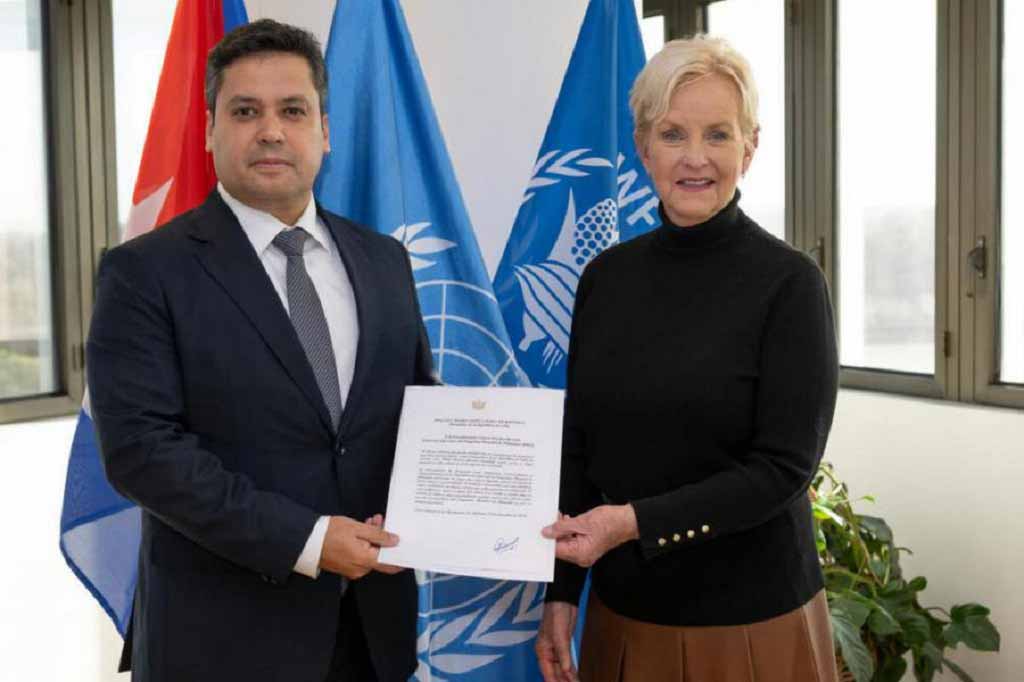
The Cuban ambassador to Italy, Jorge Luis Cepero, representative to the United Nations agencies in Rome, presented his credentials to Cindy McCain, director of the World Food Programme (WFP), according to a press release issued on Wednesday.
During the ceremony held on Tuesday at the organization’s headquarters, both parties reaffirmed their commitment to continue strengthening relations and expanding cooperation.
The Cuban diplomat conveyed the gratitude of his country’s government and people to the WFP for its support and timely response to emergencies and recovery efforts, according to a statement from the diplomatic mission.
Cepero specifically mentioned the recent immediate and sustained assistance provided by the UN program to the communities most affected by Hurricane Melissa, which struck eastern Cuban provinces in late October of last year.
Furthermore, the diplomat denounced the negative impact of the economic, commercial, and financial blockade imposed for more than six decades by the United States government against Cuba, the main obstacle to guaranteeing the food and nutritional security of the island’s population.
This criminal unilateral measure, reinforced after an executive order signed on January 29 by President Donald Trump, has unprecedented humanitarian consequences, as it hinders access to markets, financing, supplies, and technologies, and increases the costs of acquiring and transporting food, he emphasized.
For her part, the WFP Executive Director reaffirmed the organization’s commitment to its dual mandate of saving and transforming lives, and its purpose of supporting Cuba in the complex challenges facing the country.
McCain highlighted the program’s commitment to remaining an effective partner in updating the Cuban economic model, supporting local development projects, and promoting social protection policies.
In Cuba, the World Food Programme (WFP) prioritizes support for agricultural value chains for nutritious crops, from seed and field production to final consumption.
It also develops actions aimed at increasing farmers’ productivity and incomes, as well as reducing post-harvest losses, in order to guarantee a stable and diverse food supply for social safety nets, with a focus on nutrition.
Furthermore, it provides training, technical assistance, and equipment to small-scale farmers and other actors in food systems, with a focus on reducing the vulnerability of food production to extreme weather events and climate change.
This program, according to the organization’s official website, aims to increase crop yields and improve crop quality in Cuba.
[ SOURCE: PRENSA LATINA ]