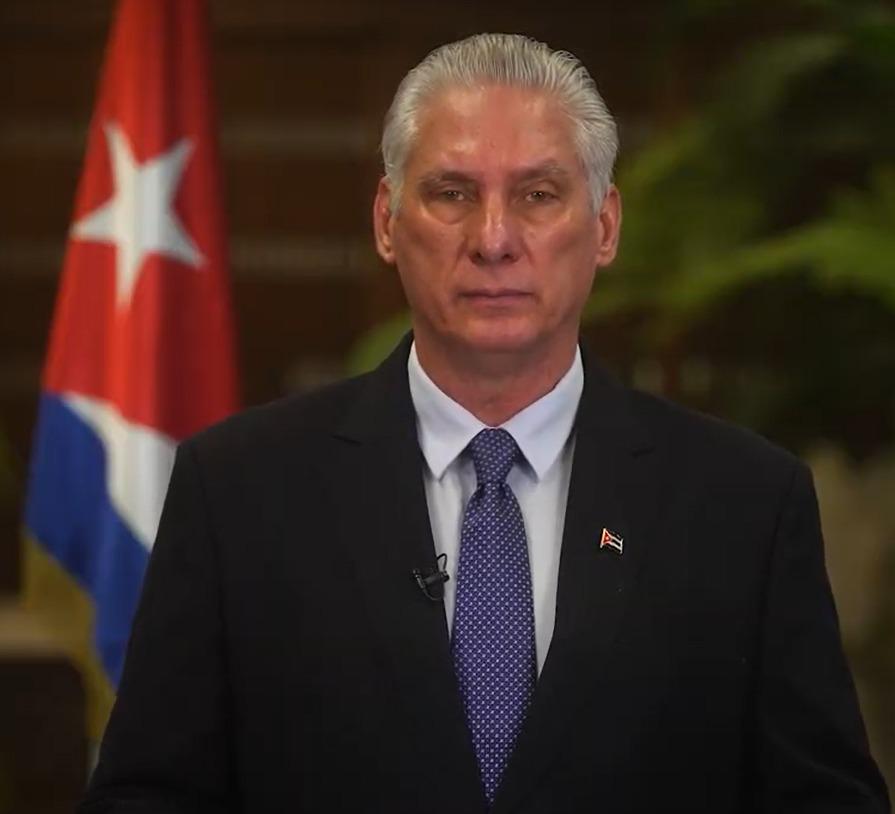
Cuban President Miguel Díaz-Canel has denounced that the United States’ energy blockade constitutes collective punishment that is suffocating the island, violating human rights, and leaving 96,000 people waiting for surgeries.
In a message sent to the Second International Conference against Coercive Measures, being held in Geneva, the Cuban president explained that the recent arrival of a Russian oil tanker with 100,000 tons of fuel was an extraordinary event due to the US threat to sanction any country that trades hydrocarbons with Cuba.
Díaz-Canel detailed that the policy of suffocation also affects 16,000 patients requiring radiotherapy and 2,888 patients on hemodialysis, whose lives are endangered by the paralysis of these services due to energy instability.
The head of state added that the prolonged power outages are affecting water and gas supplies, paralyzing transportation and food production, and have forced schools and universities to adopt hybrid learning models.
“By preventing the arrival of fuel, the United States government is flagrantly violating the human rights of an entire people,” he stated in the text read at the Swiss forum, where he described this policy as part of an economic war that has lasted more than 60 years and is designed to provoke social unrest.
The Cuban president questioned whether the international community will allow a return to “times of subservience and barbarism,” and demanded that the United Nations create a working group within the Human Rights Council and adopt a legally binding instrument that compels the lifting of the blockade and demands accountability.
Finally, Diaz-Canel thanked the High Commissioner and UN experts for their solidarity and affirmed that the Cuban people will defend “every inch of our homeland” against the “voracious appetite of the empire.”
Cuba is participating in the conference with a delegation headed by Deputy Foreign Minister Anayansi Rodríguez, who addressed the high-level plenary session.
Rodríguez emphasized that unilateral coercive measures have a direct impact on the daily lives of the Cuban population, affecting key sectors such as public health, transportation, production, and the country’s sustainability.
The deputy minister stressed that these practices contravene fundamental principles of International Law, including those enshrined in the Charter of the United Nations, such as sovereignty, non-interference in internal affairs, and the self-determination of peoples.
A declaration from the Group of Friends in Defense of the Charter of the United Nations was presented at the plenary session, strongly condemning all unilateral coercive measures and especially “the current escalation, excessive and brutal, of the United States blockade against Cuba.”
The conference, organized by the Special Rapporteur on Unilateral Coercive Measures, Alena Douhan, is being held under the theme “Humanitarian action, reparation and accountability in an environment of unilateral sanctions” and brings together representatives of governments, international organizations and experts in International Law.
[ SOURCE: PRENSA LATINA
]