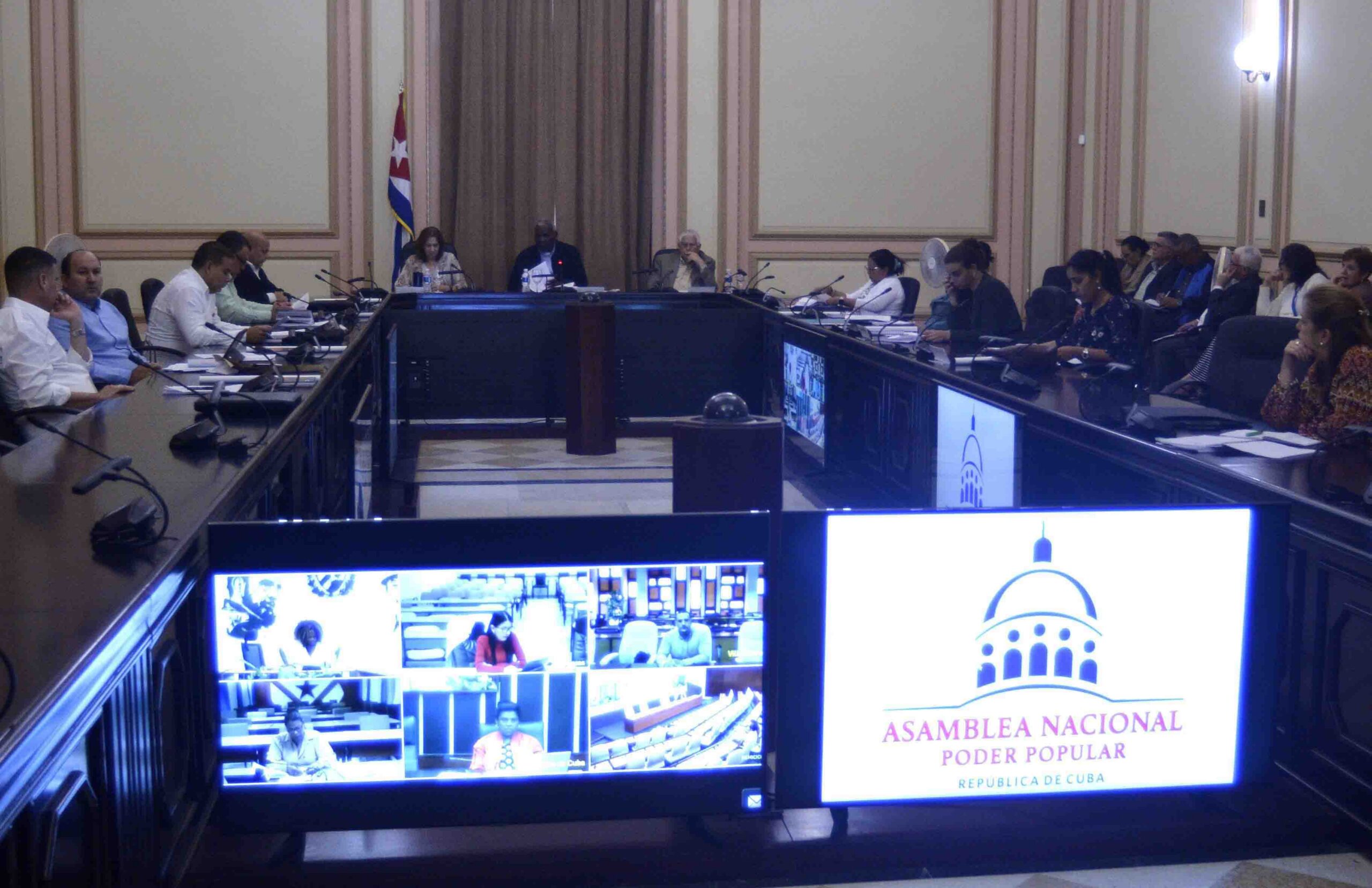
The Council of State reviewed the implementation of the Government’s Economic and Social Program for the year 2026 this Thursday, during a session presided over by Esteban Lazo Hernández, President of that body, and attended by Miguel Díaz-Canel Bermúdez, First Secretary of the Central Committee of the Party and President of the Republic, and Prime Minister Manuel Marrero Cruz.
According to the institutional website of the National Assembly of People’s Power, Marrero Cruz explained that since the previous meeting in February, work has focused on finalizing the update of the Program, establishing directives to address fuel shortages, and consolidating additional components for the Economic Plan and the State Budget.
He noted that the document was enriched with 10 general objectives, 111 specific objectives, 505 actions, and 309 indicators and targets—the result of a process of popular consultation and proposals submitted by the population.
Nancy Acosta Hernández, Head of the Directorate for Attention to Local Administrations of People’s Power within the Council of Ministers, reported on the implementation of general objective number five: “To advance in the improvement of strategic management for territorial development.” This objective is underpinned by reports and recommendations from commissions of the National Assembly of People’s Power.
Acosta Hernández specified that the central purpose is to drive economic and social development from the municipal and provincial levels, utilizing networks of actors with transformative capacity—as well as the application of science and innovation—all with broad popular participation. Among the regulatory provisions approved, he cited Decree 140, “On the Decentralization of Competencies and Transfer of Resources to the Territories,” and Decree 148, “Amending the Decree on the Strategic Management of Territorial Development,” alongside other complementary resolutions.
During the session, the general guidelines for the popular-participatory movement “My Neighborhood for the Homeland” were approved, comprising three lines of action: Safe Neighborhood, Participatory Neighborhood, and Productive Neighborhood—as explained by Ana María Mari Machado, Vice President of the Cuban Parliament.
Esteban Lazo underscored the significance of this movement in supporting the realization of the Government’s Economic and Social Program for 2026, fostering unity and creativity at the local level. This initiative is inspired by the centenary of the birth of the historic leader of the Cuban Revolution, Commander-in-Chief Fidel Castro Ruz, and the 50th anniversary of the People’s Power system.
The Council of State also approved a decree-law amending Law No. 1307, which mandates the renaming of the Higher Institute of International Relations to the “Raúl Roa García” University of International Relations. This was explained by Walter Baluja, Minister of Higher Education, who was accompanied by Rogelio Sierra, the institution’s Rector.
Additionally, the Council reviewed compliance with Law No. 132 regarding the organization and functioning of Municipal Assemblies and People’s Councils, as well as an assessment of Agreement X-23 concerning the relationship between parliamentary deputies and their constituents.
Finally, the Council of State extended its recognition and gratitude to the “Nuestra América: Convoy to Cuba” initiative—comprising parliamentarians from various nations and Members of the European Parliament—for their support and solidarity with Cuba in the face of the blockade.
IMAGE CREDIT: ACN | Photos: Tony Hernández Mena
[ SOURCE: AGENCIA CUBANA DE NOTICIAS ]