By Hedelberto López Blanch* / Special Collaboration for Resumen Latinoamericano.
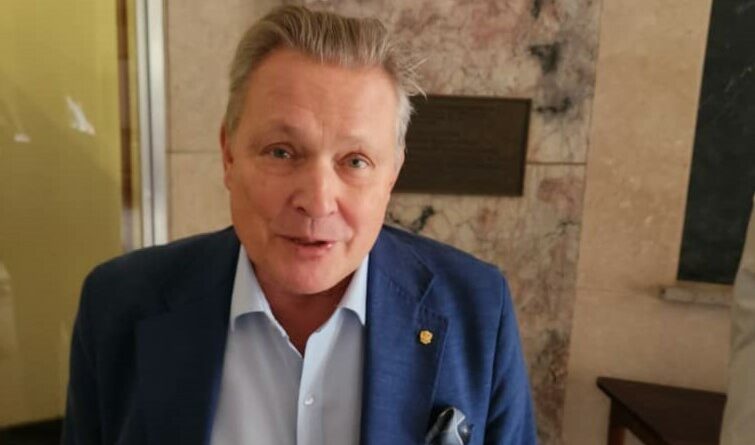
Since the experienced diplomat assumed his high-ranking post in Cuba in February 2023, relations between the two countries have continued to strengthen. To learn his views on this and other aspects, Cubaenresumen spoke with Viktor Koronelli, who previously represented his country in Argentina and Mexico.
—Moscow and Havana have had a very strong relationship since the triumph of the Revolution in 1959; initially with the USSR and later with the Russian Federation. How do you assess them at this time?
Koronelli: The ties between our sister nations have a long history, dating back to the 18th century, but undoubtedly, with the triumph of the Revolution and thanks to the personal contribution of our Historical Leader, Fidel Castro Ruz, they gained new momentum. In May 2025, we celebrated the 65th anniversary of the re-establishment of diplomatic relations between the then USSR and Cuba. This historic and cherished relationship has stood the test of time.
We can describe our bilateral ties as excellent. We have a very energetic and productive political dialogue at the highest level. We highly value the fact that the First Secretary of the Central Committee of the Communist Party of Cuba, President of the Republic Miguel Díaz-Canel Bermúdez, was with us on a day sacred to all the inhabitants of our country, joining us in the military parade in Red Square to commemorate the 80th anniversary of the Victory in the Great Patriotic War. It is a gesture that resonates in millions of hearts.
I think I’m not wrong in saying that our relations are developing successfully in several areas. We are making progress and things are going quite well.
-In recent months, Russia and Cuba have held intensive exchanges of delegations and signed trade and economic agreements, but there seems to have been some stagnation. In that regard, how have the MIR cards been implemented on the island? Are there any proposals for collaboration with Cuba to help it overcome the energy crisis it is suffering due to the obsolescence of its thermoelectric plants and the lack of fuel?
Koronelli: I wouldn’t say we are observing any stagnation at the moment if we are talking about the economic and trade sphere. But it is true that we are not taking full advantage of the existing potential. Our common challenge over the last few years has been to elevate material cooperation to the level of political dialogue.
Among the achievements, we must mention the start of the use of the MIR payment system cards, thanks to which all Russian visitors and even officials of our Embassy can purchase goods and services without having to resort to cash. This is an important step in bringing our financial systems closer together, generating additional sources of income for the Cuban economy.
There are other initiatives at various stages of implementation. For example, the project to increase oil production at the Boca de Jaruco field, being carried out by the Zarubezhneft company, is already entering commercial operation. Obviously, the energy sector is key to revitalizing the Cuban economy. Prospects for modernizing some existing units at Cuban power plants are being analyzed.
-The new administration of President Donald Trump has intensified the economic, commercial, and financial blockade against Cuba, which has led to a substantial deterioration of the Cuban economy. At the same time, Havana has offered greater opportunities for foreign investment in various sectors: Are there possibilities for new Russian investments in Cuba?
Koronelli: The US administration has unfortunately once again chosen the path that only brings more suffering, but it will never be able to undermine the Cuban people’s firm will to continue on their own path of development. Therefore, I reiterate once again our principled position: it is necessary to end the cruel and criminal economic, commercial, and financial blockade of the Island, as well as to remove Cuba from the so-called list of State Sponsors of Terrorism.
It is well known that Cuba rigorously fulfills its international commitments in the fight against this scourge. All accusations against Havana in this regard are ridiculous. On the contrary, in recent decades Cuba has been the victim of terrorist acts and sabotage, and everyone knows very well who orchestrated them.
Speaking of the prospects for Russian investors, in recent years, thanks to the coordinated work of our governments, particularly within the framework of the Russian-Cuban Intergovernmental Commission for Economic, Trade, and Scientific-Technical Cooperation, favorable conditions have been created for the implementation of joint projects. Despite attempts to stifle the Cuban economy, Cuba remains an attractive destination for our businesspeople, primarily due to its human capital and economic potential. This was also evident at the inauguration of the Russian pavilion at FIHAV, which was attended by the heads of three Russian regions: St. Petersburg, the Republic of Mordovia, and the Ryazan Region. The new measures adopted by the Cuban government will undoubtedly provide further incentive for Russian business circles.
What is the current situation in the Ukrainian-Russian conflict, and what are the prospects for achieving peace almost four years after Russia declared the Special Military Operation to demilitarize and denazify Ukraine?
Koronelli: The Armed Forces of the Russian Federation continue to carry out the tasks assigned to them within the framework of the Special Military Operation and are advancing along the entire front. At the same time, I would like to reiterate that Russia has never rejected the path of negotiations and has always advocated for a peaceful resolution of the conflict. We are prepared to use all diplomatic avenues and work on projects that are currently under consideration.
President Vladimir Putin stated: Russia is not plotting to attack NATO countries or the European Union and is prepared to legally demonstrate this, but at the same time, it has the means and resources to respond to any external aggression.
We will continue to provide a firm response within the framework of the Special Military Operation to the hostile policies of the Kyiv regime toward the Russian-speaking population. In early December, President Putin held talks with Steve Witkoff, special envoy of the US administration. The US proposals could serve as a starting point for future work, building on the agreements reached at the bilateral summit in Alaska. Ukraine must return to its neutral, non-nuclear, and non-aligned status. The motivation for our actions in the Special Military Operation is the need to guarantee the rights of Russians and Russian speakers in Ukraine.
Eliminating the root causes of the Ukrainian crisis is a necessary condition for achieving a just and lasting peace. The geopolitical errors of our adversaries, who underestimated the stability of the political system and the resilience of the Russian people, are the result of their irresponsible policies. Trying to evade responsibility, they are now increasingly resorting to militarization and escalation, particularly through the blatant theft of our country’s sovereign wealth funds.
Serious doubts about the mental capacity of the European elites have long existed. A few days ago, the chairman of NATO’s Military Committee, Giuseppe Cavo Dragone, went so far as to say, referring to the bloc’s reaction to the supposed “threats” from Russia, that “preemptive strikes could be considered defensive actions.” And other NATO members, such as Great Britain, have stopped concealing the direct involvement of their military forces in the hostilities. But all these efforts will be in vain: Russia will inevitably achieve its objectives despite all the obstacles.
(*) Hedelberto López Blanch is a renowned Cuban journalist. He writes for the newspaper Juventud Rebelde and the weekly Opciones. He is the author of “Cuban Emigration to the United States,” “Secret Stories of Cuban Doctors in Africa,” and “Miami, Dirty Money,” among others.
SPECIAL THANKS TO THE AUTHOR: Hedelberto López Blanch
[ SOURCE: RESUMEN LATINOAMERICANO Y DEL TERCER MUNDO CUBA / EN RESUMEN ]