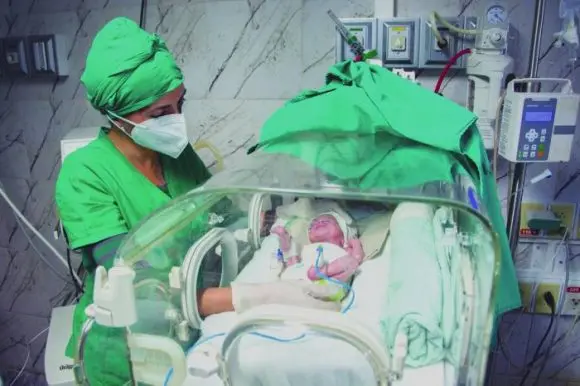
More than 32,880 pregnant women in Cuba face additional risks as a consequence of the intensification of the energy blockade imposed by the United States, the Ministry of Public Health (MINSAP) reported, warning of the direct impact that the fuel shortage is having on medical care and vital services of the health system.
According to official data, energy supply restrictions are primarily affecting the Maternal and Child Health Program, limiting pregnant women’s access to obstetric ultrasounds for fetal monitoring and genetic testing, essential for the timely diagnosis of malformations and complications.
The fuel shortage is also hindering the mobilization of medical teams responsible for evaluating cases of extremely severe maternal morbidity and critical newborns, in addition to causing delays in childhood vaccination schedules.
Health authorities indicated that these disruptions could significantly impact the 61,830 children under one year old who require special care during their first stage of life. Furthermore, care for children with specific needs, such as home ventilation, mechanical suction, and air conditioning, is jeopardized due to the unstable electricity supply and the limited availability of ambulances for urgent and emergency situations.
The Ministry of Public Health (MINSAP) warned that the situation also jeopardizes care for cancer patients, people with chronic non-communicable diseases, and the monitoring of programs related to communicable diseases, which could impact mortality rates.
Logistical limitations and increased supply costs
According to Cuban authorities, the tightening of US measures has led to greater difficulties in acquiring medicines, reagents, medical supplies, medical instruments, and spare parts for hospital equipment. This is compounded by the reduction in commercial flights and the increase in freight costs, which hinders the urgent arrival of supplies to the country.
The Minister of Public Health, José Ángel Portal Miranda, recently explained that the health system has adopted strategic measures to preserve the vitality of services amidst the current situation. Among these, he highlighted the concentration of essential services, the strengthening of the family doctor and nurse program, the prioritization of the maternal and child health program, and the reduction of hospital stays when clinically possible.
Surgical activity will also be reduced, prioritizing only emergency procedures, while ensuring care for patients with chronic conditions, including those requiring hemodialysis.
Sustained Efforts of Healthcare Personnel
Since the beginning of the COVID-19 pandemic, the Cuban healthcare system has faced a scenario of high logistical and financial pressure. Authorities maintain that the current energy blockade exacerbates the conditions for guaranteeing hospital services, intensive care units, and operating rooms.
Nevertheless, the Ministry of Public Health (MINSAP) assured that medical personnel and healthcare institutions remain committed to ensuring care for the population, prioritizing the most vulnerable cases and reorganizing resources to address the limitations arising from the economic context.
Cuban authorities have reiterated that the measures adopted by Washington constitute a policy of maximum pressure that directly impacts the lives of millions of people, while the government continues to implement adjustments to maintain essential services in the country.
CREDIT INDEX: Restrictions on energy supply are primarily affecting the Maternal and Child Health Program, limiting pregnant women’s access to obstetric ultrasounds for fetal monitoring and genetic studies, essential for the timely diagnosis of malformations and complications. Photo: Rafael Fernández Rosell / Granma
[ SOURCE: teleSUR / Granma ]