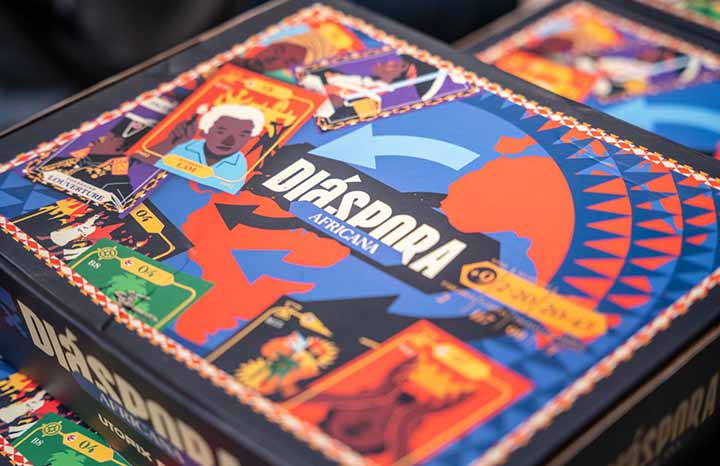
The United Nations Educational, Scientific and Cultural Organization (UNESCO) has presented the educational game “African Diaspora” with the aim of deepening knowledge about the history of that continent and its ties with the Caribbean.
At the event, held at the House Museum of Africa, located in the Historic Center of the City, this material was presented as a game box for schools and communities where teams discover hidden figures, places, traditions, and events of that region and its Caribbean descendants, using tools that enhance learning.
Anne Lemaistre, director of the UNESCO Regional Office in Havana, explained that this initiative arose from the desire to showcase the intangible cultural heritage of the island and the lack of educational tools for this purpose. Using board games, cards, comics, and other didactic materials, the project will convey new narratives based on the process of creating and consolidating the continent’s identity. She added that this resource aims to foster meaningful learning through playful activities, critical reflection, and collaborative work, contributing to the recognition of cultural diversity.
Miguel Barnet, president of the Fernando Ortiz Foundation, emphasized the importance of the African presence in the formation and transformation of the nation, highlighting the significant influence of African culture on the daily life and traditions that define the island.
He further emphasized the need for different generations to learn about the region and its influence in the Americas, from the arrival of the first slaves, to raise awareness of what is owed to a land that for centuries has been subjected to all kinds of discrimination and the plundering of its resources.
Zuleica Romay, coordinator of the Afro-American Studies Program at Casa de las Américas, pointed out that this learning tool is not only aimed at children and teenagers, but also at families, viewing education as a social endeavor that extends beyond the confines of educational institutions.
According to information provided by the UNESCO Regional Office, this version of “African Diaspora” reflects the continent’s impact on Cuba, the Dominican Republic, and Venezuela, and can be used in classrooms with up to 20 players or in small groups of two to five people over the age of nine.
During the event, this material was distributed to educational centers associated with UNESCO’s work, and the importance of integrating the strategy into the country’s educational system was reaffirmed. This will help prepare citizens to better face the challenges of today’s world. Students and teachers also shared their impressions of their first experience with the game.
The host institution was also recognized for its role in preserving African heritage in Cuba and its educational work through various activities.
Representatives from the Ministry of Education, university students, researchers, and members of the diplomatic corps from Venezuela, Angola, and Haiti accredited to Cuba participated in the event.
IMAGE CREDIT: Jessica Jimenez Gainza | Photo: Courtesy of UNESCO
[ SOURCE: AGENCIA CUBANA DE NOTICIAS ]