Radishes, lettuce, chard, okra, cabbage, beets, carrots, cucumbers, corn, and even medicinal plants grow in the school’s backyard, but the value of the garden goes beyond nutrition. For these children, working the land is also a form of rehabilitation.
“The fourth-grade students who wish to participate in the work, from planting to harvesting, which allows them to develop manual and cognitive skills,” explains Antonio Benito Hernández González, the farmer in charge of that area of crops.
“For them, it constitutes one of the different forms of occupational therapy at the center. It helps them move, coordinate, and feel useful.”
These products are used in the school cafeteria to enrich the diet of the 65 students and the hundred or so staff members.
“It’s a virtuous cycle,” says Ángela Margarita Díaz Mesa, a worker at the school.
“The children learn, receive therapy, eat better, and also feel proud of what they do. That’s priceless.”
And it certainly is priceless. The 652,161,241.96 pesos invested in 2025 to support the school, despite the U.S. economic, commercial, and financial blockade, wouldn’t be enough without the ingenuity, complementary projects, and partnerships the school has forged with the government and the community.
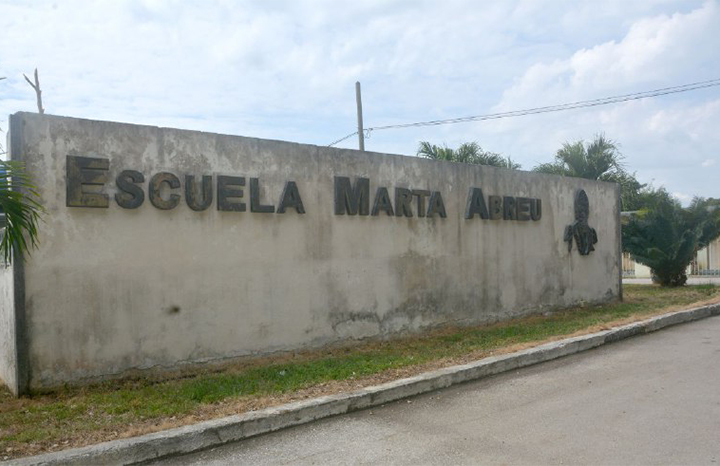
The Marta Abreu School is not an island. Faced with difficulties, it has built bridges.
The local development project Reluxes Herrería repairs wheelchairs. The Cultural Heritage Fund and other economic actors donate clothing, shoes, and personal hygiene items. The motorcycle patrol, an initiative of the National Revolutionary Police, sponsors quinceañera celebrations and recreational activities for young people.
Cultural and commercial institutions open their doors so children can visit—for example, on Sundays—the zoo or the virtual reality room on the city’s boulevard, free of charge.
Likewise, the National Office for the Control of the Rational Use of Energy in the province arranged the donation of 10 solar-powered lamps to help them cope with power outages.
“We don’t always have everything, but we try to make sure they have the best,” says Yadira Pascual Rodríguez, the regional director.
“The boarders receive sheets, towels, soap, toothpaste, and uniforms. The food, of course, includes breakfast, lunch, dinner, and three snacks a day; there is always milk and bread.
The same goes for school supplies: notebooks, pencils, books… they are guaranteed. There is always hot water, foam mattresses, and fans. We do everything humanly possible,” she explained.
The Specter of Fuel
But the fuel shortage is perhaps the most pressing problem. For a school that receives students from five provinces, transportation is vital. Trips, which used to be every 21 days, have been reduced to 11 to protect the children’s health and learning.
“We conducted a study and saw that when the students traveled for 21 days and rested at home for 10, in many cases they returned malnourished or sick,” explains Assistant Principal Mildred López Calero.
“Furthermore, for a patient with cerebral palsy, 10 days without rehabilitation means a setback. We would have to start all over again. That’s why we decided to shorten the passes: 11 days here and three at home. It’s less time away from their families and also less time without treatment,” he stated.
If fuel were to run out completely, the situation would be bleak. “They would have to go home,” Pascual Rodríguez admits. “And there, many don’t have access to physical therapy, to specialists. Some could receive outpatient care, but the teachers wouldn’t have a way to get there either. It would be very difficult. Very difficult. The blockade is endangering the lives of these children.”
IMAGE CREDIT: Y. Crecencio Galañena León | Phots: Arelys Echevarría Rodríguez and courtesy of the interviewees
[ SOURCE: AGENCIA CUBANA DE NOTICIAS ]