The hostile policy of the current US administration toward Cuba reached unprecedented levels of systematicity and cruelty in 2026.
Far from being isolated measures, this is a comprehensive plan encompassing all spheres of Cuban society, exacerbated in a context of global crisis, with the avowed objective of provoking ungovernability, subverting internal order, and overthrowing the Revolution through a genocidal economic, commercial, and financial blockade.
This new siege, described by analysts as a “surgical blockade,” is distinguished from previous phases by its precision in attacking sectors crucial to national survival: fuel, remittances, tourism, and medical cooperation.
Since returning to the White House on January 20, 2025, Donald Trump, accompanied by figures like Marco Rubio, has reversed any previous easing of restrictions and established a regime of unilateral measures that openly violate the Charter of the United Nations and the U.S. Constitution itself.
THE EXECUTIVE ORDER OF JANUARY 29: EXTRATERRITORIAL ENERGY STRICTNESS
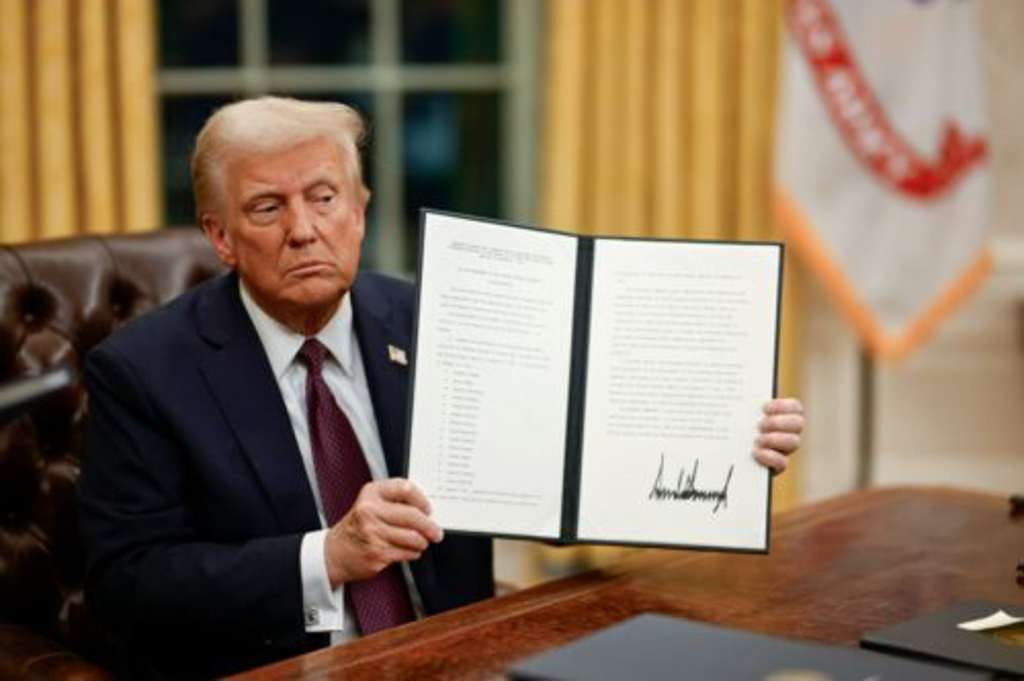
The cornerstone of this offensive is the Executive Order signed on January 29, 2026, which declares a “national emergency” based on the fallacy that Cuba constitutes an “unusual and extraordinary threat” to U.S. national security and foreign policy.
This order establishes punitive tariffs and secondary sanctions against any country, company, or shipping company that exports fuel to Cuba.
According to international law experts, this measure constitutes a flagrant violation of the sovereignty of third-party states. The UN Charter (Article 41) empowers only the Security Council to impose sanctions, and only in the face of genuine threats to peace.
Likewise, General Assembly Resolution 70/151 urges states not to adopt unilateral coercive measures. By sanctioning nations that have nothing to do with the bilateral conflict, Washington is overstepping the bounds of the concept of a blockade, transforming it into a tool of global hegemony that undermines the free development of peoples, a right enshrined in other international legal instruments.
Although the US Supreme Court recently declared certain tariffs illegal due to abuses of the International Emergency Economic Powers Act (IEEPA), the Trump administration has maintained monitoring and pressure mechanisms on crude oil suppliers, demonstrating that the objective is not legal, but political: to strangle the Cuban economy by cutting off its vital source of energy.
FINANCIAL DISMANTLING AND BANKING PERSECUTION
The “maximum pressure” strategy has systematically dismantled existing provisions, creating new coercive instruments.
The Office of Foreign Assets Control (OFAC) has intensified its crackdown on the island’s financial operations, as explained to Prensa Latina by Dr. Seida Barrera, a lawyer specializing in legal sciences.
Of the 22 monetary penalties recently imposed on companies for violating the embargo laws, nine have been specifically targeting the banking sector.
The result is a bleak outlook: mass account closures, transaction denials, and insurmountable obstacles for Cuban diplomatic and commercial missions abroad, due to the extraterritorial nature of the sanctions.
Furthermore, Barrera emphasized, Cuba’s reinstatement on the list of State Sponsors of Terrorism on the very day of Trump’s inauguration has served to further isolate Havana from the global financial system, hindering its access to credit and external financing.
WAR AGAINST THE PEOPLE: REMITTANCES, TRAVEL, AND MIGRATION
According to the researcher, the most damaging aspect of this targeted blockade is its direct impact on the daily lives of citizens. On January 31, 2025, the US president reinstated sanctions against Orbit S.A., the remittance management company, prohibiting transactions with giants like Western Union.
This, coupled with the limit of remittances to one thousand dollars per quarter and the prohibition of non-family remittances, has eliminated formal income channels for thousands of Cuban families, also affecting the nascent private sector that US rhetoric claims to support.
In the area of travel, the administration has canceled charter flights to the entire country except Havana (with limited frequencies), banned cruises, suspended the “people-to-people” category, and created a list of 422 prohibited accommodations, discouraging tourism, a vital source of foreign currency.
Paradoxically, while Cuba is labeled a “threat,” official statistics show that human exchanges remain robust, driven by family ties and the interests of the U.S. transportation and agricultural lobbies.
Migration has become another weapon of war, Seida Barrera pointed out. Trump eliminated the humanitarian parole program, leaving more than half a million applicants in limbo, and began using the Guantanamo Naval Base, illegally occupied territory, as a mass detention center for immigrants, reviving the darkest policies of human rights violations.
Furthermore, visas for cultural, sporting, and scientific exchanges have been suspended, and Cuban professionals involved in international medical cooperation are being persecuted, seeking not only economic damage to the island but also to discredit its humanitarian solidarity.
ACTIVATION OF TITLE III AND LEGAL WARFARE
In an unprecedented action after 23 years of suspension, Donald Trump activated Title III of the Helms-Burton Act, allowing lawsuits in U.S. courts against Cuban and foreign entities that allegedly “traffic” in “confiscated” properties.
To date, 28 legal proceedings have been initiated, creating a climate of legal uncertainty that discourages foreign investment and hinders foreign trade.
The update to the Restricted Entities List, which now includes 231 companies, including the non-renewal of licenses for hotel chains like Marriott, completes this legal siege designed to paralyze the Cuban economy.
The moral contradiction of U.S. policy is abysmal.
While Washington invokes the defense of “human rights” to justify its aggression, these unilateral measures directly violate the rights to life, health, food, and development of the entire Cuban population, including private sector workers.
UN Resolution 70/151 explicitly condemns the use of unilateral lists and false accusations of terrorism to impede trade, a practice that is currently strangling Cuba.
These measures indiscriminately affect hospitals, schools, and basic services, creating a scenario that various organizations and Cuban civil society itself have denounced as an act of genocide.
The claim that these sanctions will liberate the private sector is a fallacy; reality demonstrates that the objective is to use the suffering of the people as a political battering ram, regardless of the human cost.
SOVEREIGN RESISTANCE: FROM MARTÍ TO THE PRESENT DAY
Faced with this display of brute force, Cuba’s stance has been one of unwavering firmness, refusing to negotiate under pressure or change its political system in exchange for lifting the blockade.
According to the specialist from the Center for Hemispheric and United States Studies, this consistency is the historical continuity of the thought of José Martí and Fidel Castro.
“As Martí warned in his unfinished letter to Manuel Mercado, his life was dedicated to preventing the United States from descending upon Latin America with its imperialist expansion,” she emphasized.
That vision of “Our America,” she stressed, remains relevant: Cuba stands as a bastion of ideas that mortifies the “vain villager” who believes the world belongs to him.
“Fidel, Martí’s successor, explained that the strength of the Revolution lies in the unity of the Party, its link with the masses, social justice, honesty, and the conscience of its people,” Barrera noted.
[ SOURCE: PRENSA LATINA ]