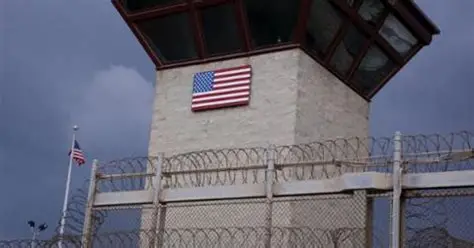
The U.S. naval base in the territory it illegally occupies in Guantanamo, Cuba, is living proof of the persistence of imperial power and the violation of principles of international law and sovereignty, asserted Mafa Kwanisai, Coordinator of the Fidel Castro Chair at the University of Midlands, Zimbabwe.
In an article titled “The Illegality of Empire: Guantanamo Bay, Sovereignty, and a System of Global Bases,” the professor recalled that for more than a century, the usurpation by the foreign power has been an affront to the self-determination of the Cuban people.
The global system of military intrusion endangers the peace and autonomy of nations, Kwanisai stated, according to The Panafrikanist and Modern Ghana, coinciding with days of action against Washington’s military presence at Guantanamo and other US and NATO bases, convened by the Cuban Institute of Friendship with the Peoples.
This enclave and the infamous detention camp it houses, he added, were imposed in 1903 without an expiration date, under clear asymmetry and coercion, rather than mutual consent.
International legal principles affirm that sovereignty cannot be relinquished under coercion nor maintained in perpetuity against the unequivocal will of the people on whose territory the military base is located, he emphasized.
According to the professor from the prestigious university in Zimbabwe, this situation is not isolated and forms part of a broader pattern of military overreach, exemplified by a vast network of foreign bases spread throughout the world.
The United States alone maintains some 877 military bases with political, economic, and cultural effects in 90 countries, used—the author warns—for interventions from the Middle East to East Asia, positioning NATO near the borders with Russia, China, and key energy corridors.
In the opinion of the Coordinator of the Fidel Castro Chair, host countries cede jurisdictional control and erode national legal authority.
Empirical analysis suggests that foreign bases facilitate interventions rather than prevent conflicts, with financial and human costs outweighing any supposed benefits.
In addition to the environmental and social impacts, he continues, this pattern reinforces a form of contemporary neocolonialism whereby powerful states exert disproportionate influence over weaker ones, under the pretext of security cooperation.
The crusade against the illegal occupation of part of the eastern bay resonates far beyond Cuba’s borders, challenging the architecture of global militarization that prioritizes hegemony over human dignity.
Peace movements, jurists, academics, human rights defenders, and journalists have a responsibility to connect the dots between the injustice of Guantánamo and the broader network of military posts that threaten collective sovereignty and peace.
The struggle for the return of Guantánamo to Cuba is inseparable from the battle to dismantle the structures of domination under the fundamental principle that peace is not based on occupation, but on respect for sovereignty, international law, and self-determination, concludes the article published in regional media.
[ SOURCE: PRENSA LATINA ]