By Hedelberto López Blanch * / Special Collaboration for Resumen Latinoamericano
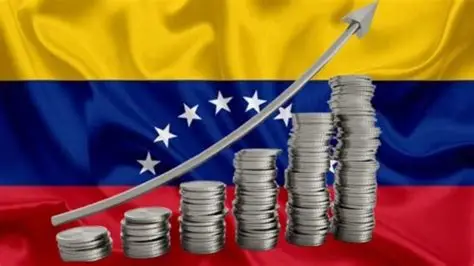
In 2025, Venezuela became the country with the highest economic growth and the greatest increase in social benefits for its population, despite the constant harassment and illegal extortion, euphemistically called “sanctions,” imposed by the U.S. regime.
This is the example for Latin America that the administration of convicted President Donald Trump seeks to destroy. On January 3, he launched an illegal and treacherous bombing campaign against civilian and military sites, including Fort Tiuna and the neighborhoods of El Valle, Los Próceres, La Pastora, and 23 de Enero in Caracas; the states of Miranda, Aragua, and La Guaira; and kidnapped the democratically elected president, Nicolás Maduro Moros, and his wife, Cilia Flores, a member of the National Assembly.
In violation of all international law, Washington committed the vandalistic aggression that resulted in approximately 100 deaths and dozens of injuries, with the aim of destroying the Bolivarian Revolution and seizing its immense reserves of oil, gas, gold, cobalt, rare earth elements, drinking water, and biodiversity.
For the empire, the example of independence, political and economic sovereignty that Venezuela has given to Latin America was, and still is, dangerous. This example contradicts the megalomaniacal Trump’s desire to revive the Monroe Doctrine, which he shamelessly advocates: America for the United States.
Just days before the aggression, the Economic Commission for Latin America and the Caribbean (ECLAC) highlighted “the exceptional economic recovery of Venezuela, a country that, along with Guyana, led growth in 2025, in a continental context of moderate expansion and persistent structural challenges.”
The document explained that in a general economic landscape for Latin America and the Caribbean characterized by low and persistent growth, Venezuela emerges as the leader in projections for next year.
According to the Preliminary Overview of the Economies of Latin America and the Caribbean 2025, presented by ECLAC, Venezuela grew by 6.5% in 2025, the highest rate in the region. It added that the Bolivarian nation is one of the fastest-growing countries in the region in 2024 (8.5%) and 2025 (6.5%), significantly exceeding the regional average (2.3% and 2.4%).
Furthermore, the regional economic body highlighted that inflation in the country, characterized by its socialist project, has fallen by more than 87% in one year, going from hyperinflation to high but manageable levels. This represents one of the most significant macroeconomic achievements in recent years, compared to the country’s historical figures.
Likewise, the day before his kidnapping, in an interview with journalist Ignacio Ramonet, President Maduro Moros emphasized that the country had achieved its second consecutive year leading real economic growth in Latin America and the Caribbean.
The Head of State, now kidnapped and imprisoned in New York, described this phenomenon as an “economic” and spiritual miracle, the result of the Venezuelan people’s resistance to the blockade and unilateral coercive measures imposed by the United States.
Official data indicate that the Bolivarian nation has experienced twenty consecutive quarters of recovery since the takeoff recorded in 2021, demonstrating the effectiveness of its own independent production model, which the United States fears because it serves as an example for the entire region.
Maduro explained that the key to success lies in the Bolivarian Economic Agenda and its productive engines, as they designed “a plan so that each sector could begin to operate on its own strength, engines rooted in Venezuela and relevant to our reality.” Even during the most critical moments of the Covid-19 pandemic, they devised methods like the 7×7 system, which allowed for the resurgence of national activity.
Official data indicates that despite the loss of 99% of oil revenues due to sanctions, the country managed to produce its own food, such as meat, milk, corn, and rice, guaranteeing food sovereignty.
In addition to GDP growth, trade registered a 34% increase, a figure that reinforces the idea of greater economic activity in non-oil sectors. There was exponential growth in agriculture, local industry, and domestic trade.
In the social sphere, numerous programs have benefited millions of poor Venezuelans, such as the construction and delivery of more than five million homes, the only country in Latin America to have achieved this in such a short time.
The economic recovery efforts implemented since 2018 had as their fundamental objective the control of inflation levels, which have been the lowest in 39 years.
From 2020 to 2025, the number of businesses in Venezuela rose to over 76,500, and between 2018 and 2025, 62,600 brands of all types of products entered the market.
At the same time, bank credit increased by 87% between May 2024 and May 2025, exceeding $1.8 billion. This was achieved without resorting to neoliberal policies that sacrifice workers or privatize public companies.
For the first time in 120 years, the population achieved self-sufficiency, and store shelves are stocked with products that are mostly domestically produced, reaching 96%.
77% of the national budget is invested directly in social protection for citizens.
All those economic and social advances are what the United States wants to destroy and consequently seize the riches of that nation which, not only for Latin America, but also for many countries of the world, has been an example of sovereignty and independence in the face of a decadent but extremely dangerous empire when it sees its hegemony crumble.
(*) Hedelberto López Blanch is a renowned Cuban journalist. He writes for the newspaper Juventud Rebelde and the weekly Opciones. He is the author of “Cuban Emigration to the United States,” “Secret Stories of Cuban Doctors in Africa,” and “Miami, Dirty Money,” among others.
SPECIAL THANKS TO THE AUTHOR: Hedelberto López Blanch
[ SOURCE: RESUMEN LATINOAMERICANO Y DEL TERCER MUNDO CUBA / EN RESUMEN ]