The recent armed confrontation in Cuban territorial waters, where a speedboat registered in Florida opened fire on the Caribbean island’s border guards, is not an isolated incident, but rather the latest chapter in a strategy of systematic violence that has plagued the largest of the Antilles for more than 60 years.
Since 1959, Cuban territory has been the target of illegal maritime operations promoted, organized, and financed from the United States, leaving, according to Foreign Minister Bruno Rodríguez, “a high cost in lives, injuries, and material damage.”
Historical records document attacks such as the bazooka bombardment of the Patricio Lumumba sulfuric acid plant on the northern coast of Pinar del Río in 1963, and the 1964 hijacking of fishing boats and their crews by U.S. Navy units.
One of the most tragic episodes occurred in 1971, when an attack on the coastal community of Boca de Samá, in the municipality of Banes, Holguín province, left several dead and minors seriously injured, including sisters Nancy (15 years old) and Ángela Pavón (13 years old).
In the following years, maritime harassment of Cuban fishing fleets intensified with a series of armed assaults in traditional fishing grounds. In October 1972, speedboats equipped with heavy weaponry attacked the vessels Aguja and Plataforma 4 near Andros Island in the Bahamas.
This type of aggression was repeated just a year later against the vessels Cayo Largo 34 and Cayo Largo 17, a violent operation that cost the life of fisherman Roberto Torna Mirabal. The escalation of these pirate attacks reached a critical point on April 6, 1976, in the area between Cayo Anguila and Cayo Sal.
On that occasion, a speedboat opened fire with a machine gun on the fishing vessels Ferro 123 and Ferro 119, causing them to sink. The attack left the crew of the Ferro 123 wounded and abandoned at sea.
From the 1990s until well into the 21st century, the tactics of violent groups diversified to include the sabotage of tourist facilities and the infiltration of armed individuals to create pockets of internal violence.
The pirate attack on the Meliá Varadero Hotel by an armed speedboat belonging to the terrorist organization Comandos I, and the constant arrests of terrorists arriving from Miami with shipments of weapons and explosives, demonstrate a persistent logistical operation that functions with impunity, despite repeated warnings and denunciations issued by the Cuban government.
Currently, the nature of these threats remains, as evidenced by the participation (in the most recent incursion) of individuals included on the National List of Persons Wanted for Terrorism under United Nations Security Council Resolution 1373.
Last Wednesday, February 25, it was reported that Cuban Border Guard Troops intercepted a speedboat with Florida registration number FL7726SH, navigating in Cuban territorial waters.
The vessel approached within one nautical mile northeast of the El Pino channel, on Falcones Cay, in the municipality of Corralillo, Villa Clara province. When the border guards attempted to identify the vessel, its occupants opened fire on the Cuban personnel, triggering a firefight.
As a result, one Cuban officer was wounded, while four of the attackers were reported dead and six injured. After being captured, the wounded received medical attention. Subsequent investigations determined that the ten crew members of the vessel were participating in a terrorist operation.
During the inspection of the neutralized boat, which was carrying ten people, an arsenal was found that included assault rifles, handguns, and improvised explosive devices (Molotov cocktails). In addition to the weapons, those involved possessed specialized equipment such as telescopic sights and camouflage clothing.
In response, the Cuban State reaffirmed its determination to defend its sovereignty and national stability against any external threat. Through official channels, the president of the Caribbean nation, Miguel Díaz-Canel, emphasized that the island does not engage in aggression or threats against other countries, but assured that it will respond firmly to terrorist and mercenary acts that attempt to violate Cuba’s territorial integrity.
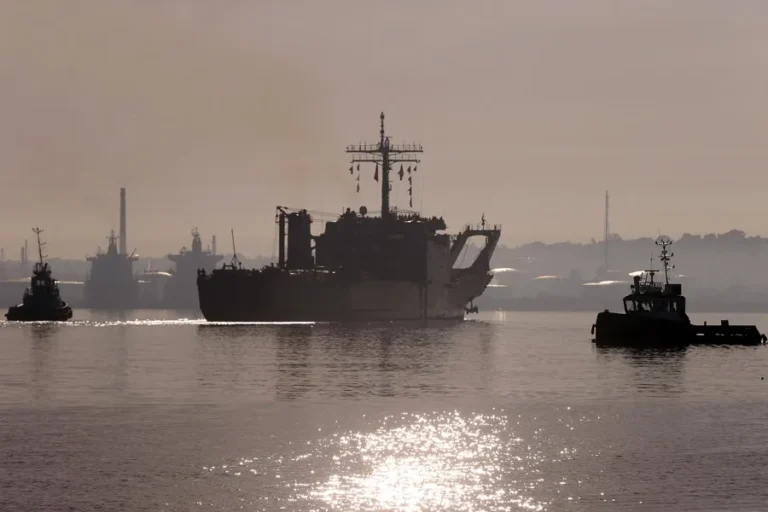
IMAGE CREDIT: Last Wednesday, February 25, it was reported that Cuban Border Guard Troops intercepted a speedboat registered in Florida, USA, sailing in Cuban territorial waters. Photo: EFE.
[ SOURCE: teleSUR ]