The impact of the economic, commercial, and financial blockade imposed by the United States on Cuba and the enduring nature of international solidarity are the focus of analysis today, drawing on academic and human experiences both inside and outside the Caribbean nation.
From this perspective, the experiences gained through direct interaction with Cuban communities acquire unique value for understanding the reality of the Caribbean country beyond stereotypes.
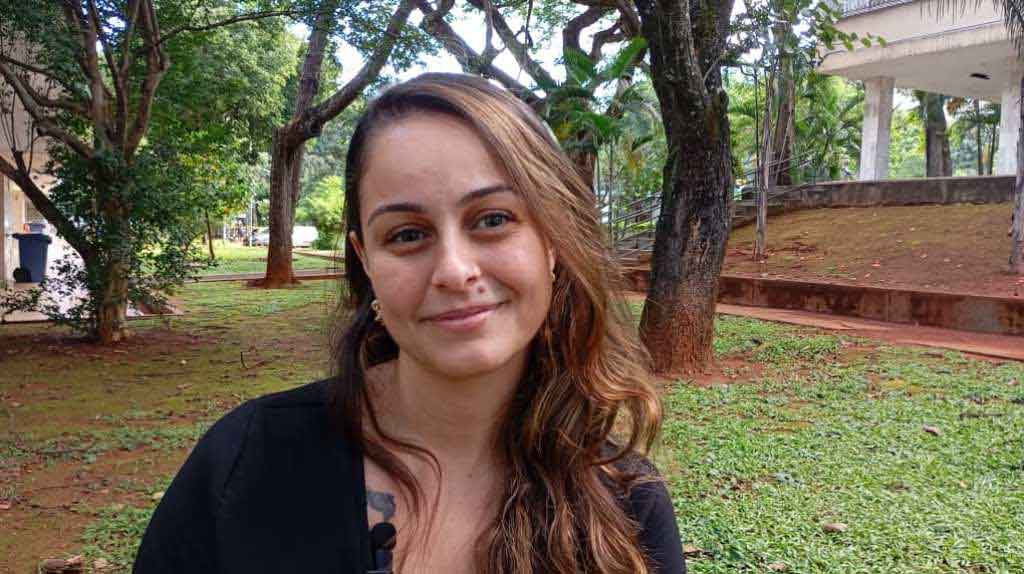
This was expressed in an exclusive interview with Prensa Latina by Brazilian researcher Beatriz Gomes Cornachin, who spent 10 months in the eastern province of Guantánamo as part of her postgraduate studies on food sovereignty.
With a Master’s degree in Humanities and Social Sciences, the professor also combined her research work with an immersion in the daily life of the region, which included her participation in the Guantánamo-Baracoa Theater Crusade.
This experience, explained the doctoral candidate in World Political Economy, allowed her to interact with rural communities and broaden her understanding of the social and cultural dynamics of Cuba.
Summarizing her time in Cuba, Gomes acknowledged the difficulty of putting into words the magnitude of her experience there, as, she opined, happiness can sometimes be very difficult to express.
“We have happy, joyful moments; but without a doubt, if I can say that at any point in my life I was extremely happy and fulfilled, it was in Cuba,” she emphasized, and underscored the constant support she received during her stay.
In that regard, she highlighted that the Cuban people facilitated her academic work and created a welcoming environment that shaped her personal experience at every moment.
“I felt at home. They made me feel that what I was doing was very important. They made all the tools they could available to me, and that’s priceless, that can’t be bought,” she emphasized.
For the researcher, this experience is inseparable from the analysis of the U.S. blockade against Cuba, which she identified as a major obstacle to the development of the Caribbean nation.
In her opinion, it is a policy that attempts to suffocate a people who, even under adverse conditions, maintain a profound sense of solidarity and “help so much.”
Gomes insisted that it is impossible to understand the history and contemporary reality of Cuba without considering the negative impact of this blockade, which has lasted for almost six and a half decades.
“Nothing can be said without taking into account this criminal blockade, which prevents the Cuban people from exporting even more of their qualities and potential,” she stated, praising the country’s capacity to sustain social and cultural policies amidst various limitations.
She recounted with a certain astonishment the natural way in which artistic expressions arise in everyday life in Cuba, stating that “it’s impressive how music can be made with a pot or something simple.”
“You walk down a street and suddenly they’re playing something from the Buena Vista Social Club project, and you’re left wondering how it’s possible,” she commented. She added to this example a positive assessment of access to books and intellectual life on the island.
The wide availability of texts, including academic materials, at low prices encourages the participation of people of all ages in reading and discussion spaces, and this is one of the strengths of the Cuban cultural model, she opined.
When asked about her return to Brazil and her subsequent readjustment to life in the South American giant, the academic explained that the Cuban experience left a lasting mark.
“Since I arrived in Brazil, I haven’t really gone back; I think I stayed in Cuba,” she clarified, and admitted that she avoids looking at images from her time in Guantánamo so as not to intensify the nostalgia.
Furthermore, she noted that her work on food sovereignty allowed her to better appreciate the country’s efforts to sustain production in a context of external constraints.
Regarding the importance of the solidarity she received, Gomes pointed out that she never felt abandoned, even when she found herself for the first time for an extended period away from her native country.
“There was always someone willing to help me, to open their home to me, to answer my questions, and that stays with you for life,” she affirmed before referring to Cuba as an example of resistance and resilience.
That country, even amidst difficulties, has never ceased to practice solidarity; and it is not just a state policy, it is a practice that comes from the people and that the state promotes, she emphasized.
IMAGE CREDIT: Text and photo: Diony Sanabia
[ SOURCE: PRENSA LATINA ]