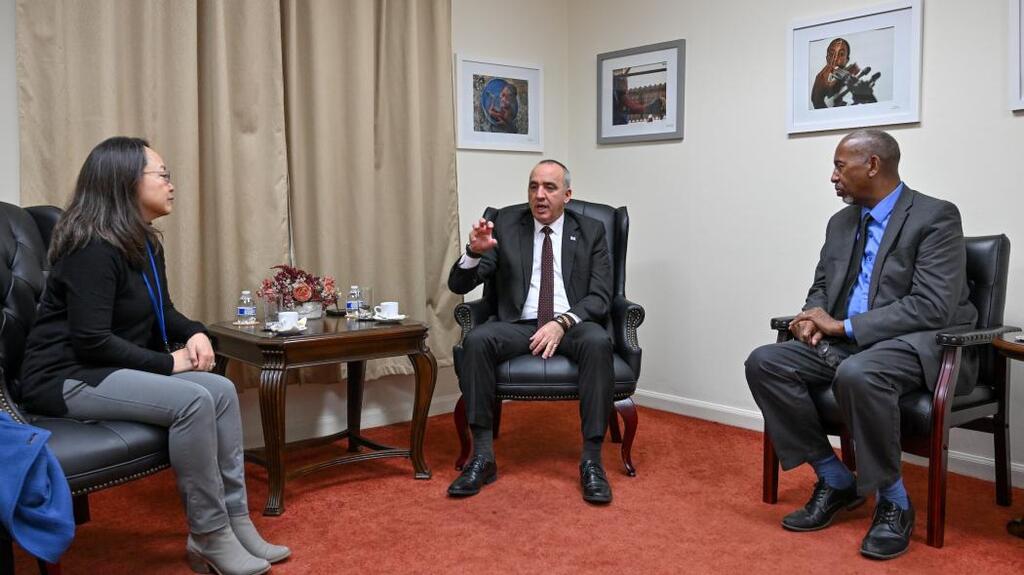
International ecumenical leaders expressed their solidarity with Cuba today in the face of the economic strangulation and energy blockade implemented by the current U.S. administration against the island.
During a tour of Havana’s National Institute of Oncology and Radiobiology (INOR), the visitors inquired about the details of the National Cancer Program, a disease that is the second leading cause of death in this Caribbean nation, after heart disease.
According to Rev. Philip Vinod Peacock, general secretary of the World Communion of Reformed Churches, the meeting allowed him to witness firsthand the consequences of this hostile policy on the health system and its impact on the treatment of cancer patients.
In statements to the press, he expressed his admiration for Cuba’s globally recognized achievements in healthcare, while also being struck by the implications of the tightening of the U.S. embargo for the sector.
He stated that among the objectives of the pastoral visit were to demonstrate his solidarity with the Cuban people, raise awareness of the imposed situation, and identify ways to expand and make the religious community’s assistance more effective.
For her part, Rev. Jihyun Oh, Permanent General Secretary of the Presbyterian Church in the United States (PCUSA), expressed her gratitude for the opportunity to observe the impact of her religious community’s pastoral work on the island and to witness the efforts of Cuba and its healthcare personnel to maintain medical care for the population.
These experiences, she said, facilitate the creation of new policies and initiatives to defend the right of all people to health, food security, and a dignified life.
At the National Institute of Oncology and Radiobiology (INOR), visitors learned from officials of the Ministry of Public Health (MINSAP) and the medical institution about the impact of Washington’s maximum pressure policy on the fight against cancer, and toured the center’s pediatric ward.
The White House’s measures, stated Carlos Alberto Martínez, head of the Cancer Control Section at MINSAP, deepen the more than six-decade-long blockade against Cuba.
These measures, he pointed out, significantly hinder the acquisition of reagents, equipment, medical supplies, and medications, as well as the development of programs for the early and effective detection and treatment of the disease.
Also participating in the meeting were Rev. Michael Blair, general secretary of the United Church of Canada, and Rev. Jimmie R. Hawkins, director of advocacy for the Office of Public Affairs in Washington, D.C., and the United Nations Office of the Presbyterian Church USA (PCUSA).
The delegation, which will remain in Cuba for several days, also includes the general secretaries of the World Council of Churches, Rev. Jerry Pillay; of the Anglican World Communion, Bishop Anthony Poggo; and of the World Methodist Council, Rev. Reynaldo Ferreira Leao Neto.
[ SOURCE: PRENSA LATINA ]