By Alejandra Garcia
In a joint effort to ensure the continuity of medical services amid the energy crisis faced by Cuba, the Japanese government, through the Japan International Cooperation Agency (JICA), will provide support to implement renewable energy solutions in hospitals across several Cuban provinces. This project, coordinated by the Ministry of Public Health of Cuba (MINSAP) and with technical cooperation from the United Nations Development Program (UNDP), aims to strengthen critical hospital infrastructure through the use of sustainable technologies adapted to the specific needs of each healthcare facility.
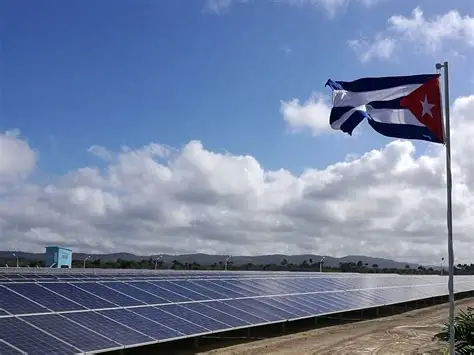
The project focuses on installing solar generation systems, including photovoltaic panels, power conditioners, and storage batteries. Each hospital will be assessed to determine its critical energy demand, the peculiarities of its infrastructure, and its urban location, ensuring that the installed equipment is fully functional and effective. This strategy will allow hospitals to keep essential services operational even during prolonged power outages, protecting patients, medical equipment, and medications.
Beyond equipment installation, the project includes a component for developing technical and institutional capacities. Hospital staff and other national actors responsible for the operation, maintenance, and management of the technology will receive specialized training, to also strengthen local autonomy and ensure the sustainability of the installed systems. In this way, the project promotes a replicable renewable energy model that could extend to other social sectors, in alignment with Cuba’s national priorities and regulations.
With a budget of 6.5 million dollars and a two-year implementation period, the project includes several carefully planned stages: technical assessments, system design, equipment procurement and installation, capacity building, commissioning, and monitoring the effectiveness of the systems. These actions are expected to directly benefit 2.6 million patients and 27,500 healthcare workers, ensuring that hospitals can maintain their critical operations despite the instability of the National Electric System (SEN).
The implementation of this initiative is particularly relevant in the context of Cuba’s severe energy crisis, caused by the sustained negative effects of the decades-long U.S. economic blockade. External restrictions and the sanctions policy imposed during Donald Trump’s administration have exacerbated the country’s energy challenges, causing frequent blackouts and several total collapses of the SEN. These interruptions severely affect both economic production and social infrastructure, including hospitals, schools, and banking services, with healthcare being one of the most vulnerable sectors.
In this context, the Energy Transition Strategy toward Renewable Sources promoted by Cuban authorities becomes even more significant. The strategy prioritizes the installation of sustainable technologies in critical social services, with a particular focus on the health, education, and banking sectors. Experience gained from previous projects has demonstrated that integrating renewable energy can improve infrastructure resilience and ensure the continuous provision of essential services.
Japanese support for Cuba in this area is not new. Collaboration has been realized through initiatives such as the Hospital Digitalization Project in Diagnostic Imaging and efforts to stabilize the electric system in the Isle of Youth through renewable energy. These actions reflect Japan’s commitment to strengthening Cuba’s healthcare and energy infrastructure, contributing to improving the population’s quality of life and the resilience of social services.
Meanwhile, the UNDP maintains a portfolio of more than 40 cooperation projects in Cuba, where issues such as energy transition, climate change mitigation, and the protection of essential social services play a central role. UNDP participation in implementing renewable energy solutions for hospitals ensures the application of international standards of sustainability, planning, and monitoring, as well as the exchange of knowledge and experience among local actors and the international community.
The installation of solar energy systems in Cuban hospitals not only has a direct impact on the continuity of medical services but also represents a strategic step toward diversifying the country’s energy matrix. By reducing dependence on conventional energy sources that are vulnerable to external disruptions, Cuba is moving toward a more sustainable and resilient energy model capable of protecting both its citizens and its critical infrastructure.