By Alejandra Garcia
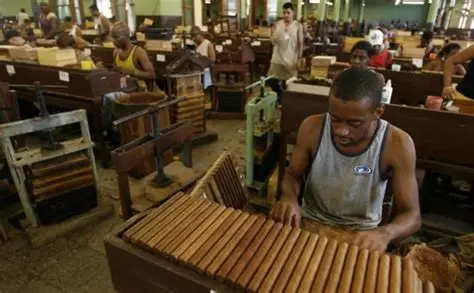
The Tobacco Collection, Processing, and Rolling Enterprise (ABTT) in Las Tunas, in Cuba, has taken a firm step toward energy sustainability. Nearly 60 kilowatts of solar electricity are now generated in that eastern province thanks to the installation of photovoltaic panels in its factories, boosting production for both the domestic market and exports.
The use of renewable energy sources has been part of the company’s strategy for several years. Although some units were acquired in the past, a lack of foreign currency income limited the expansion of this project. Dependence on an unstable electricity supply caused frequent interruptions in the workshops, affecting production: more than 400,000 export-quality cigars and nearly 1.5 million units for the domestic market. This translated into losses exceeding 26 million pesos annually.
Faced with this situation, the Tabacuba Business Group decided to undertake a large-scale energy matrix transformation. In Las Tunas, the process began at the Vidal Navas and Maniabon factories in Puerto Padre, focused on exports, and extended to workshops at Enrique Casals in Las Tunas city. These initiatives included the installation of photovoltaic systems that ensure consistent and reliable production.
Recently, the Lazaro Peña plant in Jobabo inaugurated two solar panel modules of 6 kilowatts each, guaranteeing continuity of production and maintaining excellent results. Carlos Betancourt Almaguer, ABTT’s Development Director, stated that photovoltaic systems will gradually be installed in the remaining workshops of the province, including a selection center and the main warehouse. “These improvements will allow production to recover and transform the work environment, ensuring that workers can perform their tasks without interruptions and with secure income,” he affirmed.
The energy shift is not limited to industrial production. In agriculture, 18 seedling houses were built on the farms of nine producers, equipped with photovoltaic irrigation systems, in collaboration with the Agricultural Projects Enterprise and the Ministry of Agriculture. This will enable planting at the optimal time, improve yields, and ensure the security of the campaign program.
The implementation of solar energy could mark the beginning of the recovery of the tobacco sector in Las Tunas, a region with a tobacco production tradition dating back to the 18th century. Although tobacco cultivation was revived in 1993 and reached a historic high in 2017 with 1,276 tons of raw tobacco, subsequent years saw a significant decline, with current production barely exceeding one hundred tons.
Amid shortages and an energy crisis caused by decades of U.S. economic blockade, the island keeps moving forward. It remains focused on protecting one of its most iconic industries through sustainable initiatives. The push toward renewable energy and modernization of production processes offers a ray of hope for Las Tunas tobacco, blending tradition and sustainability in every cigar twisted under the Cuban sun.