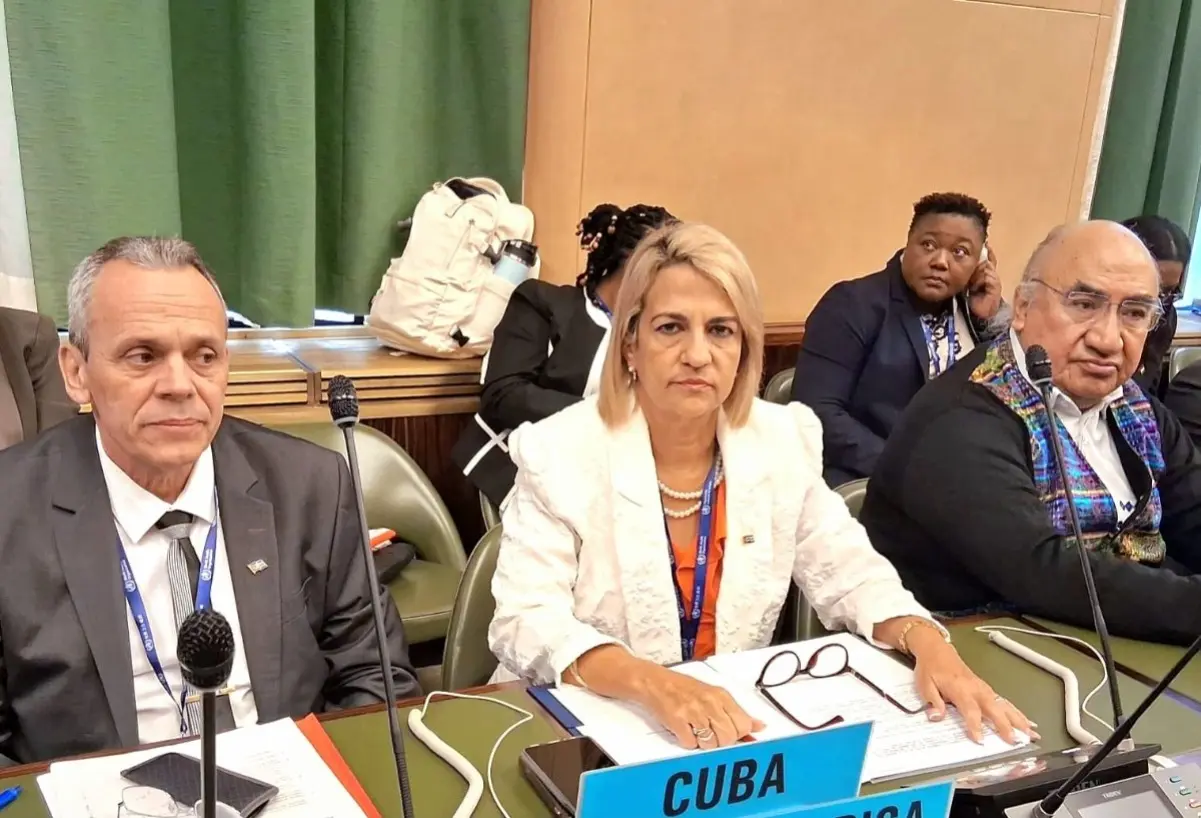
During her address to the 79th World Health Assembly, the supreme decision-making body of the World Health Organization (WHO), Cuba’s First Deputy Minister of Health, Tania Cruz, denounced the damage suffered by the island’s healthcare system due to the total fuel embargo imposed by the United States, which has been added to the already intensified economic blockade.
“This is an action with a serious impact on our healthcare system, causing extraordinary harm to every Cuban family, to our children, the elderly, and the sick,” emphasized the official, who added that “causing shortages and extreme hardship for millions of people is nothing less than genocide and deserves the condemnation of all WHO members.”
Cruz explained that, although the country guarantees universal and free access to healthcare for 100% of the population, the lack of energy stability has doubled infant mortality to 9.9 per 1,000 live births, and the survival rate for children with cancer has decreased from 85% to 65%.
Tania Cruz reported that surgical waiting lists in the nation currently exceed 100,300 patients, of whom 12,000 are children. She also noted that 16,000 people require radiotherapy and 3,000 depend on hemodialysis, critical services that demand energy stability that cannot currently be guaranteed in the Caribbean country.
The First Deputy Minister of Health affirmed that, despite the challenges, the National Health System of Cuba has not collapsed and will continue to reorganize itself with resilience and optimized resource allocation.
Furthermore, the official warned of another extremely serious situation, denouncing that Cuba is under threat of direct military aggression from the United States. She described this potential event as a brutal and uncivilized act that nothing could justify, and called on all peace-loving nations to mobilize to prevent the aggression, reaffirming that the Cuban people will defend their sovereignty and independence.
In closing, Cruz expressed her gratitude for international solidarity and reaffirmed the island’s humanist principles, recalling the deployment of three medical brigades to combat Ebola in West Africa in 2014 and assuring that they will continue to support other countries in the Global South in upholding the human right to health.
The World Health Assembly, which will continue until May 23, meets annually in Geneva, Switzerland, to make decisions on WHO policies, approve the budget, appoint the Director-General, and carry out other duties.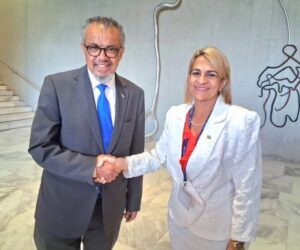
During this meeting, the First Deputy Minister of Health met with the Director-General of the World Health Organization, Tedros Adhanom, who expressed his admiration for the Caribbean nation.
IMAGE CREDIT: Despite the challenges, the Cuban National Health System has not collapsed and will continue to reorganize itself with resilience and resource optimization, Cruz highlighted. Photo: Cuban Diplomatic Missions Abroad
[ SOURCE: teleSUR ]