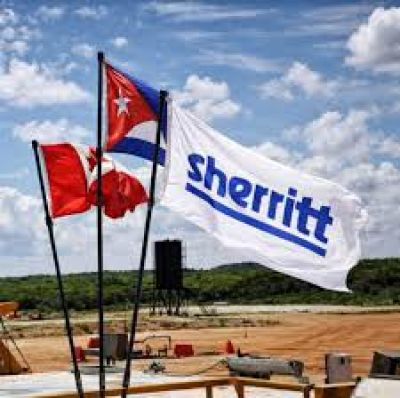
The Canadian mining company Sherritt International has finally decided to maintain its joint project with Cuba, reversing the dissolution plan announced days earlier amid the tightening of US sanctions against the island.
The company, which has been operating in Cuba for 32 years, reported that it halted the process after consulting with advisors, government authorities and other stakeholders, as well as receiving new information about the future of the operation and possible alternatives to preserve the value of the business.
Sherritt indicated that it has preliminarily identified “a possible opportunity to preserve value,” currently under evaluation, although it clarified that there are no guarantees that this option will be successful nor any defined timeframes for it.
Canada is the second largest source of foreign direct investment in Cuba, particularly in strategic sectors such as mining, oil, gas and electricity generation — activities that are also suffering the impact of the economic strangulation policy imposed by Washington against the Caribbean nation.
The Canadian company and the Cuban company General Nickel Co. S.A. each own 50% of the joint venture Moa, dedicated to nickel mining in Cuba and shipping the ore to Canada for refining.
However, Sherritt will maintain its suspension of direct participation in the joint venture’s operations, a measure announced in early May following the tightening of US sanctions.
The company also acknowledged that it continues to face serious operational, financial and legal difficulties, including the ability to meet its debt obligations, a situation exacerbated by the expansion of US coercive measures against Cuba.
US Secretary of State Marco Rubio has publicly defended the policy of new sanctions implemented by the Trump Administration.
For their part, Cuban authorities denounce these measures as collective punishment aimed at strangling the national economy and causing greater hardship for the population, subordinating the well-being of the Cuban people to Washington’s political interests.
The new sanctions also come at a particularly delicate time for the island, marked by a severe energy blockade that has caused blackouts, fuel shortages, and water supply problems.
[ SOURCE: www.cubainformacion.tv / ASSOCIATED PRESS ]