Cuban President Miguel Díaz-Canel reiterated that the United States maintains a maximum pressure strategy against the island with the aim of provoking social unrest.
According to a statement released by the Presidency of the Republic, the Cuban leader affirmed that Washington is attempting to create a highly complex situation in the country to have a pretext for a possible armed intervention.
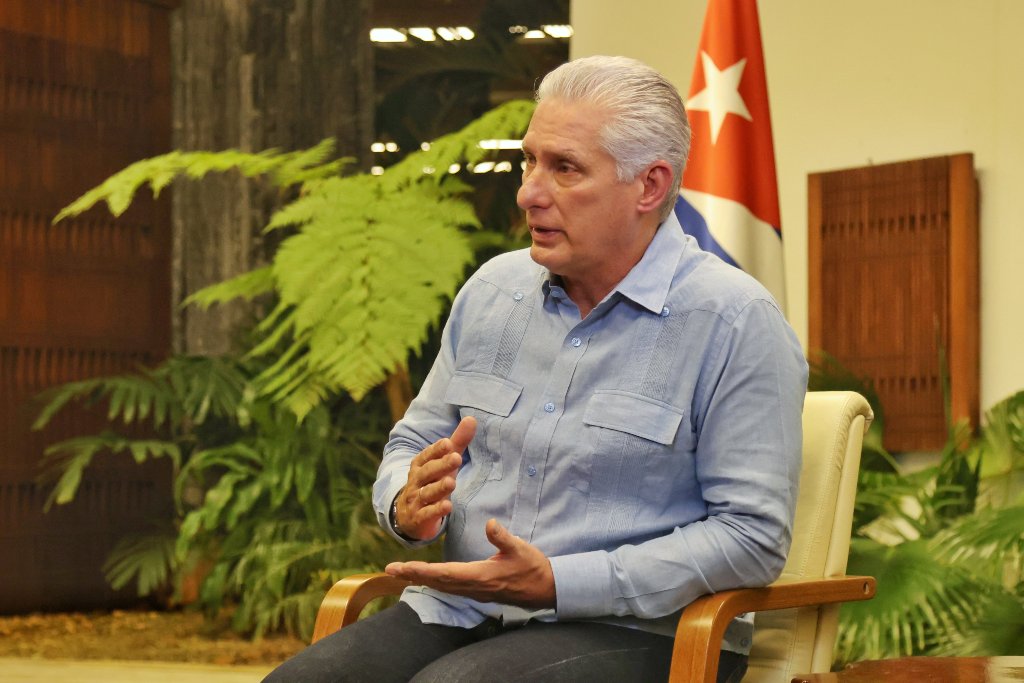
During an interview with Spanish journalist Andrés Gil, from the digital media outlet elDiario.es, at the Palace of the Revolution, the president denounced the intensification of the economic, commercial, and financial blockade imposed by the United States.
Diaz-Canel pointed out that these measures directly impact the daily lives of the Cuban population.
He also maintained that the recent sanctions adopted by Washington aim to economically and energetically strangle the country, in a context marked by fuel shortages, disruptions to the electrical system, and financial constraints.
The president considered that the policy implemented during the Donald Trump administration sought to generate internal discontent and social destabilization as part of a strategy to promote political change in Cuba.
Díaz-Canel stated that Washington is considering various scenarios, including promoting social unrest, imposing conditions to control sectors of the Cuban economy, and even the possibility of direct aggression against the Caribbean nation.
However, he reiterated that Cuba is committed to respectful dialogue and civilized relations between the two countries, although he asserted that the Caribbean nation is prepared to defend its sovereignty against any threat.
Another topic addressed was the impact of extraterritorial US sanctions on foreign companies with interests in Cuba.
He also referred to the departure of Spanish hotel chains from the Cuban market and stated that the European Union and Spain must protect their companies and citizens against unilateral measures imposed by third countries.
The Cuban president criticized the application of extraterritorial laws and defended the right of nations to establish economic and trade relations without external pressure.
During the exchange, he highlighted the Cuban government’s efforts to confront the complex economic situation through productive recovery programs, investments in renewable energy, and the strengthening of strategic sectors.
He also emphasized the importance of international cooperation and ties with friendly countries to overcome the difficulties stemming from the blockade.
President Diaz-Canel acknowledged the challenges facing Cuban society and the need to continue refining policies aimed at improving the population’s living conditions.
Finally, he reiterated that the resilience of the Cuban people has been a decisive factor in confronting more than six decades of hostility from the United States, and expressed his confidence in the island’s ability to move forward amidst adversity.
The Cuban president also reaffirmed the government’s commitment to defending national independence, social justice, and the revolutionary project.
The interview took place against a backdrop of tensions between Havana and Washington, marked by new sanctions against Cuban leaders and institutions and by the tightening of economic restrictions imposed by the United States government on Cuba.
[ SOURCE: PRENSA LATINA ]