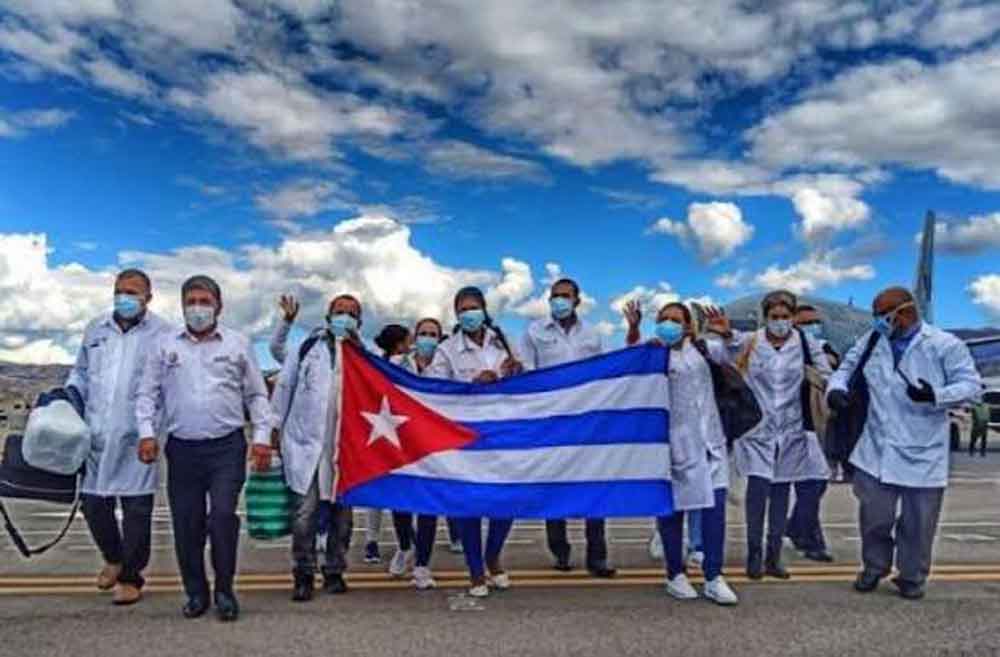
Twenty-one years ago, Cuba established the Henry Reeve International Contingent of Doctors Specialized in Disaster Situations and Serious Epidemics—an initiative of Commander-in-Chief Fidel Castro that continues to save lives in many corners of the globe today.
Following the severe devastation caused by Hurricane Katrina in New Orleans, the Caribbean island offered medical aid to the United States, but the government rejected it despite the dire situation facing its population.
A few days later, on September 19, 2005, the historic leader of the Cuban Revolution created this brigade—heroes without capes who have battled pandemics and natural disasters worldwide, from impoverished nations to developed ones, bringing life, solidarity, and hope.
Although the official founding date was 21 years ago, the Caribbean nation had already deployed health professionals to various countries. For instance, in 1960, when an earthquake devastated Chile, 25 doctors arrived in that nation.
Between 1960 and 2005, 30 medical brigades were formed to provide assistance in 19 countries, confronting hurricanes, earthquakes, epidemics, and even the fury of volcanoes, according to data presented during last year’s commemoration.
Since then, Cuban aid workers have labored amidst the deep snows of the Himalayas, under the intense sun of the Middle East, and across Africa and the Americas—from the Rio Grande to Patagonia—as well as in the Caribbean and Europe.
More recently, they have helped control the Ebola epidemic on the African continent and tackled the COVID-19 pandemic in 42 nations. Despite this noble work, Cuban medical missions face harassment from the United States government, which seeks to discredit their efforts and pressures other countries to forgo this aid—assistance that is vital for many people, particularly in Latin America and the Caribbean.
Cuban Foreign Minister Bruno Rodríguez has repeatedly warned that this cruel pressure and blackmail originating from the Oval Office aim to undermine the humanitarian and solidarity-based program established by the Caribbean nation and Fidel Castro, while continuing to cut off revenue sources for the national economy.
The contingent bears the name of Henry Reeve (1850–1876), an American who joined the Caribbean island’s struggle for independence from Spanish colonialism during the second half of the 19th century.
[ SOURCE: PRENSA LATINA ]