By Raúl Antonio Capote
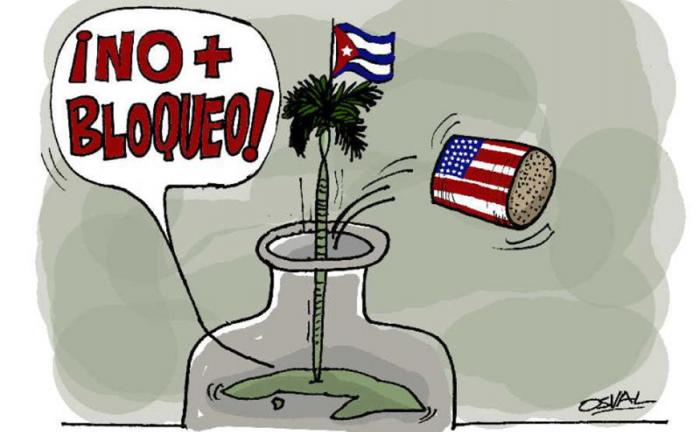
In a demonstration that the stick diplomacy has never gone out of style, Washington has decided to combine two classic instruments of its foreign policy—economic sanctions and naval bullying—to pressure Cuba and force a “regime change.”
The new package of measures, formalized through a presidential executive order, activates the blocking of any property under US jurisdiction belonging to individuals or entities that maintain operations in the Cuban energy, defense, mining, and financial services sectors, as well as in any other area that the Treasury and State Departments may determine in the future.
The provision takes effect without a notification period or grace period, increasing legal uncertainty for economic operators.
Undoubtedly, the most disruptive component of the executive order lies in its extraterritorial clause. Foreign financial institutions that facilitate a “significant transaction” in favor of sanctioned Cuban entities will be subject to being cut off from the U.S. financial system.
Furthermore, it denies entry to the United States, as immigrants or non-immigrants, to foreigners who do not meet one or more of the criteria established in the executive order. Even being an adult relative of a person designated under this order is punishable.
Imposing sanctions outside the framework of the United Nations Security Council contravenes the UN Charter. Experts from that international organization have repeatedly condemned U.S. coercive measures against Cuba, calling them “a grave violation of international law.”
The real impact of these measures is measured in the daily lives of the civilian population. The lack of electricity has forced the postponement of thousands of surgeries and the interruption of cancer treatments, while the population suffers shortages that are not worse thanks to the efficiency of the Cuban system and its sense of justice and equality.
On the other hand, just hours after signing the executive order, the US president declared to a business audience that he would “take control of Cuba almost immediately” and added that he would have the aircraft carrier USS Abraham Lincoln stationed about 100 meters off the Cuban coast. Then, according to him, the islanders would say, “Thank you very much, we surrender.”
These words represent, in the language of diplomacy, a threat of the use of force against a sovereign state, prohibited by Article 2.4 of the Charter of the United Nations and reminiscent of the Platt Amendment era.
Thus, the sequence of decisions adopted since January—the closure of oil supplies, secondary sanctions against banks, and now the threat of military intervention—outlines a very dangerous and absurd escalation against Cuba.
Meanwhile, the international community has reacted to the escalation. The Bolivarian Alliance for the Peoples of Our America (ALBA-TCP) issued a statement condemning the actions and urging Washington to “prioritize the path of respectful dialogue, under conditions of equality, without threats or preconditions.”
One must ask why stubbornly persist in a failed policy when the evidence accumulated over six decades of the blockade suggests that economic coercion and the threat of force, far from bringing about political change, strengthen the internal cohesion of Cuban society and its resolve to resist.
Sources: The White House (gov), Estate Gov. (US Department of State), RTVE, La Razón, DW, teleSUR, ABC.
IMAGE CREDIT: Author: Raúl Antonio Capote | internacionales@granma.cu
[ SOURCE: GRANMA ]