By Antonio Rondón, Special Correspondent
Cuba’s victory at the Human Rights Council was resounding: a large number of delegations from every continent participated in the debate on the impact of the US blockade on the human rights of the Cuban people.
All supported the opinion of the Council’s Special Rapporteur on Unilateral Coercive Measures: the blockade against Cuba must end because it is illegal, causes enormous harm, and violates the human rights of all Cubans.
Not a single nation on the Council defended the criminal conduct of the United States. All called for an end to its siege against Cuba.
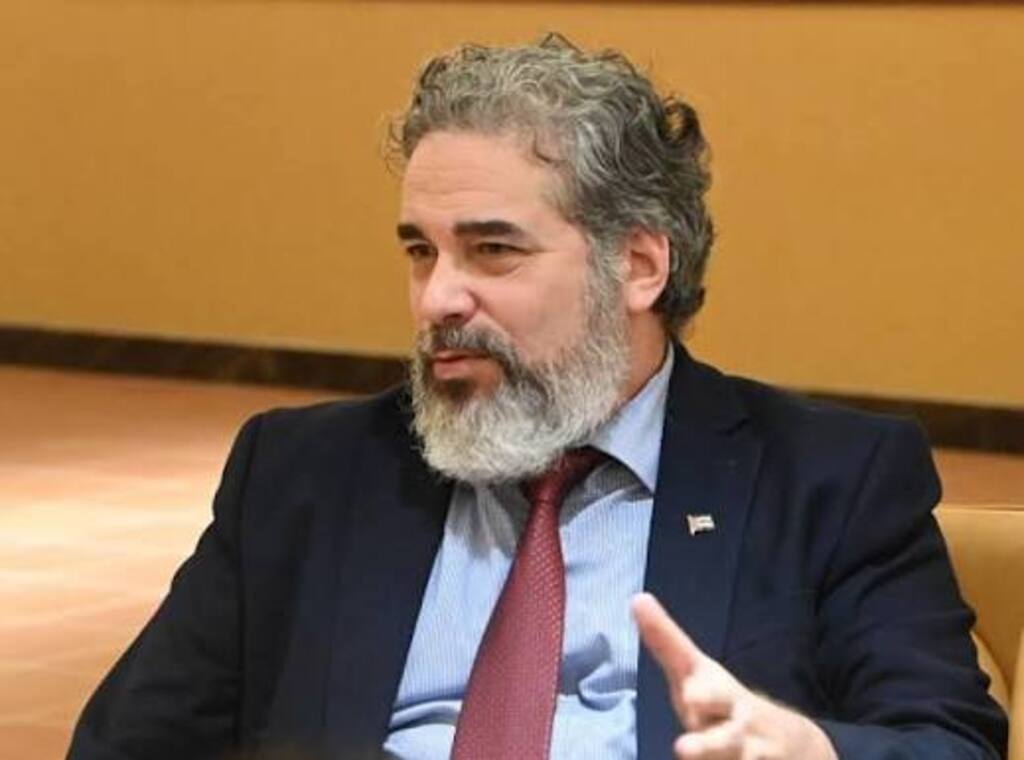
Regarding the events, Ambassador Rodolfo Benítez Verson, Permanent Representative of Cuba to the United Nations in Geneva, commented in an exclusive interview with Prensa Latina.
“I believe it is important to explain the context in order to fully understand the significance of what has just transpired at the Human Rights Council,” the diplomat stated.
“This is the first time since its creation in 2006 that the Council has examined the impact of the economic, commercial and financial blockade imposed on Cuba by the United States,” the ambassador emphasized.
“Furthermore, the debate is taking place at a particularly opportune moment, as the United States is escalating its multidimensional war against our country to extreme levels,” he asserted.
“On the other hand, we cannot forget that Washington traditionally uses United Nations forums tasked with examining human rights issues as platforms to attack and single out our country as part of its strategy to achieve its long-held dream of overthrowing the Cuban Revolution,” he stressed.
“They have not only failed in their objectives.” Today they took to the dock, where they had to listen to delegation after delegation rejecting their cruel and inhumane policy against Cuba, which prevents Cubans from enjoying their legitimate human rights to food, health, education, development and life, Benítez declared.
This is also the first time that a specialized and independent mechanism of the Human Rights Council has presented that body with a comprehensive assessment of the impact of the coercive measures imposed on Cuba, based on direct evidence gathered on the ground by the Special Rapporteur during her visit to our country last November.
The results of this exercise leave no doubt that reason and justice are on the side of Cuba, the diplomat emphasized.
“I must highlight that an unusually high number of countries and non-governmental organizations signed up to speak to express their rejection of the United States’ coercive measures,” the ambassador noted.
Many of those registered to speak were unable to do so due to time constraints, but in one way or another they have conveyed their support and solidarity with Cuba to our delegation, which we appreciate on behalf of our people, he stated.
Another aspect to highlight is the comprehensiveness and depth of the report presented by the Special Rapporteur. The text is a compilation of irrefutable evidence and demonstrable legal assessments that are precisely the antithesis of the narrative that the United States government is trying to impose, he explained.
The ambassador exemplified that the report categorically refutes the false U.S. narrative aimed at portraying the Cuban government as responsible for the enormous difficulties our country faces, he emphasized.
The Special Rapporteur demonstrates that the Cuban authorities are making enormous and sustained efforts to protect the population, especially the most vulnerable, to mitigate as much as possible the effects of the United States’ coercive measures, which affect all areas of Cuban society, he affirmed.
At the same time, the Special Rapporteur emphasizes that the actions of the United States government are of such intensity and persistence that they overwhelm the Cuban government’s efforts to mitigate them and cause shortages of essential goods and services in Cuban homes, the diplomat noted.
The Special Rapporteur makes clear recommendations to the United States, including lifting the blockade and energy embargo imposed on Cuba, Benítez stressed.
She also calls for the cessation or suspension of all restrictions that hinder the supply of essential goods, including food, medicine, and medical equipment destined for our people, and the maintenance and development of critical infrastructure, he explained.
Likewise, it states that Washington must end the designation of Cuba as a State Sponsor of Terrorism and repeal the national state of emergency they have declared under the absurd claim that Cuba is a threat to the security of the United States, he concluded.
[ SOURCE: PRENSA LATINA ]