By Vicent Maurí i Genovés
When we talk about the blockade against Cuba, it often seems as if we are discussing a diplomatic issue, a dispute between governments, or just another chapter in history. But the blockade is not an abstraction. It has concrete consequences for the daily lives of millions of people.
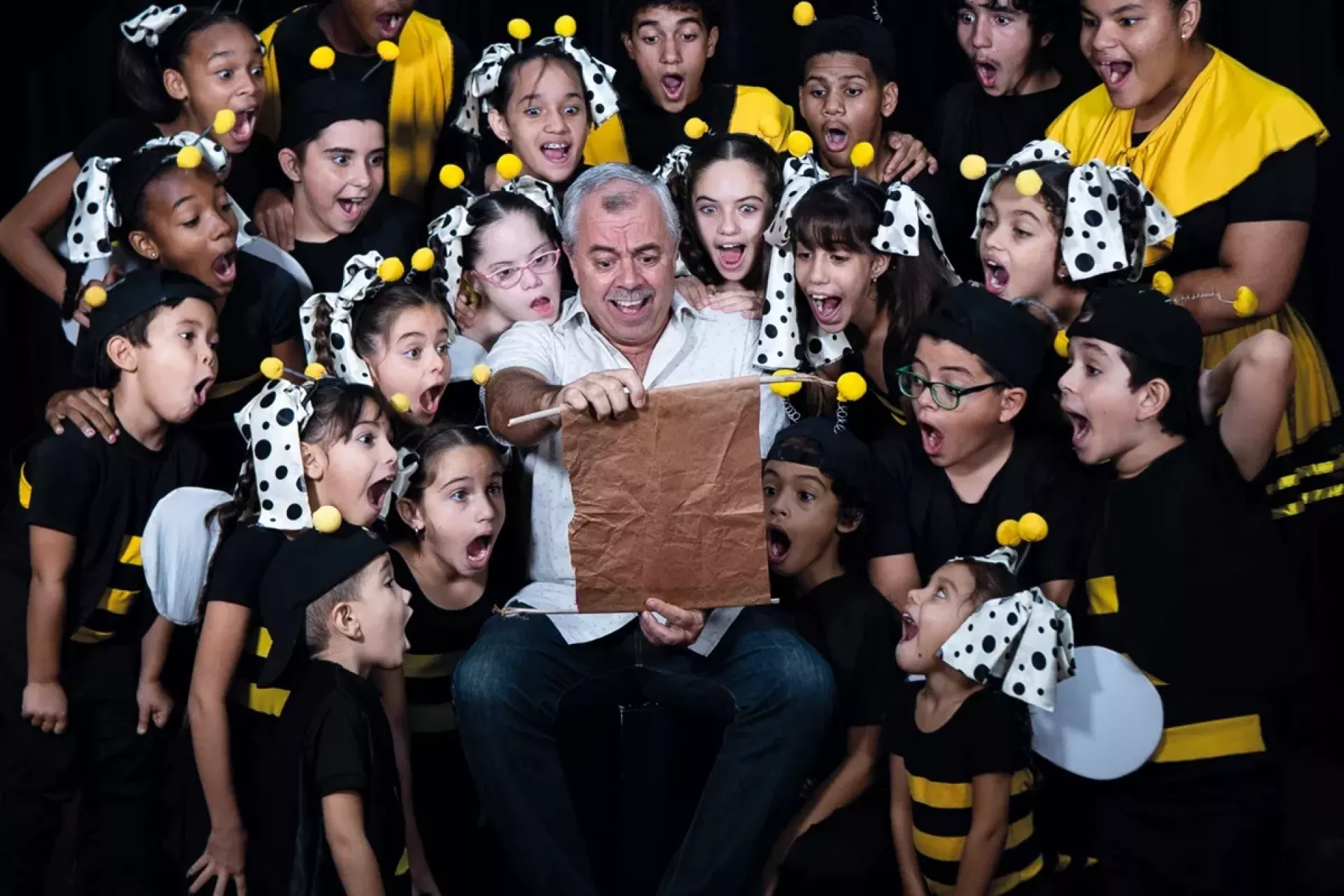
I have seen La Colmenita, the Cuban children’s and youth project, sing “Cuba, How Beautiful Cuba Is” on several occasions at the Havana Convention Center. Boys and girls singing to their homeland, with a joy that contrasts sharply with the difficulties their country is experiencing. This image seems to me a good way to begin talking about Cuba: not from prejudice, but from the perspective of its people.
Cuba is an island with a history of struggles for independence and sovereignty. A history that has one of its universal figures in José Martí. Martí wrote that “Homeland is humanity.” A simple yet profound idea: loving one’s own country also means respecting other nations and their right to decide their own future.
And today, the Cuban people suffer under a policy of economic, commercial, and financial sanctions that has lasted for more than six decades. The United States blockade is not just a difficulty in trading. It affects access to financing, bank transfers, markets, technology, equipment, medicine, food, fuel, and spare parts. And when these resources don’t arrive, the consequences end up in the streets, in homes, in schools, in hospitals, and ultimately, in the daily lives of the people.
This comes at a price. When a power plant needs a part that cannot be readily acquired, when a hospital struggles to replace equipment, or when a bus cannot run due to a lack of fuel or spare parts, the problem ceases to be merely economic and becomes a social one.
Energy shortages affect homes, but also hospitals, schools, water supply systems, and public services. The deterioration of infrastructure means a lower quality of life and a reduced capacity to face the future.
Education is also a prime example of what is at stake. UNESCO recognized that Cuba was the only country in Latin America and the Caribbean to have achieved all the measurable targets of the Education for All 2000-2015 strategy. And in 2026, UNESCO itself warned of the impact that external fuel restrictions are having on the continuity of education on the island. Education is also affected by the consequences of the US embargo.
But Cuba endures. Cuba is much more. It is the Cuba of José Martí, but also that of Mariana Grajales, whom Martí described as a woman of “decorum and greatness.” A woman who embodies the participation of the working class and women in the struggles for independence and who has left a lasting legacy among new generations.
It is also the Cuba of Nicolás Guillén, the national poet, who wrote in “Tengo” (I Have): “I have learned to read, / to count, / I have learned to write / and to think / and to laugh.” And he ended with a phrase that remains powerful: “I have, let’s see, I have what I had to have.” And the Cuban people have it: they have the capacity for resilience in the face of external attacks that seek, as in other parts of the world, to turn the island into a colony of the Empire.
And Cuba is also the Cuba of Celia Sánchez, who dedicated a good part of her life to preserving the memory of Cuban history. “What one does not know, one does not love, and what one does not love, one cannot defend.” A phrase that also summarizes the importance of collective memory and offers us a more accurate understanding of the reasons why a people resist for so long.
It is not necessary to idealize any country to defend its right not to be subjected to a blockade. This is the question we should be addressing: what is the point of maintaining a policy of economic pressure for over sixty years that ultimately affects hospitals, schools, transportation, energy, businesses, and families? And, above all, what is the point of continuing to punish an entire society?
The blockade has not disappeared. And the Cuban people continue to pay its price.
The international community, the European Union, the Spanish State, and the Valencian Community should not simply stand idly by. They should advocate for their own policies based on dialogue, cooperation, and respect for the sovereignty of nations. Cuba needs to be able to buy, sell, invest, access technology, and modernize its infrastructure without the obstacles imposed by the United States blockade.
We must be clear that behind every sanction there are people, families, the elderly, children. That’s why, when La Colmenita sings “Cuba, how beautiful Cuba is,” I think of this dignified and resilient people who, despite all the difficulties, continue singing, studying, working, building, and defending their sovereignty and their lives.
As I’ve said, José Martí wrote: “Homeland is humanity.” Perhaps we should start there: looking at Cuba through the humanity of its people and understanding that behind the blockade there are not only banks, sanctions, and numbers. There are people. There is a nation.
IMAGE CREDIT: Courtesy of Tin Cremata
[ SOURCE: www.cubainformacion.tv ]