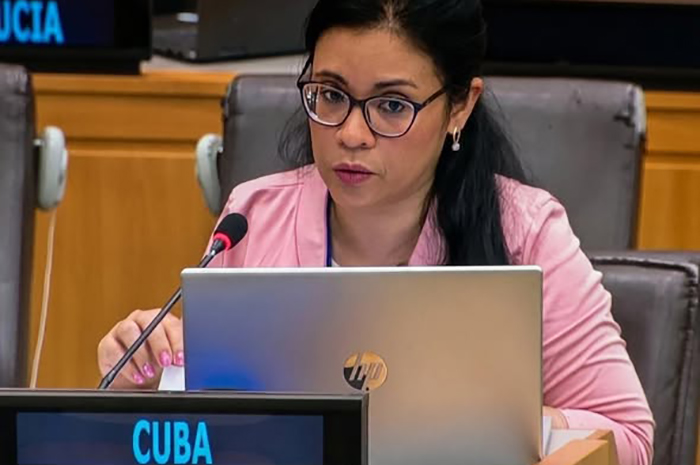
The Cuban delegation to the United Nations reaffirmed its historic stance in favor of completely eradicating global colonialism. At the Special Committee on Decolonization (C-24), Ambassador and Alternate Permanent Representative of Cuba, Daylenis Moreno Guerra, emphasized that this work remains an outstanding task and a priority for the international community as long as there are peoples who have not achieved self-determination.
The diplomat argued that contemporary global crises, such as poverty, energy and food insecurity, the technological gap, and climate change, directly affect the development of non-self-governing territories. Given this scenario, Cuba highlighted the fundamental role the organization has played for over sixty years in defending the independence of peoples.
In her remarks, Moreno Guerra expressed concern about the repeated failure of some administering powers to comply with their obligation to report on the socioeconomic and educational conditions of the territories under their control, as stipulated in Article 73(e) of the Charter of the United Nations. The ambassador noted that these reports are vital for assessing the reality of each territory and issuing recommendations that respect the wishes of its inhabitants.
Finally, the Cuban delegation urged the administering States to cooperate transparently with the Special Committee, formally participating in its sessions and seminars. The diplomat concluded that respectful dialogue and the timely provision of data are indispensable tools for successfully advancing toward definitive decolonization, within the framework and fundamental principles of the UN.
Prior to this intervention, the Cuban delegation participated in the 19th Conference of States Parties to the Convention on the Rights of Persons with Disabilities, where the same ambassador denounced the impact of the US economic, commercial, and financial blockade, in addition to the energy embargo and secondary coercive measures imposed by the United States.
The island’s delegation explained to the United Nations that these external policies create a complex scenario for the development of support strategies aimed at this sector of the population.
Despite the severe material limitations caused by these sanctions, the Cuban representation emphasized that the inclusion and integral development of citizens with disabilities constitute a priority for the State.
IMAGE CREDIT: Moreno Guerra expressed concern about the failure of some administering powers to comply with their obligation to report on the socioeconomic and educational conditions of the territories under their control. Photo: @DaylenisMorenoG
[ SOURCE: teleSUR ]