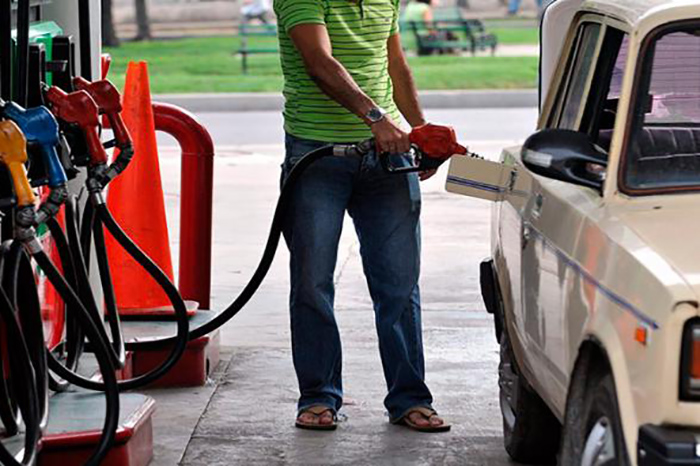
The Cuban Ministry of Finance and Prices has announced that, beginning this Friday, May 15, at 12:00 a.m., fuel prices in foreign currency will be updated, either upward or downward, according to the actual costs of each specific transaction, in response to the intensification of the economic, commercial, financial, and energy blockade imposed by the United States government against the Cuban people.
The decision, according to the agency, is a response to the drastic decrease in fuel supplies caused by President Donald Trump’s executive orders of January 29 and May 1, 2026, which, through threats and coercion, have prevented ships from docking and suppliers from selling, in an international context made more expensive by wars and geopolitical tensions.
Cuba demands its inalienable right to import fuel to guarantee the country’s economic and social development and the well-being of its people, the Ministry of Finance and Prices stated in a note that, due to its importance, the Cuban News Agency reproduces in full below.
Adjustments to fuel prices in dollars in Cuba.
The intensification of the economic, commercial, financial, and energy blockade imposed by the United States government against the Cuban people, aggravated by President Donald Trump’s executive orders of January 29 and May 1, 2026, has caused a drastic decrease in fuel supplies.
In recent months, the blockade has intensified, employing threats and coercion to prevent ships from docking and suppliers from selling, in an international context exacerbated by wars and geopolitical tensions. Faced with this complex reality, scarce fuels are reaching high prices, making it impossible to maintain a single, fixed price for sales in dollars across the country.
The gradual process of social and economic transformations that Cuba, in its legitimate and sovereign right, has been undertaking has allowed multiple actors to import and sell fuels in foreign currency.
Given this context, starting this Friday, May 15, at midnight, fuel prices in foreign currency will be updated, either upward or downward, according to the actual costs of each specific transaction.
Therefore, going forward, different retail fuel prices will coexist at service stations, reflecting the actual import costs for each economic actor. This will be influenced by the supplier, freight costs, the supply route, insurance, risks, and fluctuations in the international market.
To date, a fixed price has been maintained for fuel sales as a policy to protect against the changes and instabilities inherent in a volatile market, which is no longer economically sustainable under current conditions.
Cuba demands its inalienable right to import fuel to guarantee the country’s economic and social development and the well-being of its people.
Havana, May 12, 2026
Ministry of Finance and Prices
IMAGE CREDIT: ACN | Photo: Archive
[ SOURCE: AGENCIA CUBANA DE NOTICIAS ]