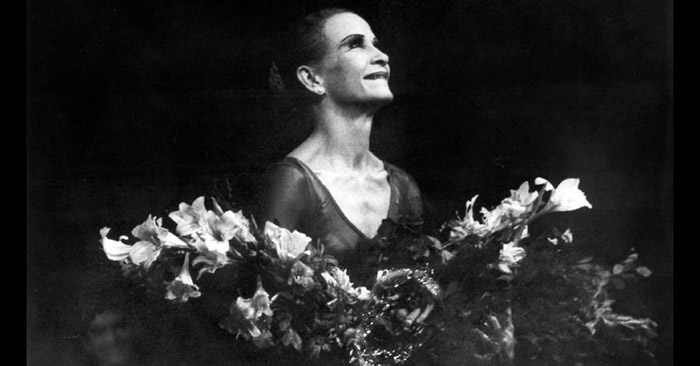
María Elena Llorente, Principal Dancer and *Maître* (ballet mistress/coach) of the National Ballet of Cuba (BNC), passed away Monday morning at the age of 80 at the Hermanos Ameijeiras Hospital in this city, due to complications arising from heart failure.
According to a post on the BNC’s official Facebook page, Llorente—a recipient of the National Dance Award—was born in the Cuban capital on May 20, 1946. She began her ballet studies as a child at the School of the Pro-Arte Musical Society of Havana, later continuing at the Alicia Alonso National Ballet Academy.
Notable teachers contributed to her training: Alicia Alonso (1920–2019), Fernando Alonso (1914–2013), Marta Mahr, Alexandra Fedórova (1884–1972), and, notably, the Puerto Rican dancer José Parés (1926–2006). According to María Elena, Parés made her aware of the importance of possessing a solid, clean technique to be used “as a means and not as an end.”
In 1962, she joined the BNC corps de ballet—a company where she was promoted to the rank of Soloist in 1967 and Principal Dancer in 1976. Llorente thus began a distinguished artistic career spanning more than five decades, characterized by technical assurance, stylistic precision, and elegance of interpretation.
Over those years, she took on a vast and comprehensive repertoire that included works in a wide variety of styles by both Cuban and international choreographers; And, of course, there are the titles from that great repertoire inherited from the 19th century—often referred to as the “traditional” repertoire—in which she excelled: *La Fille mal gardée* (she is considered one of the most outstanding interpreters of the role of Lise in the history of Cuban ballet); Swanilda in *Coppélia*; the roles of Myrtha (Queen of the Wilis) and Giselle in the crowning masterpiece of Romantic ballet; Princesses Aurora and Florine in *The Sleeping Beauty*; Odette-Odile in *Swan Lake*; and Kitri in *Don Quixote*.
The condolence statement notes that the ballerina also participated in the premieres—or Cuban premieres—of many ballets, some of which were created specifically for her.
In the view of the BNC, works deserving special remembrance include *Introducción a una idea*; *Hamlet*—a ballet in which, to date, she is the only dancer to have performed the female lead, Ophelia, in the complete version; and *Los amantes de Verona*, a choreographic reimagining of the Shakespearean tragedy *Romeo and Juliet* by Iván Tenorio (1941–2014).
Also included in this selection of outstanding works are *Tarde en la siesta*—a signature piece of Ibero-American choreography in which she danced the role of Esperanza, the younger sister; *El río y el bosque* and *Vals* by Alberto Méndez; the title role in *Isabel Ilincheta* (from *Cecilia Valdés*) and *Equinoxio* by Gustavo Herrera (1946–2016); and the ballets *La tierra combatiente*, *Días y flores*, *Curva descendente*, and *La infanta* by the Chilean choreographer Hilda Riveros (1936–2013). It should also be remembered that Llorente was the first BNC principal dancer to perform—and thus incorporate into the company’s repertoire—certain *pas de deux* from the traditional canon that later became staples for many leading Cuban dancers: the *Grand Pas Classique* and the *La Bayadère* *pas de deux* (premiered with Alberto Méndez); the *Tchaikovsky Pas de Deux* (premiered with Lázaro Carreño in 1982); and the now-celebrated *Le Corsaire* *pas de deux*, which she danced for the first time with the Spaniard Víctor Ullate during the 5th Havana International Ballet Festival in 1976.
A significant moment in the professional life of this celebrated dance teacher was her performance with the Alvin Ailey American Dance Theater in New York in May 1977—an event described by actor Harry Belafonte (1927–2023) as “an important historical event.”
Her final performance as a dancer took place on October 28, 2002, at the closing gala of the 18th Havana International Ballet Festival, with the premiere of the ballet *Souvenir*. Choreographed by Eduardo Blanco specifically for the occasion, the piece featured her dancing alongside the then-young dancer Javier Torres.
The following year, on April 29, 2003—at the International Dance Day Gala where the BNC’s “Four Jewels” received the National Dance Award—Llorente gave a special performance alongside José Zamorano (1953–2020) and other iconic figures of Cuban dance.
On October 29, 2012, as a moving finale to the gala of the 23rd Havana International Ballet Festival—marking the centenary of *La comparsa* by Maestro Ernesto Lecuona (1895–1963)—she returned to the stage for another very special performance alongside Alicia Alonso, Marta García (1949–2017), Orlando Salgado, Jorge Vega, Osmay Molina, and Lázaro Carreño.
The statement continues by recalling her foray into choreography, highlighting the full-length version of *Don Quixote* in 1988—created alongside Marta García and Karemia Moreno—and her stagings of two scenes from *La Bayadère*.
Like her colleagues, and alongside her career as a performer, Llorente spent years working as a teacher and rehearsal coach for several generations of dancers—not only at the BNC but also at the National Ballet School, the Choreographic Center of the Valencian Community, and the courses of the Alicia Alonso Dance Chair (now the institute bearing the same name) in Spain.
María Elena Llorente’s artistic career was recognized with significant national and international awards: the Bronze Medal at the 4th International Ballet Competition in Varna, Bulgaria; the Puerto Rico Bar Association Medal (1978); the Distinction for National Culture conferred by the Cuban Ministry of Culture; the Alejo Carpentier Medal; the Félix Varela Order (First Class) granted by the Council of State of the Republic of Cuba; and the National Dance Award, received in 2015.
In accordance with the artist’s wishes, her remains will be interred in the family mausoleum, the renowned dance company added, expressing deep shock and sorrow while sharing in the grief of the family, admirers, and friends of a figure who is, without a doubt, a significant personality in Cuban dance.
IMAGE CREDIT: ACN – Culture / Photos: National Ballet of Cuba
[ SOURCE: AGENCIA CUBANA DE NOTICIAS ]