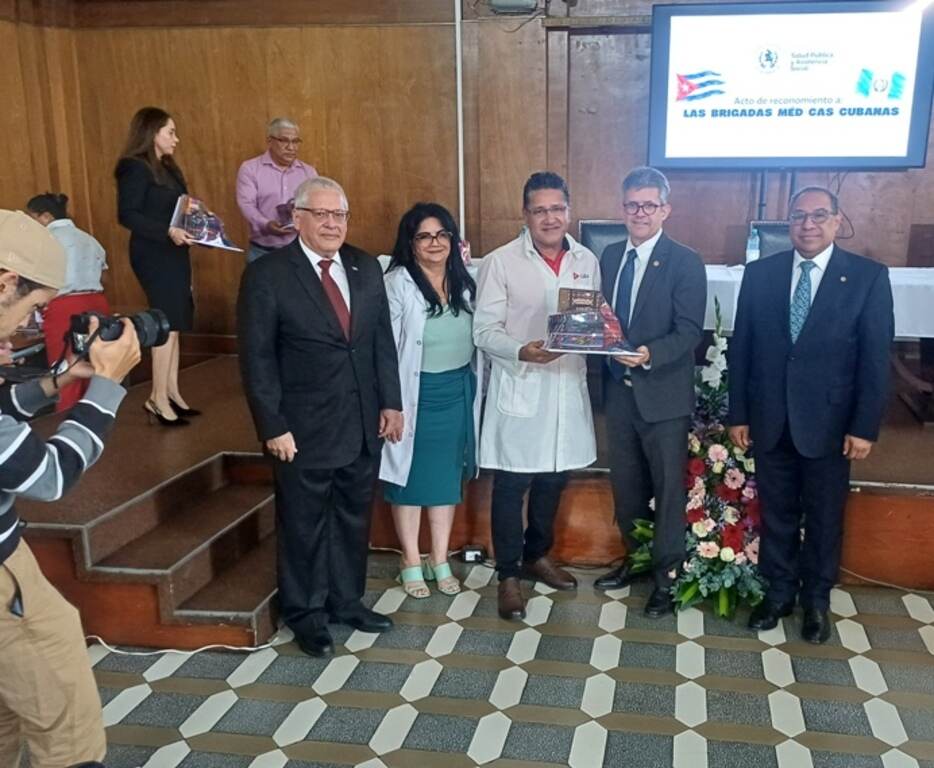
Guatemala’s Minister of Health and Social Assistance, Joaquín Barnoya, on Friday recognized the nearly 28 years of uninterrupted work by the Cuban Medical Brigade (BMC) in the most impoverished communities.
In his closing remarks at the event in the capital, the minister emphasized that the Cuban doctors made history from the moment they arrived, in a system that placed little value on public assistance, unlike the situation on the Caribbean island.
Before the Cuban ambassador, Nazario Fernández, the Vice Minister of Foreign Affairs, Julio Orozco, deputy ministers of health, directors, and a group of Cuban health professionals, Barnoya highlighted the support they received.
For over 27 years, doctors, nurses, and technicians in various fields have selflessly and ethically provided care to the population, demonstrating commitment and a true vocation for service, he explained.
At the headquarters of the Departmental Directorate of Integrated Health Services Networks (Central Area), he detailed that the presence of the Cuban Medical Brigade (BMC) strengthened coverage in 16 departments.
He emphasized the importance of highlighting their work, particularly in primary health care, disease prevention, and maternal and child health, “so essential in our country,” he asserted.
In part, he noted, following the example set by Cuba, the team is building an integrated health services network, where primary care is a fundamental pillar of medical attention.
He also pointed out the need to emphasize specialized treatments and other levels of care that are part of the health system, which Cuba has also developed in an exemplary manner.
However, they didn’t just provide health services; they also trained midwives, served as local promoters, and acted as community leaders, which are fundamental to delivering healthcare from every perspective, the minister explained.
The Latin American School of Medicine in Havana trained more than a thousand Guatemalan doctors, who are currently working in our healthcare system, he noted.
The Cuban Medical Brigade (BMC) also contributed knowledge and experience in key specialties such as ophthalmology, gynecology, obstetrics, pediatrics, internal medicine, family medicine, and general surgery, the minister specified.
However, while we are closing this chapter of the BMC, cooperation with our sister nation of Cuba continues in medicine, he emphasized.
We are working on an integrated network that includes services where the island is an example to follow, and we will continue collaborating with them, strengthening our level of care, Barnoya affirmed.
“You brigadistas,” he said, “came to serve your country, but above all, you showed us humanity with your dedication.”
[ SOURCE: PRENSA LATINA ]