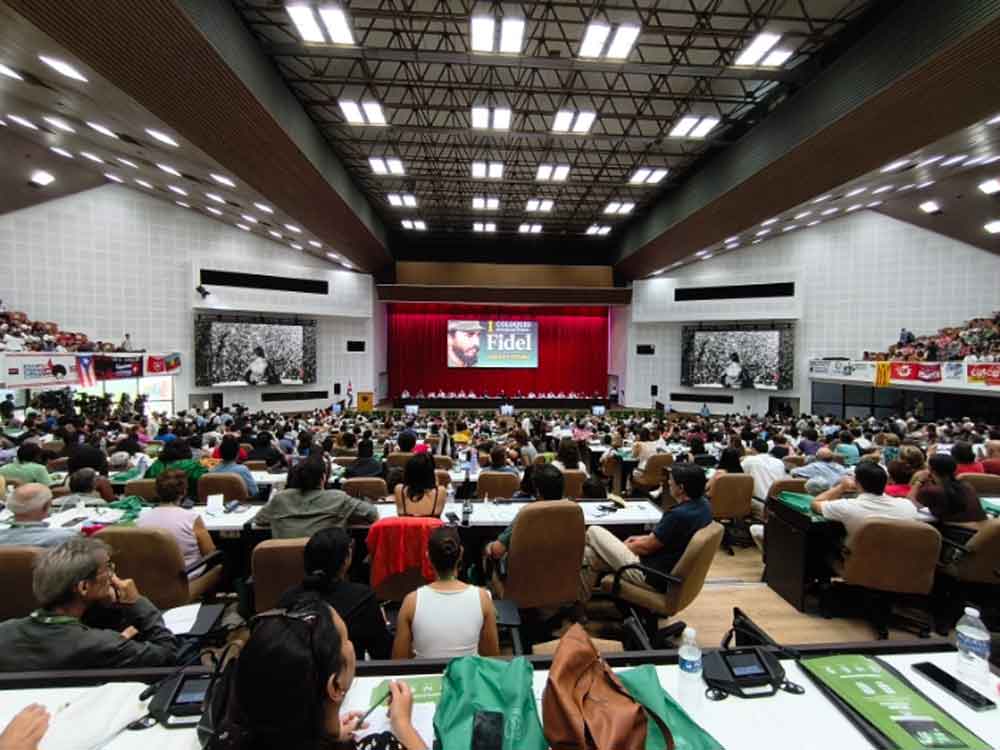
The First International Colloquium “Fidel: Legacy and Future” continues in the Cuban capital, focusing on highlighting the legacy of the Commander-in-Chief in strategic sectors: foreign policy, education and health.
A forum on Cuban foreign policy brings together presentations on Fidel Castro’s impact on the struggle for peace, the unity of peoples and revolutionary diplomacy.
The forum on Fidel and public health addresses his influence in that sector and the development of the Cuban biotechnology and pharmaceutical industry.
In the area of education, the Colloquium analyzes the leader’s impact on professional training and literacy, highlighting his educational work as a benchmark for social justice, solidarity and human development.
The philosophical and ideological foundations of Fidel Castro’s thought is also discussed, including his political thought, ethics, and social leadership, as well as his contributions to the legal sector.
The leader’s oratory and political communication, his revolutionary praxis, political power, and social leadership were among the topics analyzed by the more than 1,500 delegates attending the Colloquium.
Furthermore, the Colloquium examined the key aspects of Fidel Castro’s thinking regarding political strategy and regional integration, the role of youth and student movements, and the relationship between Martí and Fidel in the construction of Our America.
The leader’s influence on science, culture, communication, agriculture, anti-imperialism, and the women’s movement are highlighted, emphasizing Fidel’s legacy as a champion of social justice, sovereignty and international cooperation.
The First International Colloquium “Fidel: Legacy and Future” began on Monday at Havana’s Convention Center and will continue until Thursday, August 13th — the centennial of the birth of the historic leader of the Cuban Revolution.
[ SOURCE: PRENSA LATINA ]