By José R. Cabañas Rodríguez
We are living in a political era in which the succession of real or virtual events forces non-professional consumers of information into a recurring forgetfulness of history and an inability to foresee the future.
The main effort in this regard comes primarily from the remnants of what was once the U.S. federal government, but even more so from the mega-corporations that control social media algorithms, personal data, and even the dreams of ordinary citizens.
The transition taking place amid the multilateral disorder among the countries that have been part of the United Nations system since 1945 points in various directions: from the attempts of those who still aspire to build a better world, through those who think only of controlling their immediate geographical surroundings, to those who seek to prevail at any cost, including the end of humanity—or a significant portion of it.
Amid this bleak reality, we have an obligation to look up and see a little further ahead, to imagine a future and build towards it, to try to unravel the keys to those processes we know will not be permanent over time.
Rereading these days the main perspectives from science, the press, and U.S. academia, there is almost no effort to try to envision a post-Trump scenario. Such is the intensity of the disorder and chaos reigning in the U.S. executive branch—and being exported abroad—that many assume this state of affairs would be permanent or irreversible. And they may be right.
But even in that case, politicians, opinion leaders, businesspeople, bureaucrats, university administrators, and others who can influence how the country’s future events unfold should ask themselves now how to prevent the current crisis from continuing over time, or how to prevent it from recurring in the future.
Trump’s constant presence in national and international headlines leads a majority to believe that the figure behind them will not cease to exist as a political—or biological—phenomenon at some point. Paradoxically, those who participate in and benefit daily from his presidential excesses are the ones who see most clearly that this may be a fleeting opportunity, one they must exploit to the fullest and with all intensity to reap personal benefits in the shortest time possible.
Objectively speaking, Donald Trump, as a human being and as a politician-businessman, likely has more days behind him than ahead of him. He cannot be re-elected for another term and lacks a partisan or other structure behind him that would allow for the extension of what might be called “his legacy.”
At first glance, his nominal vice president, JD Vance, appears increasingly sidelined and self-sidelined both in the news and in major cabinet decisions. He comes across as a young man who could have a future executive career and who would not want to bear the stinking burden of his boss, much like what the much older Mike Pence did on January 6, 2021.
Perhaps it cannot be said that his “administration” holds the record for the most departures in 17 months, but there have been significant departures from top-tier portfolios: Attorney General, Homeland Security, Secretary of Labor, Director of National Intelligence, as well as the Director of the National Counter terrorism Center, the Secretary of the Navy, the National Security Advisor, the Deputy Director of the FBI, and the Commander of the Border Patrol.
Particularly intense have been the changes within the now-called Department of War and in the Army’s command structure and its overseas representations, amid the disaster of the military adventure against Iran. Secretary Pete Hegseth remains in his post, surpassed in his complete and thoughtless servility only by the current Secretary of State, who logically dreams of being the Republican nominee for 2028.
And here one might add, “plus what is yet to come,” if we recall the midterm purge Trump carried out upon reaching the midpoint of his first term in late 2018. These facts should suffice to support the conclusion that he will be the only one absolved of responsibility for any domestic or foreign policy failures, both current and those yet to occur.
If these realities should be taken into account by domestic supporters and opponents, they should be even more so by foreign dignitaries who have not been sufficiently dignified in joining the Trumpist parade and dancing to his tune. Poor, insular, and tiny countries can be forgiven for the weakness of having been impressed by the Big Orange Boy, but the leaders of Old Europe and other nations that count themselves among the allies could well have shown greater stature when rushing to pose in group photos, clap, and excitedly call the U.S. president Daddy.
In this brief exercise in futurism, it would be worth asking whether the American Dream will ever again be sold as a mass-market product, whether there will be new courses for foreign students on “democratic values,” and whether ships on the high seas will once again be guided by the Beacon of Freedom. The entire puzzle that was pieced together over years and at a cost of millions of dollars to construct the facade of the superior and unrivaled hegemon has been shattered in one fell swoop by the blackmail, threats, and use of force by the 45th-47th president and his inner circle.
Perhaps the one who best interpreted the watershed moment we are living through was the Israeli Benjamin Netanyahu, who took full advantage of years of Mossad and Jewish lobby infiltration into American society to, in a moment of total chaos, drag the war machine of his great ally and benefactor into service for suicidal Zionist plans in the Middle East.
Several developments are yet to unfold that will either intensify or mitigate the crisis we face today. The so-called midterm elections in November 2026 could result in a Democratic victory in one or both chambers of Congress. Depending on the magnitude of the Republican defeat, Democratic opponents may or may not resume an impeachment process against Trump, as they unsuccessfully attempted in 2019. Would a Trump cornered by a succession of defeats be more or less reckless?
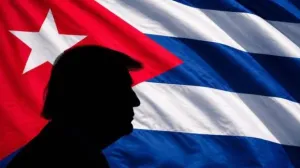
For Cuba, these questions and possible scenarios also constitute an invitation to view the future from other angles. The crisis into which the island has been plunged by the multidimensional tightening of the U.S. blockade and other abuses is also the result of the attitude of many governments, companies, and institutions, due to their willingness to yield to pressure from Washington and abandon to its fate a small island they consider to fall within Washington’s “natural sphere of influence.”
Hundreds of bilateral or multilateral events, dozens of visits by official delegations, and government exchanges have failed to shield Cuba’s diplomatic and economic relations with a significant number of countries, which have yielded to the mere threat of facing further sanctions from the United States. It would be short-sighted to claim that Cuba has not received solidarity and political support from dozens of organizations, political parties, and movements of all kinds; yet, individually or collectively, they have lacked the capacity to offer an alternative to the priorities of their respective governments. It is also valid to note that a small group of nations has provided support that has served as a lifeline for the Cuban people under such circumstances.
Cuba’s vision of the future in a post-Trump scenario should place much greater emphasis on policies built upon a functional economy, rather than the reverse. We must gain a better understanding of the value chains generated by global production and objectively decide which ones we can integrate into and under what conditions. We will need to analyze more precisely which processes of the so-called Fourth Industrial Revolution we still have time to access and what it would mean to be absent from them. We must place at the core of all our foreign actions the presence of our citizens wherever they reside, in a coherent, consistent, and constructive manner.
Recalling the undisputed leader who led us to victory several times in the past, from the depths of crises similar to the one we face today, the future will belong to us only if we manage to “emancipate ourselves by our own efforts.”
José R. Cabañas Rodríguez is Director of the International Policy Research Center (CIPI) in Havana, Cuba and former Cuban Ambassador to the US.
Source: Resumen Latinoamericano – English