By Hedelberto López Blanch
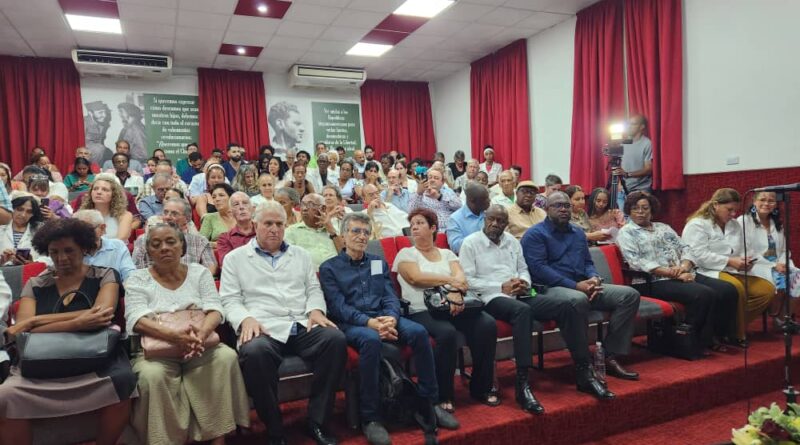
The immense interest sparked by the presentation of the book *Internationalism in Cuban Medicine: Notes for a History* (*El internacionalismo en la medicina cubana. Apuntes para la historia*), by Dr. Armando Elías González Rivera, was evident as more than 200 people filled the auditorium at the Faculty of Medical Sciences of the Calixto García Hospital.
Published by Casa Ruth and presented by the author of this article, the book is set to become a reference work for historians, researchers, and the general public interested in learning about the internationalist trajectory of Cuban medicine.
This book will make history within the Cuban health sector, as it recovers and honors the names of the men and women who gave their lives to help other peoples—a testament to the true humanitarian, internationalist spirit of Cuba, covering the period from the mid-18th century through 1991.
Dr. Armando is a first- and second-degree specialist in Internal Medicine, as well as a second-degree specialist in Intensive and Emergency Medicine. He served on a mission in Angola as a military physician from 1977 to 1980 and headed the Intensive Care Unit at the Calixto García Hospital from 1989 to 2018.
As a persistent historian and researcher, Dr. Armando González not only gathered information on Cuban health professionals who died while on internationalist missions since the beginning of the Revolution in January 1959, but he also conducted extensive research—consulting books, pamphlets, newspapers, magazines, and library archives. He visited the families of the fallen and consulted cemetery records to produce a work that also compiles countless details, some dating as far back as 1740.
In the course of this research, he examined the humanist and internationalist thought of figures such as Félix Varela, Carlos Manuel de Céspedes, José Martí, Antonio Maceo, Fidel Castro, and other prominent Cuban patriots.
The book is well-structured and divided into four parts. The first covers the historical antecedents of internationalism in Cuban medicine, beginning with those who provided support during the First World War, the Spanish Civil War, and the Second World War, as well as the contributions of the Cuban Red Cross.
The second chapter focuses on those who carried out such activities during the wars of independence and the revolutionary struggles of the 20th century.
The third part describes the internationalist medical collaboration undertaken by the Revolution; the state of human resources in the healthcare sector in 1962; internationalist efforts in Africa and Asia; and the Cuban example and its broader impact.
The fourth chapter is dedicated by the author to the heroes and martyrs who passed away between 1959 and 1991.
It includes information on 58 Cuban healthcare personnel, identified through his meticulous research.
One might wonder how Armando came to devote so much time and dedication to this endeavor.
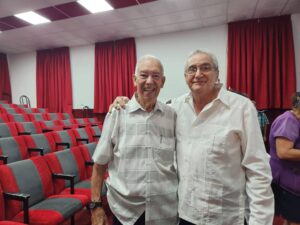
 Dr. Armando Elías González Rivera
The answer lies in his own life experiences: first, as a military physician providing aid to Angola—helping the nation preserve its independence against South African aggression and armed factions—and, 40 years later, as an intensive care specialist on the front lines, confronting the consequences of the COVID-19 pandemic, which claimed so many lives. He arrived in Angola in 1977, fresh out of medical school. He took part in military convoys and served in war zones, where he treated both Angolan and Cuban comrades—men wounded by enemy shrapnel or in accidents. He also witnessed the deaths of fellow healthcare workers who served alongside him at the hospital. These events struck him to the very core of his soul.
Profoundly moved by these experiences, he decided to set aside his memoirs of Angola—which may well become his next book—and instead dedicate himself entirely to recovering the names of the healthcare personnel who gave their lives during these humanitarian internationalist missions.
The work Dr. Armando has produced serves as an excellent lesson for any young researcher: it demonstrates the importance of gathering data from every available source, as well as the value of persistence, patience, dedication, and the know-how required to dig in the right places to achieve a goal.
As the author himself notes, there remain many heroic yet painful stories yet to be told—stories that deserve further investigation. There is no one better suited than the author to continue contributing to the historiography of Cuba’s internationalist healthcare efforts.
I invite you to read this book. Furthermore, I believe it is essential that this magnificent work eventually finds its way into the hands of readers in a printed, physical format.
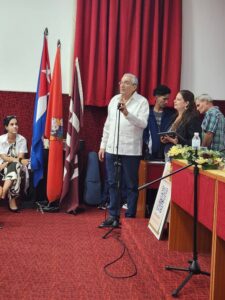
With his characteristic modesty, Professor Armando remarked during his address that he felt gratified to have made a modest contribution to the history of the immense undertaking of internationalism in Cuban medicine, and that he had been able to fulfill his duty to help preserve the memory and legacy of those heroes of the nation.
The presentation was attended by the leadership of the Calixto García Hospital and provincial health authorities, as well as physicians, nurses, specialists, medical students, writers, members of the diplomatic corps accredited in Cuba, and family members of those who perished while serving on these missions.
( * ) Hedelberto López Blanch is a Cuban journalist. He writes for the newspaper *Juventud Rebelde and the weekly Opciones. He is the author of Cuban Emigration in the United States, Secret Stories of Cuban Doctors in Africa, Miami: Dirty Money, and Rubio: An Uncontrollable Mythomaniac, among others.