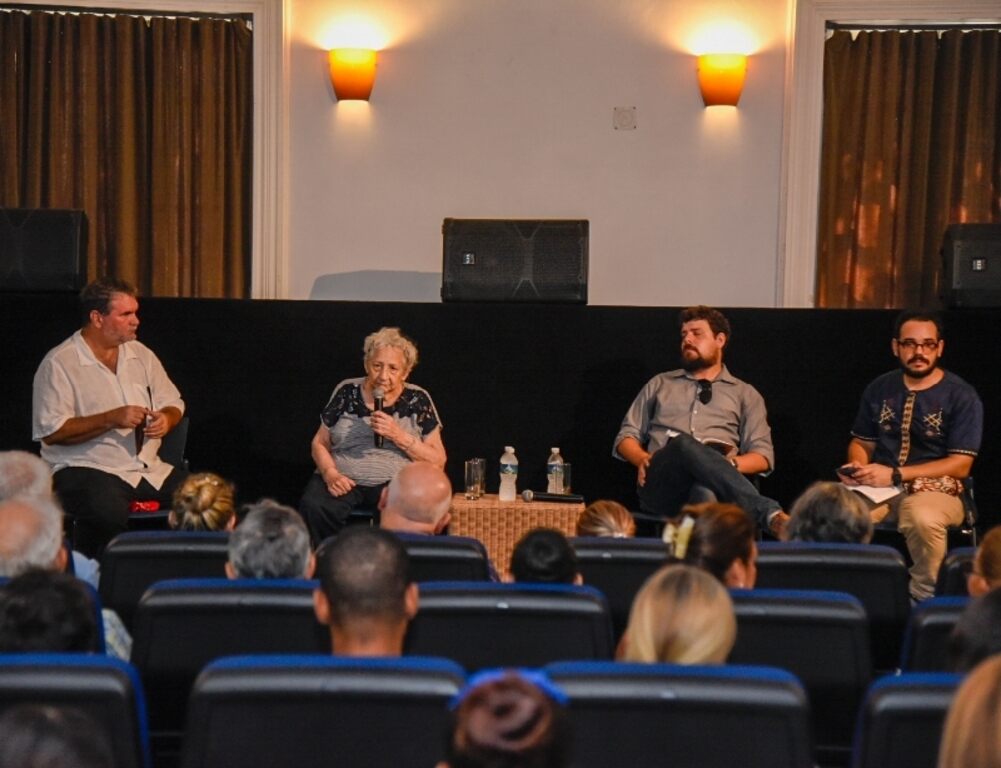
An extraordinary gathering, one of those that narrates history through the voices of its protagonists, took place on Tuesday, commemorating the 65th anniversary of the speech “Words to the Intellectuals,” delivered by Commander-in-Chief Fidel Castro.
Those ideas expressed by the revolutionary leader in a frank and open conversation with Cuban artists in June 1961 constitute a starting point for national cultural policy, as they reflect the vision conferred upon it by the Revolution.
These considerations were offered by the prominent Cuban researcher Isabel Monal at a panel held at the Fidel Castro Ruz Center, where she shared similar opinions with lawyer Michel Torres and Ernesto Teuma, a professor at the University of the Arts (ISA).
At the event, marked by a tribute to Commander of the Revolution Ramiro Valdés Menéndez, who passed away this Sunday, the panelists addressed the significance of a speech that paved the way for creativity in Cuba and demonstrated the link between politics and culture.
According to the recipient of the National Prize for Cultural Research (2025), “Words to the Intellectuals” reflects the Revolution’s vision of the role of culture, a product of the thought, analysis, and spiritual growth that Fidel Castro had been developing.
From that moment on, it provided the Revolution with a conception of culture in society, respect for artistic creation, and for creators, she noted.
The speech relates to “a great problem that has been debated for thousands of years among the human beings who have inhabited the earth, and that is precisely what the role of culture, in its broadest sense, is for the development of society.”
Fidel’s intervention contributed to this understanding in Cuba, and those minor incidents that initially caused some fear ultimately led him to realize that the way to confront it was through dialogue, she opined.
Isabel Monal recalled that those three days unfolded in a fraternal atmosphere, where Fidel’s respect for differing opinions prevailed, even when some were mistaken.
When he concluded his address to the intellectuals, the fears subsided and the search began, she confessed, “because the search for a policy is not solely the responsibility of a leader, however great he may be.”
He knew that it was the intellectuals themselves, together with the people, who had to develop the policy, and if there were errors, they would be corrected, she explained.
Sixty-five years after that historic event, “Words to the Intellectuals” remains relevant, “because it is not only for a cultural policy in Cuba, but for a cultural policy that evolves within a society that is constantly changing… and that is timeless, for all time.”
Torres contributed other considerations to the debate, such as the historical context in which those meetings took place, marked by urgent needs of all kinds and by the siege of a foreign power.
According to his statements, the document reflects the Cuban Revolution’s commitment to a democratic cultural policy, which seeks to make art and culture a national heritage.
What better expression of freedom than the fact that these intellectuals can meet and discuss in that place, exercise their right to speak publicly, and have their concerns taken into account, added the professor from the ISA (Instituto Superior de Arte).
“We must make Palabras (Words) second nature to revolutionary politics, not just refer to it, but embody it, understand its meaning, and make it one of the emblems we can proudly bear,” he emphasized.
“This document helps us to address the challenges of the present, which are the challenges to the existence of the Revolution, the threats and dangers that loom over it, the need for dialogue and public debate, the role of intellectuals and culture, and the transformation that still remains to be done,” the young man concluded.
Moderated by the director of the José Martí National Library, Omar Valiño, the panel included the Minister of Culture, Alpidio Alonso, the director of the Fidel Castro Ruz Center, René González, and other intellectuals and students.
IMAGE CREDIT: Photo: Endrys Correa
[ SOURCE: PRENSA LATINA ]