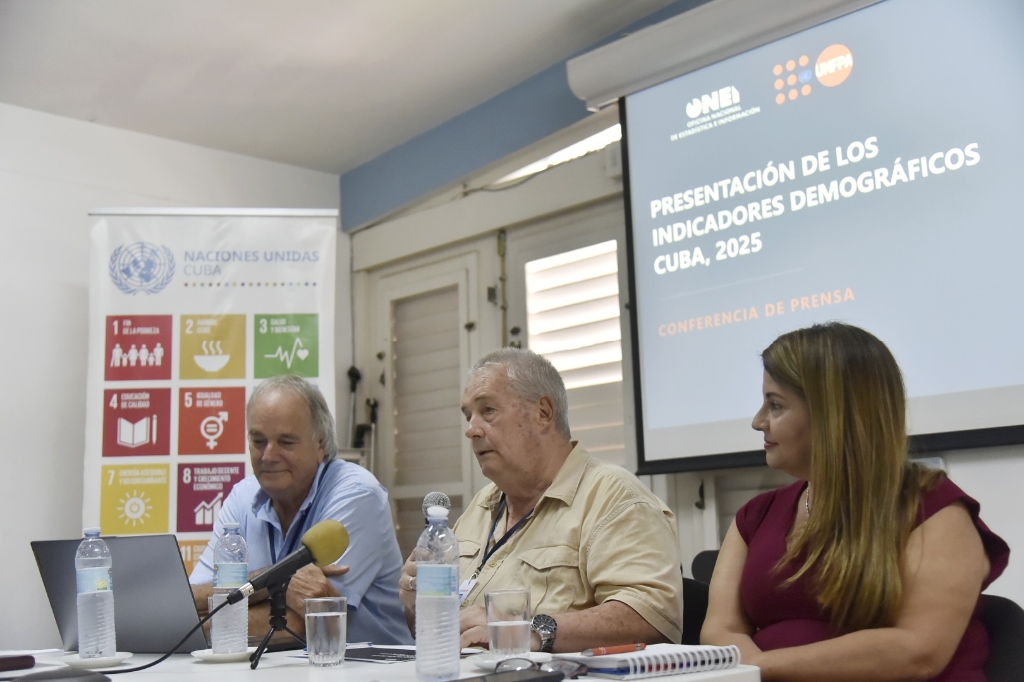
Cuba’s population continues to decline, with a demographic profile characterized by low fertility, increased mortality, persistent aging, and high internal and external migration.
The deputy head of the National Office of Statistics and Information (ONEI), Juan Carlos Alfonso, specified that the country’s effective population at the end of 2025 was 9,434,593 inhabitants, representing a decrease of 313,414 people compared to the previous year.
According to Alfonso, this downward trend, which has been common since 2021, is primarily due to the consequences of the Covid-19 pandemic and the country’s complex situation, exacerbated by the economic, commercial, and financial blockade imposed by the United States.
For his part, Diego Enrique González, director of the Center for Population and Development Studies at the ONEI (National Office of Statistics and Information), warned that the natural population growth rate is -7.1 per thousand inhabitants, meaning the country is losing population even before accounting for migration.
Regarding this latter indicator, it was revealed that the total net migration was high (245,264 people), becoming the factor that most influenced the population decline last year.
The country registered 68,064 births last year, the lowest number in recent decades.
Meanwhile, deaths totaled 136,214, representing almost double the number of births, the analyst pointed out.
Another statistic that highlights the country’s demographic complexity is the infant mortality rate, which stood at 9.9 per 1,000 live births.
Likewise, for the second consecutive year, the Total Fertility Rate was 1.29 children per woman, the lowest figure recorded in the historical series since 1958.
González also warned that the population aging rate is 26.7 percent, which continues to place Cuba as the oldest country in Latin America and the Caribbean.
He added that the median age in the country is 45.0 years, with the central province of Villa Clara being the oldest.
This figure poses significant challenges to the care system, especially given the decrease of 1,269,894 people of working age in the last five years.
Regarding internal migration, he noted that Havana has seen a net gain of 21,104 people; However, Havana has a negative net migration rate, with 78,537 people leaving the Cuban capital for other countries—the highest figure among the nation’s 15 provinces.
Meanwhile, the cities that contribute the most population to the rest of the country are Granma, Santiago de Cuba, Guantánamo, and Holguín, all located in the east.
Officials from the United Nations Population Fund (UNFPA) office in Havana and the Center for Demographic Studies were also present at the conference.
IMAGE CREDIT: Photo: Abel Rojas Barallobre
[ SOURCE: PRENSA LATINA ]