As their beautiful world began to fade, leaving only the lights on the Havana coastline behind, some swore that their return to recover everything they had was just a matter of days, but it wasn’t to be. Far removed from the joys of memory, their feelings turned to anger.
And why were they so angry? You will understand this when you learn about the nature of the first law enacted by the Cuban Revolution, on May 17, 1959. The nationalization of properties, ratified by the law, signified the sovereign course of a nascent revolution, cornered by the measures against the Cuban economy imposed by the U.S. government.
From the beginning, the response of the United States government was strong and clear. The blockade against Cuba was, and is, an act of war. To understand this, let’s look at three defining examples:
The State Department declared that, “it was incumbent upon the United States government to immediately assume a very firm position against the Agrarian Reform Law and its implementation […] The best way to achieve the result was through economic pressure,” June 24, 1959.
Shortly before, on February 6, 1959, the National Bank of Cuba declared and recorded the deposit of four hundred and twenty-four million dollars in U.S. banks. This amount was stolen by leaders of General Fulgencio Batista’s government. Obviously, not a single cent was returned to Cuba.
The next step was the denial of a modest loan, intended to support the Cuban currency, by the United States National Security Council on February 12, 1959.
The sanctions were aimed at breaking, subduing, and continuing to squeeze the Cuban people until they surrendered.
It was the Agrarian Reform Law that eliminated large landholdings and set the maximum land ownership at 30 caballerías (402 hectares). It abolished the right of foreign companies and individuals to own land in Cuba, except for small farmers.
This was followed in 1963 by a second Agrarian Reform Law that established nationalization. This law stipulated the payment of compensation applicable equally to Cubans and foreigners. They were 1.5 percent of landowners, who possessed more than 46 percent of the national land area. The measure harmed the interests of both domestic and foreign large landowners and, to a large extent, aligned them in conspiracies and attacks against the Cuban Revolution.
Consequently, sharecropping and extensive production on large estates were eliminated, and land ownership was distributed to tens of thousands of peasants, tenants, and squatters—that is, the vast majority of Cuba’s rural population.
The Birán estate, owned by the Castro family in the eastern region of Holguín, was among the first to be expropriated. On May 19, 1960, the Sierra Maestra newspaper reported that these lands were distributed among the families of that area.
This first measure was decisive, as it affected the large corporations, including the untouchable American ones; in particular the powerful United Fruit Company (UFCo), one of the largest producers, owner of sugar giants and at the same time, of the largest latifundist companies in the country.
On August 6, 1960, Fidel Castro announced the nationalization of 26 U.S. companies that owned the country’s telephone and electricity monopolies, three oil refineries, and 36 sugar mills.
Just 83 days after the triumph of the Cuban Revolution, the Cuban Institute of Cinematographic Art and Industry (ICAIC) was established. In April 1959, Casa de las Américas was founded to develop and expand sociocultural relations with the peoples of the Americas. During this period, the Prensa Latina news agency was created.
The Literacy Campaign began in 1961, teaching nearly one million people to read and write. “Reading is growing,” proclaimed posters everywhere, following the creation of the National Printing Office, which began publishing works of world literature with a print run of 100,000 copies in four volumes of Miguel de Cervantes y Saavedra’s *Don Quixote*.
In 1962, the National School of Art opened, expanding artistic education. The Cuban population benefited from equal opportunities through a humanitarian social policy, particularly for the poorest people in general and for Black people, who had historically been excluded.
In July 1960, Fidel Castro announced the nationalization of all American properties on the island, following the elimination of the Cuban sugar quota by the Washington government. The Cuban Petroleum Institute nationalized the American refineries: Esso, Texaco, and subsequently, the Anglo-Dutch Shell. All refused to process the oil acquired from the Soviet Union. The sabotage threatened to paralyze the country.
The president of the Rockefeller family-owned consortium, Mr. Rathsbone, declared in Copenhagen, “We thought that Fidel would change his mind as soon as his oil supply was cut off… We told the shipping companies dedicated to transporting oil clearly and openly that we would not be pleased to see them put their ships at the disposal of the Cuban government. At that point, we were already at war with Fidel Castro… ultimately, he has won the battle.”
Thus began this long conflict. In response, the United States Congress authorized, the following day, a reduction in Cuba’s sugar quota, the mainstay of the island’s economy. The first shipment of 700,000 tons of sugar from Cuba was prevented that same week.
Several key American companies in the country’s economic life were expropriated: 36 sugar mills, mostly from the Gulf Coast Atlantic Company, and the United Fruit Company, with a total value of $800 million at the time. The Cuban Telephone Company, owned by Bell, and the Electric Company, owned by Electric Bond and Share, were also expropriated.
Later, the decision was made to nationalize the companies of the Cuban upper bourgeoisie, who were engaged in systematic economic sabotage. Between 1959 and 1965, 299 armed groups, totaling 3,995 members, operated throughout the country. “Operation Mongoose,” beginning in 1961, included acts of aggression, terrorism, and sabotage, even contemplating direct military intervention. Little is known about this period in the world.
Even when the Cuban Missile Crisis of 1962 was resolved—one of the most dramatic events of the Cold War that brought humanity to the brink of catastrophe between October 22 and 28—the practices of aggression against Cuba did not cease.
From these early years, a tense diplomatic incident in Costa Rica during the Sixth Conference of Foreign Ministers of the OAS in August 1960 stands out.
The U.S. government had taken steps to isolate Cuba, including its expulsion from that international forum, which occurred two years later.
Hundreds of Costa Ricans walked some 20 kilometers from San José to the airport, carrying Cuban flags hidden on their bodies, fearing repression. The previous afternoon, the local government had prevented them from using chartered buses. A few hours earlier, Jorge Ricardo Massetti, Director of Prensa Latina, had been kidnapped there, and Esso refused to supply fuel for the return flights of the planes chartered by Cuba for the event.
A climate of confrontation had taken hold of the daily conversations between supporters and opponents of Fidel Castro. The aggression of the U.S. government was palpable, along with the constant threat of direct war, aggression, and sabotage—and the Cubans knew it.
“What the imperialists cannot forgive us for,” declared an impetuous Fidel Castro, then a 35-year-old, on the historic corner of 23rd and 12th Streets, “is that we are here, that we have carried out a socialist revolution right under the nose of the United States…” This was the declaration of the socialist character of the Revolution, on April 16, 1961, just hours before the mercenary attack at Playa Girón, or the Bay of Pigs, in the Zapata Swamp.
Only 24 hours had passed since six B-26 bombers from Nicaragua simultaneously attacked the airports of Santiago de Cuba, San Antonio de los Baños, the Rebel Air Force base, and the Ciudad Libertad airstrip in Havana. Nicolás Guillén, Cuba’s national poet, would write to the dead:
“Now there will be no one who can stop
its united and shared heart.”
Don’t say he’s gone.
His blood remains with the Fatherland.”
There was no surprise in that declaration. The lives of Cubans depended on it.
Girón left hundreds of wounded civilians and combatants, 176 dead, mostly very young, who came to the defense of the Cuban coast under adverse conditions. Without that courage, it would have been impossible to remove the mercenaries of Brigade 2506, who landed on Larga and Girón beaches.
From April 17 to 19, 1961. Three days and two nights facing a well-armed enemy, supported by an air force that dropped paratroopers to prevent the Rebel Army, the National Revolutionary Police, and the National Militias from reaching the invaded Cuban territory. Toward the beaches, and on high alert throughout Cuba, advanced a uniformed people’s army, less experienced but with all the courage to win.
If the aggression against Cuba… If it went well, they intended to install a provisional government and request Washington’s intervention. The exclusive invading brigade was composed of 100 large landowners, 24 major proprietors, 112 prominent merchants, 67 landlords, 194 former military personnel and henchmen of the tyranny, 179 well-to-do individuals, 35 industrial magnates, and 112 opportunists. No one could bring back the human lives lost there.
After some negotiations, the governments of the United States and Cuba agreed to exchange the prisoners of the failed U.S. invasion at Playa Girón. The U.S. government paid two million dollars, thus setting a precedent—for the first time—of compensating a country for an act of war.
Did they tell you that with that money they bought 50 poultry incubators and several tons of baby food? Although, to tell the truth, the most significant symbol that has accompanied them to this day was the exchange of mercenaries for compotes.
From the very moment the Cuban Revolution triumphed and throughout the 1960s, the campaigns promoted by the CIA and propagated by members of counterrevolutionary organizations intensified.
Many parents, legitimately concerned for their children, saw temporary departure from Cuba as an alternative to preserve their well-being, given the terrifying psychological effect of the propaganda. The tactic of instilling fear is as old as time. The action described below turned out to be one of the cruelest episodes of this endless war.
Operation Peter Pan: Did you know about it? From late 1960 to October 1962, it was presented as a front for “evading communist indoctrination.” Radio and print media intensified an alarming campaign, impacting Cuban families through the fear of losing their children. On Radio Cuba Libre: Radio Swan, in the program “Noticiero para el Caribe” (Caribbean News) hosted by Francisco Gutiérrez, the topic was introduced with the following message:
“Cuban mother, listen to this! The next government law will be to take your children away from you from the age of five until they turn nineteen.” This comment would alternate with: “Cuban mother, don’t let them take your child away! It’s the new government law… when this happens, they will be monsters of materialism. Fidel is going to become the supreme mother of Cuba.”
Repeatedly and for several months, they broadcast similar messages with precise instructions. “Attention Cuban! Go to church and follow the clergy’s instructions.” Things reached the point of issuing a fake Parental Authority Law, which was distributed clandestinely in Cuba. It is known that the text of this law was introduced into the country by CIA agent José Pujals Mederos.
The sad thing was that on October 22, 1962, Pan American Flight 422 departed for Miami, carrying the last children of Operation Peter Pan.
After this transfer, the Havana-Miami flights were unilaterally suspended by the U.S. government. They removed 14,048 children from Cuba without chaperones. Sent to orphanages, reception centers and camps, adoption homes, or juvenile detention centers in 35 states across the Union.
Some of the children were subjected to corporal punishment, neglect, and humiliating obligations, including lewd acts and rape, feeling exploited by their guardians. Others were luckier, taken in by good families and becoming so settled that they forgot their origins. Fortunately, others were able to reunite with their Cuban families. All had to wait a disconcerting amount of time, some longer than others, until they were truly safe.
(…) Most of the parents who believed in that well-orchestrated campaign sent their children to the United States. The children ended up wandering from place to place until they were reunited with their parents. In some cases, it was too late to find them and receive their forgiveness. (Havana ’59, excerpt from the author’s book)
Free Territory of America
That night, the first night of the blockade, there were approximately 482,560 automobiles, 343,300 refrigerators, 549,700 radios, 303,500 televisions, 352,900 electric irons, 286,400 fans, 41,800 automatic washing machines, 3,510,000 wristwatches, 63 locomotives, and 12 merchant ships in Cuba. All of this, except for the wristwatches, which were Swiss, had been made in the United States.
In his article “The First Night of the Blockade,” García Márquez recounts that it took some time for most Cubans to realize that, until then, Cuba was not a separate country, but rather a commercial peninsula of the United States.
They were completely dependent on American corporations, as well as the sugar and tobacco industries. Cuba imported nearly 30,000 items, both useful and useless, from the United States. Even the best customers in that market of illusions were the tourists who arrived on the West Palm Beach ferry and the New Orleans SeaTrain, as they too preferred to buy tax-free goods imported from their own land. Native papayas, discovered in Cuba by Christopher Columbus on his first voyage, were sold in refrigerated stores bearing the yellow labels of Bahamian growers. The artificial eggs that housewives scorned for their lackluster yolks and drugstore taste bore the factory stamp of North Carolina farmers on their shells, but some shrewd shopkeepers washed them with solvent and smeared them with chicken droppings to sell them at higher prices as if they were local.
With secondhand machinery, some factories employed better-qualified American technicians, and most of the few Cubans with technical skills succumbed to the offers of their foreign employers and left for the United States.
“The first measures of the Revolution had immediately increased the purchasing power of the poorest classes, and they then had no other notion of happiness than the simple pleasure of consuming. Many dreams postponed for half a lifetime, and even for entire lifetimes, were suddenly realized.”
In the article by García Márquez, published in Proceso No. 0090-01, July 24, 1978, he recounted: “Indeed, I had returned to Havana for the second time in early 1961, in my capacity as an erratic correspondent for Prensa Latina, and the first thing that struck me was that the visible appearance of the country had changed very little, but that, on the other hand, the social tension was becoming unbearable.” He had flown from Santiago to Havana on a splendid March afternoon, observing through the window the miraculous fields of that riverless land, the dusty villages, the hidden coves, and all along the route he had perceived signs of war. Large red crosses inside white circles had been painted on the roofs of hospitals to protect them from foreseeable bombings.
He remembered how these same crosses of salvation were also on the roofs of schools, churches, and nursing homes, while at the civilian airports of Santiago and Camagüey there were anti-aircraft guns from World War II disguised with truck tarpaulins, and the coasts were patrolled by speedboats that had once been used for pleasure and were now intended to prevent landings.
“Everywhere you looked, there were signs of recent sabotage: sugarcane fields burned with incendiary bombs dropped by planes sent from Miami, factory ruins dynamited by the internal resistance, makeshift military camps in difficult terrain where the first groups hostile to the Revolution were beginning to operate with modern weaponry and excellent logistical resources,” the Colombian journalist added.
“At Havana’s airport, where it was clear that efforts were being made to conceal the atmosphere of war, there was a gigantic sign stretching from one end of the main building’s cornice to the other: ‘Cuba, Free Territory of America.’”
In the chaotic world of news, information about the unfolding of a process that had been developing itself began to acquire invaluable contrasting power, both for the average citizen and for supporters of the Revolution or its adversaries.
“Many Cubans, of course, knew about this tragedy. But their peculiar sense of history prevented them from thinking it could be repeated. No one could have imagined, in the uncertain new year of 1964, that the worst of that ironclad and heartless blockade was yet to come, and that it would reach the point where even drinking water would run out in many homes and almost all public establishments,” concludes the excerpt from the article.
Havana in Recent Times
The New York Times, February 2026: Although President Donald Trump has promised to halt all oil shipments to Cuba, the U.S. government has refrained from calling its policy a blockade.
The article, “A New U.S. Blockade Is Suffocating Cuba,” states: Last month, Trump signed an executive order threatening to impose tariffs on countries that supply oil to Cuba. This has scared other nations, such as Mexico, off the hook despite their desire to help Cuba.
Cuba is facing its first effective U.S. blockade since the Missile Crisis and is rapidly running out of fuel, pushing the nation toward a humanitarian crisis and its government to the brink of collapse, according to a New York Times analysis of shipping data and satellite imagery.
For months, Cuban oil tankers have barely left the island’s shores. Oil-rich allies have halted shipments or refused to come to the rescue. The U.S. military has seized ships that supported Cuba. And in recent days, ships cruising the Caribbean Sea in search of fuel for the island have been left empty or intercepted by U.S. authorities.
At the same time, the largest U.S. military presence in the Caribbean in decades is monitoring the waters surrounding the island. This military presence comes fresh from its role in blocking oil shipments to and from Venezuela before the U.S. capture of the country’s leader, Nicolás Maduro, last month.
And, according to a U.S. official who spoke on condition of anonymity to discuss operational matters, the Coast Guard’s interception of the tanker bound for Cuba last week was part of a blockade that the Trump administration has yet to announce.
“Among us longtime observers of Cuba, we have always resisted people using the word ‘blockade,’” said Fulton Armstrong, a former senior Latin America analyst for the Central Intelligence Agency, who has studied Cuba since 1984. “But it is indeed a blockade.”
The United Nations has criticized the U.S. policy as a violation of international law that has exacerbated the suffering of Cuba’s nearly 11 million people.
The U.S. government called its 1962 policy “quarantine” to avoid using the word “blockade,” which could legally be interpreted as an act of war. The Trump administration has also avoided using the word “blockade.”
Even so, the U.S. embargo on Cuba has profoundly complicated the lives of its residents for more than six decades, and now the tanker blockade is plunging the island into one of its darkest moments
In Cuba, people are struggling with frequent blackouts, shortages of gasoline and cooking gas, and dwindling supplies of diesel fuel that powers the country’s water pumps. Garbage is piling up, food prices are skyrocketing, schools are canceling classes, and hospitals are suspending operations, concludes The New York Times.
“Most Cubans support Castro… the only foreseeable way to erode his domestic support is through disillusionment and dissatisfaction stemming from economic hardship and material difficulties… every possible means must be employed swiftly to weaken Cuba’s economic life… a course of action that, while being as skillful and discreet as possible, will make the greatest progress in depriving Cuba of money and supplies, reducing its financial resources and real wages, provoking hunger, desperation, and the overthrow of the government.”
This was explained on April 6, 1960, by Lester D. Mallory, Assistant Secretary of State for Inter-American Affairs, in a secret State Department memorandum that defined the philosophy of the unilateral blockade against Cuba.
From the declaration of the total blockade against Cuba on February 7, 1962, by then-U.S. President John F. Kennedy, through Section 620a of the Foreign Aid Act (1961), to the present day, the policy of the Donald Trump administration against Cuba stands out, having implemented an unprecedented 243 measures to strengthen the blockade, notable for their systematic nature, accentuated in the context of the pandemic.
The executive order of January 29, 2026, issued by President Donald J. Trump, imposes a new stage of collective punishment and aims to create a humanitarian catastrophe through the energy embargo, impacting the Cuban people who have endured the consequences for three generations.
On February 20, 2026, he signed a new executive order ending the additional ad valorem tariffs established under the International Emergency Economic Powers Act (IEEPA) and imposed in response to what Washington called “unusual and extraordinary threats” to U.S. national security, foreign policy, or the economy. The national emergencies declared in those executive orders and the rest of his decisions remain in effect.
This genocidal conduct, aimed at causing suffocation and paralysis, is the aggravated effect of the economic, commercial, and financial blockade imposed on the country by the United States since 1959. Seeing is believing. If not, they could try to lift it.
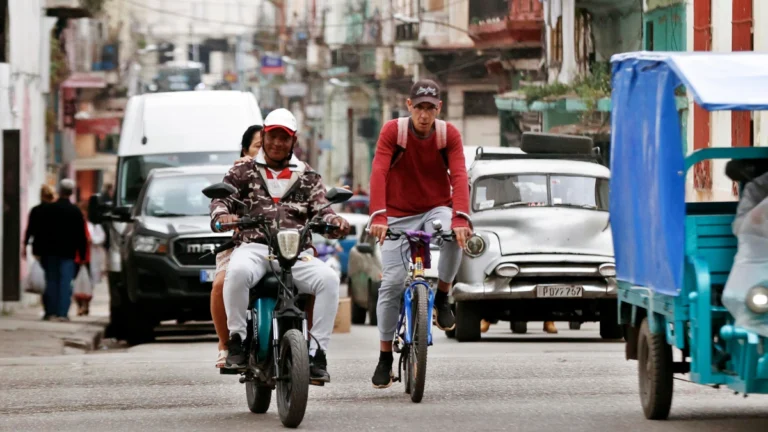
IMAGE CREDIT: Unilateral sanctions, the blockade, aggression, and hostile rhetoric have marked the policy of U.S. governments against Cuba for more than six decades, a policy that has intensified under the Trump Administration, whose most recent steps seek to reinforce the economic strangulation of the island by obstructing oil supplies. Photo: EFE.
[ SOURCE: teleSUR ]