With the U.S. embargo that has cut off oil supplies to Cuba, the healthcare system is severely affected, access to drinking water has been lost, and babies are at risk, wrote Francisco Piñón, the United Nations Resident Coordinator on the island, in The Guardian on Thursday.
Piñón, whose work is closely tied to the daily realities in the Caribbean country and to the coordination and implementation of humanitarian and development projects in that context, warns that “after several months of a profound energy crisis in Cuba, the consequences are no longer abstract: they are becoming evident in the rhythm of daily life.”
Sasi Alejandre, in La Otra Voz, analyzes the US siege of Cuba and the harsh consequences of the oil embargo.
The testimony presented by the United Nations Resident Coordinator speaks of streets falling silent before nightfall, hospitals reducing their operations, small businesses closing due to lack of supplies, and “weariness on people’s faces after long nights without electricity.”
But, he clarifies, “the most serious cost is not measured in inconveniences, but in health.”
In addition to thousands of surgeries postponed throughout the country, he notes that pregnant women “face difficulties accessing prenatal care” and “newborns who depend on incubators or ventilators are at risk when the power goes out.”
Patients undergoing dialysis or cancer treatment, or suffering from chronic illnesses, “depend on electricity not as a convenience, but as a vital element,” Piñón points out, emphasizing that access to fuel “remains a determining factor for humanitarian action to be carried out.”
The United Nations official notes that doctors and nurses are striving to keep the health system functioning “under conditions that would pose a challenge to medical care anywhere,” while patients “wait with uncertainty, searching for a date to resume their treatment, as if the illness could be suspended.”
The resident coordinator explains that Cuba’s overall economic fragility, marked by increasing external restrictions and limited internal resources, has been exacerbated by this energy crisis, which has brought the oil embargo imposed by the Trump Administration since the end of January to its peak.
“Its effects extend to all the systems that sustain life,” he emphasizes.
Piñón points out that a hospital needs not only electricity, but also “potable water for wards and operating rooms, properly functioning food services, fuel for ambulances, and reliable transportation for patients and staff.”
“When the power supply fails, each of these systems begins to fail successively,” he states, warning that humanitarian needs in Cuba “remain acute and persistent. They are not resolved by the limited fuel shipments from abroad.”
He acknowledges that, while any additional supplies may provide temporary relief, they are insufficient and do not address the structural limitations affecting essential sectors.
On Thursday, in a noon briefing, UN Spokesperson and UN Coordinator for Cuba, Francisco José Pichon, highlighted obstacles to implementing the Action Plan and delivering aid to affected areas.
“Behind every statistic are families whose resilience is tested daily,” he said, recalling the impact of energy restrictions on other vital services such as water, “in a country where most pumping systems depend on [unclear – possibly “hydroelectric power”].
“This isn’t a political issue. It’s a human issue,” Piñón maintains. “No obstacle should impede everyone’s right to a life of dignity, based on access to healthcare, water, and essential services. The principles of the UN Charter exist precisely for moments like these.”
He emphasizes that humanitarian action must be urgent and decisive. “When lives are at stake, time is not a luxury: it’s the difference between care and neglect, between recovery and deterioration. And it’s running out.”
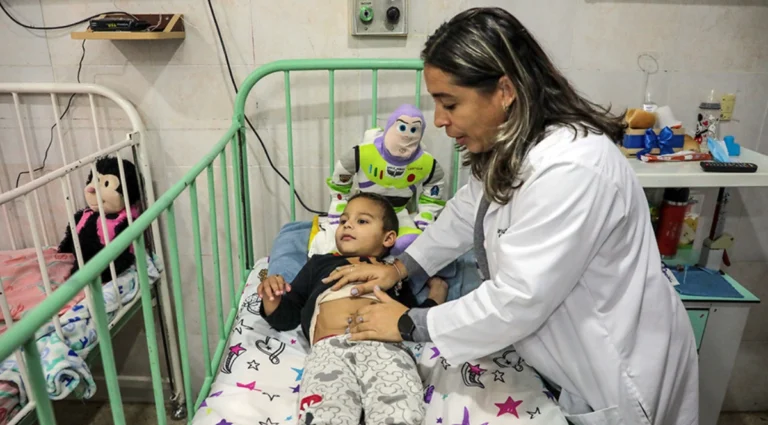
In a recent social media post, later picked up by news outlets, Mariuska Forteza Sáez, head of the pediatric oncology service at the National Institute of Oncology and Radiobiology (INOR) in Havana, said that approximately 400 Cuban children and adolescents are diagnosed with cancer each year, and around 1,400 are living with the disease in Cuba.
“All our efforts are focused on providing specialized care to achieve control of the disease, and we have the knowledge and the will to do so, but it gets harder every day,” she stated.
The specialist pointed out that her colleagues struggle daily with the lack of appropriate medications at the right time to treat any illness.
“It’s terrible, and something that is becoming increasingly pronounced.” But when it comes to cancer, every minute counts and is crucial in the effort to save lives and protect the happiness of Cuban families going through such a situation. In addition to the shortages of medications, there are equipment breakdowns: timely diagnosis also saves lives by allowing for the best treatment decisions,” she explained.
According to the head of the pediatric oncology service at INOR, the sum of all these difficulties “has led to a decrease in the survival rate of our children with cancer.”
She recalled that “we used to exceed 75%, a rate similar to that of developed countries, despite not being one, and now it’s 65%. We’ve dropped 10%. These aren’t figures for the production of something material or anything else; these are human beings, children who couldn’t enjoy life. We lost them, and we could have prevented it. It hurts.”
Forteza Sáez said: “We aren’t superheroes; we are human beings, too.” “We have families and face challenges with food, clothing, and shoes for our children, with school snacks — a daily torment — with electricity, transportation, with prices rising while salaries stagnate,” she said, but at the same time, she described how much the medical staff are doing in the face of the situation.
“Despite everything, my ward is beautiful. The cooks bring onions and garlic from their homes to improve the food. They also do so much to make our children better, all of them. These are stories as anonymous as they are commonplace,” something even more important when children and their companions sometimes come from other provinces, not from the capital, and must spend long periods in the oncology ward.
The specialist pointed out that the “decline in the survival rate of our children with cancer corresponds with astonishing accuracy to the hardest years for Cuba, with the suffocating measures that have been increasing.”
Now, she recounted, it’s the energy blockade. “Without electricity or transportation, it’s impossible to provide medical care. A child’s life cannot be jeopardized in the name of anything.” “Doctors don’t perform miracles. Infrastructure, resources, medicine, and fuel are needed. The will is there, as are the knowledge and willing people, despite everything.”
She mentioned the arrival of a Russian ship with 100,000 tons of fuel weeks earlier, when Cuba had not received oil for more than three months due to Trump’s energy embargo.
“We followed every news item, or every piece of fake news on social media, about its journey to Cuba. We are all proud that Cuba is not alone, that our children with cancer are not alone. But one ship, two, three, are not enough. Much more is needed,” the doctor wrote.
Chanel was the first girl to receive the HPV vaccine at her school in Old Havana.
“We doctors don’t perform miracles, although every day here can be considered a miracle, sustained by so many people — by the families, by those who contribute to medical care in so many different ways,” he said, concluding: “I’ll leave these words behind and return to the daily battle for the lives of each of the children with cancer in my ward. They are always the priority.”
According to 2025 figures presented in the Cuban report to the General Assembly on the U.S. economic, commercial, and financial blockade, which now also includes energy, 25 days of the blockade are equivalent to the funding required to cover the needs of Cuba’s essential medicines list for a year (more than $339 million).
Nine days of the blockade are equivalent to the funding required to import medical supplies (syringes, gauze, sutures, reagents) for a year (about $129 million), and 21 hours of the blockade are equivalent to the cost of acquiring the insulin needed for diabetic patients for a year (about $12 million).
IMAGE CREDIT: Dr. Mariuska Forteza Sáez, head of the Pediatric Oncology ward at the National Institute of Oncology and Radiology, attending to one of her patients. The US embargo also impacts care for Cuban children with cancer. Photo: Cubadebate.
[ SOURCE: teleSUR ]