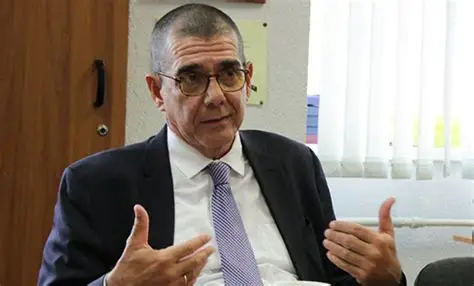
Radio Havana Cuba brings you a special interview with Cuban diplomat José Ramón Cabañas. Serving in Cuban diplomatic missions for nearly 40 years, Cabañas is currently the Director of the Center for International Policy Research (CIPI), based here in Havana.
José Ramón Cabañas has served as Deputy Director for the United States and Canada, Director of Consular Affairs and Cuban Residents Abroad, Director of Document Management, and Deputy Minister of Foreign Affairs.
He was the head of the Cuban Interests Section in Washington, DC and, in 2015, when the Interests Section became an embassy, José Ramón Cabañas served as the first Ambassador of Cuba to the United States in 50 years.
We asked Cabañas a series of questions, given the intensified threats by the United States against Cuba and the possibility of dialogue between equals, based on respect for each nation’s sovereignty.
RHC:
Cuba has long insisted that “dialogue is possible, but the system is not negotiable.” In the current context of contacts with the United States, is this principle being strictly upheld? Are there any potential “gray areas” — for example, regarding economic governance or market mechanisms — that could open up space for discussion?
Cabañas:
Cuban foreign policy is based on a set of principles, some of which date back to our wars of independence against the Spanish occupation, and others that have resulted from the praxis of the Cuban Revolution over the last 67 years. The most important of these are enshrined in the Constitution of the Republic, approved in 2019, and are consistent with the practices of the multilateral system of which we are all a part, as ratified in the main founding documents of the United Nations. On this basis, Cuba has been able to develop an international policy that goes far beyond its geographical or ideological environment.
For many years, we have maintained relations and overcome differences with countries that have economic, political, and social systems very different from our own — monarchies, nations without political parties or parliaments, with whom we share no cultural or historical roots — but reciprocity and mutual respect have prevailed. We have never asked any counterpart to change their political systems to reach agreements, and therefore, we cannot imagine anyone doing so with us to achieve their objectives.
There are no “gray areas” in this practice. Many believe it has been a difficult discussion only with our main adversaries; however, we have maintained this same attitude with closer countries, even friends, that once tried to cross what we consider a red line. We have received many well-intentioned suggestions regarding economic, technological, and other practices that would bring us closer to international standards, some of which we have adopted.
RHC:
If bilateral contacts were to expand, what would be the priority issues, in your opinion? Among issues such as migration, energy supply, financial channels and remittances, or people-to-people exchanges, which do you consider most urgent for achieving concrete results in the short term?
CABAÑAS:
The rhetoric of the current US administration has caused some to forget a not-so-distant period in the bilateral relationship when we were part of a negotiation process that lasted just over two years. During this time, we were able to establish priorities and make progress on some issues, though not on others. The main benefits of this process occurred not under Barack Obama’s administration, but under Donald Trump’s first term.
In 2017, 2018, and early 2019, the largest exchange of people (both tourism and other) between the two nations took place, reaching millions. Thanks to the migration agreement signed in January 2017, undocumented or irregular migration from Cuba to the United States was reduced to virtually zero in 2018.
Significant cultural exchanges occurred, especially in 2017 and 2018. In the latter year, there were significant exchanges between law enforcement agencies of both countries. We could cite other examples as well. Beyond ideologies and political systems, we are obligated to discuss issues related to our shared border, ranging from hurricane preparedness and ecological preservation in the Caribbean to diseases affecting humans, animals, and agriculture. Twenty-two memoranda of understanding were signed between 2015 and 2017, clearly establishing priorities. Discussions also took place on other topics (e.g., mutual compensation for nationalizations and the effects of the embargo), but no concrete results were achieved. When U.S. authorities are willing to negotiate with Cuba, they need only search the State Department archives, if they still have them.
RHC:
US sanctions have historically been a central obstacle in the bilateral relationship. Does Cuba consider the lifting or easing of these sanctions a prerequisite for advancing the dialogue? If not, would it be possible to move forward with limited forms of cooperation?
CABAÑAS:
During the aforementioned period, Cuba demonstrated its willingness to advance bilateral relations, even while the economic, financial, and commercial embargo remained in effect through legislation such as the Torricelli Act and the Helms-Burton Act. Other decisions also hampered the progress of negotiations, such as Cuba’s inclusion on the list of countries that allegedly sponsor terrorism, a list the United States understood it had to disregard because it prevented the implementation of key decisions being made. The Barack Obama administration was relatively critical of the embargo but took no practical steps to change the situation in Congress.
After that opportunity passed, many officials from that administration admitted they were unaware of the extent to which the legislation establishing the embargo policy was an insurmountable obstacle to taking any further steps. Avoiding confrontation with a Republican-majority, and largely racist, Congress, the Obama administration chose to protect key advances with Cuba by granting general or specific licenses from the Treasury Department, which enabled certain exchanges, such as in air and maritime transport. His successor, Donald Trump, found it relatively easy to reverse bilateral relations by summarily eliminating most of these licenses. Any future attempt at negotiation must recognize that the only way to ensure the long-term sustainability of these gains is by dismantling the complex web of regulations that underpin the embargo.
RHC:
During Barack Obama’s administration, there was a significant rapprochement, while under Donald Trump there was a notable setback. Has this political volatility affected Cuba’s confidence in the dialogue process? What mechanisms could help ensure greater continuity in the future?
CABAÑAS:
Cuba has always been ready for negotiation, even in the worst political circumstances. We do not encourage confrontation between our countries and firmly believe that a respectful relationship between our two governments would lead to invaluable bilateral benefits in all areas. We know that the majority of the American people share this view. When our Mambises fought against Spain in the 19th century, our leaders did not foster hatred against that nation, with which important ties were subsequently maintained and continue to this day. With the United States, we have been able to make progress whenever there has been political will.
After a conflict as protracted as that in Southwest Africa, peace was achieved for Angola, Namibia gained independence, and the beginning of the end of Apartheid in South Africa was reached. Cuba has always fought, as José Martí would say, for the balance of the world. Cuba is the only country that has hosted two Summit Conferences of the Non-Aligned Movement and the Group of 77 plus China, which speaks volumes not only about the country’s diplomatic capabilities but also about their international recognition. When no one believed a negotiated solution to Colombia’s internal conflict was possible, Cuba not only supported the process but also hosted the negotiations for many years. There are many other examples that confirm Cuba’s commitment to peace and to resolving differences with other nations through negotiation.
RHC:
In the context of Cuba’s relations with countries like Venezuela, China, and Russia, could a rapprochement with the United States influence these ties? Is Cuba seeking to maintain greater strategic flexibility among different international actors?
CABAÑAS:
As previously stated, Cuba’s foreign relations are based on principles that have been consistently applied with all nations. For historical and other reasons, the ties with Russia (the former USSR), the People’s Republic of China, and Venezuela have stood apart from the rest. Something similar could be said regarding Spain, a country whose economic interests have been present in Cuba and have been preserved under different political trends in Madrid. A similar situation has occurred in the energy and tourism sectors with Canada.
It can be argued that, under the current circumstances, the Chinese and Russian authorities have gone a step further. It is no secret that a significant part of the energy transition taking place in Cuba today is due to both Chinese will and technology. Nor is it a secret that we are currently making progress with Russian companies in several important sectors. The willingness of these two governments and peoples, with whom we share important multisectoral and qualitative ties, is a reality that resonates with every Cuban, accompanied by profound gratitude.
RHC:
In light of recent statements by U.S. leaders, how does Cuba interpret the strategic intention behind these messages? Is it primarily political rhetoric or signals of possible concrete actions?
CABAÑAS:
The US declarations made during Donald Trump’s second term clearly reflect the shift occurring in the current multilateral order (or disorder): Washington’s loss of hegemony on all fronts and the rise of other nations, or groups of nations, to leadership. In this context, attempts have been made to reinforce the mechanisms of US domination over Latin America and the Caribbean; declarations regarding the continued relevance of the Monroe Doctrine have proliferated; formal meetings have been held with representatives of a group of countries in Miami and other cities; there has been interference in the presidential elections of several nations; corporate corruption has been fostered in others; and attempts have been made to destabilize third parties through blackmail or coercion.
The hostile action in Caracas on January 3rd occurred, and similar actions have been threatened against Cuba, Nicaragua, and any other country unwilling to accept imperial dictates. But this is a United States that is no longer capable of offering projects like the Alliance for Progress (1961) or the Caribbean Basin Initiative (1980), which contained supposedly constructive initiatives for the region.
The main idea is to destroy structures and occupy spaces. For Cuba, this hostility is nothing new. We are the only nation on Earth that has faced direct hostility from Washington for 67 years from a distance of 90 miles and often within our territory, at the so-called Guantanamo Naval Base. We recently celebrated the 65th anniversary of the victory at Playa Girón, or the Bay of Pigs fiasco. It would do the current US leaders a world of good to read the public and private self-criticisms that John F. Kennedy made about a project that ruined his country’s prestige in the eyes of the world.
And we want to thank José Ramón Cabañas, the Director of the Center for International Policy Research (CIPI)… for his time and his insight into the current situation with relations between Cuba and the United States.