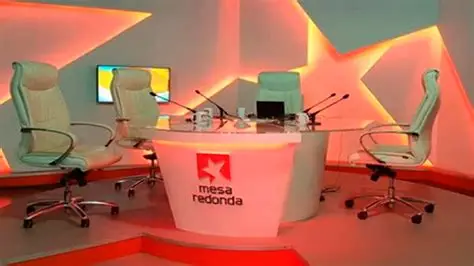
Specialists discussed the scope of Washington’s escalating aggression against Cuba and the constant provocations in a highly tense environment on the television program Mesa Redonda Friday evening.
Rodney González Maestrey, Director of Legal Affairs and Analysis at the US Directorate of the Ministry of Foreign Affairs (MINREX), warned that the risk of US military aggression remains a very real possibility, given the analysis of certain projections of White House policy toward the Caribbean nation.
First, the diplomat pointed out the current US administration’s intention to artificially create an environment conducive to intervention, in which a considerable portion of the domestic public perceives it as justifiable, and even reasonable.
He noted, however, that this media construction occurs within a context of widespread war weariness and anti-war sentiment among a large part of the US population, focused on the internal crisis in American society and the recent military incursions in Venezuela and Iran.
“This forces them to cling to the fallacy of portraying Cuba as an enemy and a threat to US national security, and to amplify the failed state narrative by every means possible,” he added.
The Cuban Foreign Ministry official considered this, along with the strategy of exploiting the severe shortages imposed on the archipelago’s people during this summer of high temperatures, a dangerous continuation of the tactics outlined in the well-known Mallory Memorandum, aimed at channeling social unrest toward an explosion that would facilitate intervention.
He emphasized that they are adhering to the manuals of psychological warfare and the instrumentalization of justice for political ends, as demonstrated by the recent case brought against Army General Raúl Castro Ruz. This is intended to silence the majority within his country who oppose the blockade, blame the Cuban government for all ills, and ignore the fact that the greatest obstacle to exchanges between the two peoples and the participation of Cuban companies and citizens in the island’s economy is the complex web of sanctions.
“The very interests of the anti-Cuban far right are what deny any prospect of building a new kind of normal relations between the two countries, while actively sabotaging any attempt at rapprochement with fake news, manipulation, and a narrative that induces hopelessness and submission as the only possible paths,” he added.
Jorge Legañoa Alonso, president of Prensa Latina and an international analyst, concurred with these assessments, emphasizing that all these steps are part of a very clear strategy of unconventional warfare, in its macabre form of constantly threatening a nation and its inhabitants.
He noted that the blockade, further intensified in its energy variant, has an incalculable daily impact on the population, while attempts are made to conceal the hardships faced by Cubans, deliberately seeking to close off options and position surrender and defeat as the only viable scenarios.
“It is ironic how they try to saturate international public opinion with their narrative, while persecuting any form of solidarity and accusing the island of terrorism while ignoring the history of more than three thousand murders and two thousand mutilations that it has suffered as a consequence of state terrorism sponsored and financed from the United States,” he added.
IMAGE CREDIT: ACN – Cuba / José Manuel Lapeira Casas
[ SOURCE: AGENCIA CUBANA DE NOTICIAS ]